
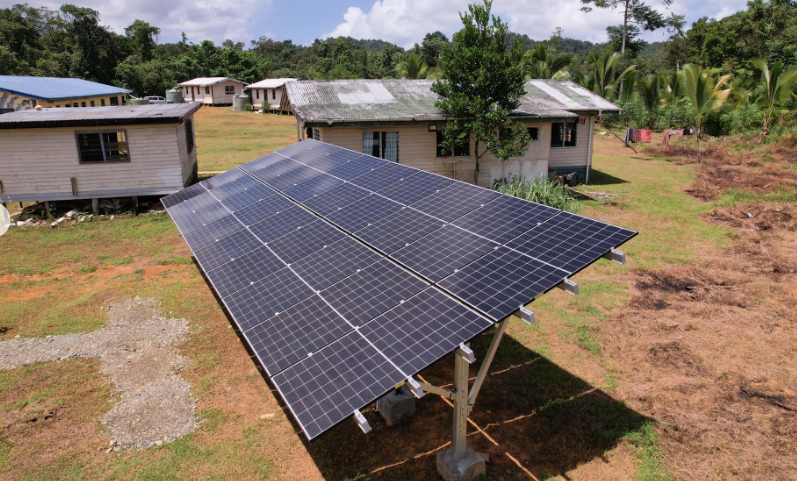
A new study has found that schools in Fiji’s remote and maritime areas are paying significantly higher energy costs, highlighting major gaps in energy management across the education sector.
The research, which analysed data from 173 schools nationwide, found that off-grid schools pay up to 4.1 times more per student for energy compared to those connected to the national grid.
The study established Fiji’s first Energy Utilisation Index (EUI) and Cost Utilisation Index (CUI) benchmarks for schools, providing a national baseline for measuring energy performance.
Researchers found the median energy use across schools was 8.7 kilowatt-hours per square metre per year, but performance varied widely. Secondary schools, particularly medium-sized ones, were identified as the most energy-intensive due to higher service demands.
Electricity accounts for about 85 per cent of total energy use in schools, while off-grid institutions rely heavily on diesel and premix fuel, increasing both costs and vulnerability to supply disruptions.
The study also highlighted infrastructure challenges, noting that 34 per cent of schools rely on untreated water sources, underscoring the link between water access and energy use.
To address these issues, researchers recommended practical measures such as switching to LED lighting, improving monitoring of energy use, and introducing student-led “Energy Champion” programmes to promote conservation.
They also called for stronger government support, including better data collection, maintenance systems for renewable energy projects, and incentives for energy-efficient upgrades.
The findings suggest schools could play a key role in improving energy efficiency and reducing carbon emissions, while also strengthening climate resilience in Fiji and other Pacific island nations.

