
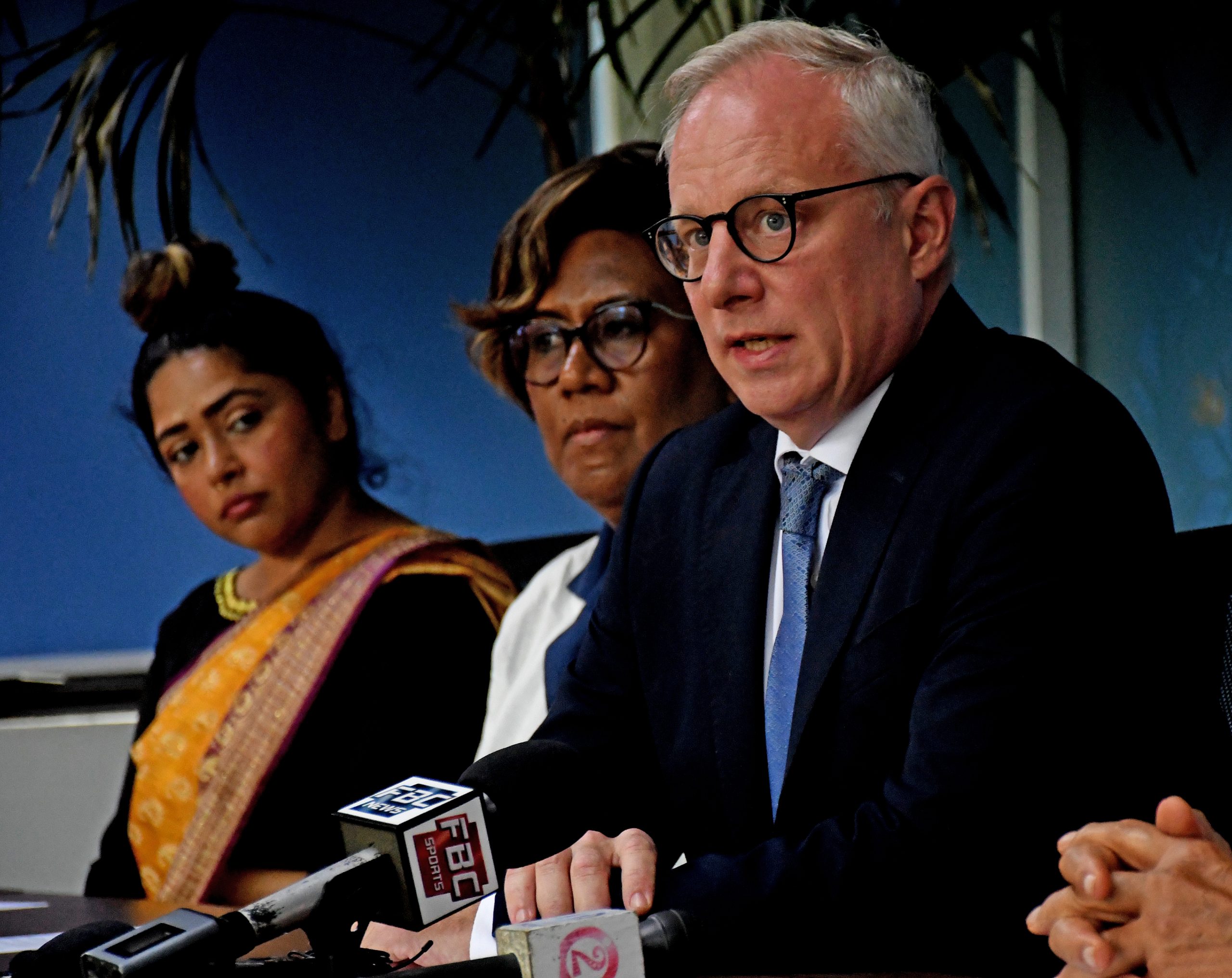
THE Truth and Reconciliation Commission (TRC) faces the challenge of encouraging public participation, particularly from political figures involved in the country’s past events.
However, Commission chairperson Dr Marcus Brand believes a structured approach will help bring people forward.
Acknowledging the difficulty of the task, Dr Brand outlined the TRC’s early stages, emphasising that the commission is still in its preparatory phase.
“We just came together as a commission a week ago, and we are currently in a starting period where we are sorting out basic administrative issues like building staff, securing resources, office space,” Dr Brand said.
He said over the next two and a half months, the commission would focus on developing its methodology for conducting hearings while also engaging with stakeholders and communities across the country.
“Already during that two-and-a-half-month period, we will also engage very proactively with other stakeholders, other groups in society.
“We will travel to parts of the country and consult with others to hear them on what their expectations are of the process and what input they would like to give in the work that we will be doing.”
Dr Brand said the actual hearings would take different formats depending on the participants.
Some sessions will be public, particularly when engaging with past and present political leaders, as there is significant public interest in hearing from those who held responsibility during key political events.
“But there will also be an element of more individual truth-telling, where people would not want to have the attention of the wider public.
“So, we will also find ways of providing a comfortable space for survivors as they are defined in the Act.
“People who were affected in one way or another through human rights violations that occurred and through trauma that may have been caused.
“So, for them to be able to come forward and safely talk about their experiences.”

