
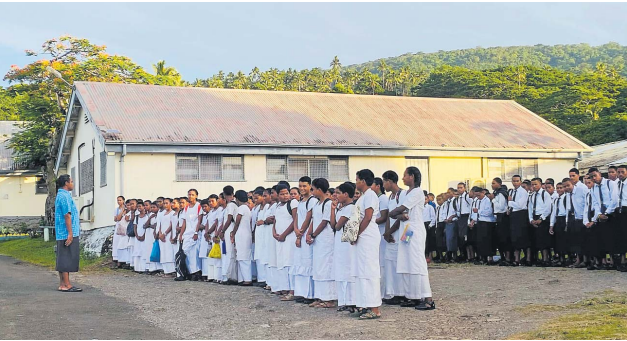
THE Ministry of Education’s new Boarding School Policy sets out stricter expectations for discipline, student safety and parental responsibility in school hostels across the country.
It requires boarding school administrators to align their rules with national guidelines and clearly state the consequences for misconduct.
Heads of boarding schools “must establish school rules which are consistent with the MoE’s policies,” the document states, adding that rules must “outline the response to any breaches, and clearly state which breaches might result in a student being suspended/expelled from the boarding facility”.
Students expelled from boarding hostels will still be allowed to continue schooling as day scholars at the same school, unless parents choose to transfer them elsewhere.
Parents and students must also sign an agreement before a child becomes a boarder.
“Rules must be provided to parents/guardians and students, and both should sign their agreement to abide by the rules before a child is enrolled as a boarder,” the policy says.
The policy also gives school heads authority to suspend students in serious cases.
A student may be suspended if their behaviour amounts to “gross misconduct or continual disobedience” that sets “a harmful or dangerous example to other students,” or if there is a risk that the student or others “will be seriously harmed if the student is not stood-down or suspended”.
Misconduct that “causes disrepute” to the school or has a “detrimental effect on the school, members of staff and teachers or the school management” also falls within suspension grounds.
The policy is firm on banned substances and high-risk behaviour.
“Drugs, alcohol and volatile substances are strictly prohibited in dormitories at all times,” it states, noting that offenders will be dealt with under the School Behavioural Management Policy.
Students may be removed from the hostel for “smoking marijuana, consumption of alcohol and/or yaqona, sexual offence, bringing pornographic material into school premises, bullying and wilful damaging of hostel properties”.
The new rules also restrict electronic devices in hostels.
At any given time, no boarder shall be allowed to bring any electronic devices to the dormitory unless approved by the school head.
Mandatory random spot checks will be conducted in dormitories, and devices confiscated “must be returned only to the parent/guardian at the end of the year”.
The ministry reiterates its “zero tolerance policy on corporal punishment and child abuse,” stating that under no circumstance is corporal punishment or bullying permitted “by any teacher, boarder, or prefect, under the direction of the school head”.
Boarders are also prohibited from entering staff quarters without permission, and staff are barred from instructing students to remain inside quarters after 6pm.
Vandalism and graffiti will be treated as offences, with responsible students required to “replace or repay the cost of damaged items”.
The ministry says development of hostel rules should ideally include consultation with parents, with the overall aim of creating safer, more accountable boarding environments.
Nutritious meals ‘a must for boarders’
BOARDING schools across Fiji are now required to provide adequate nutritious meals and maintain proper living conditions under the Ministry of Education’s Boarding School Policy.
The policy states student welfare extends beyond accommodation, with schools legally obligated to ensure food quality, hygiene, and balanced nutrition.
“Boarders should be provided adequate and nutritious meals while at the boarding school.
Inadequate nutrition can lead to serious health issues and affect a child’s ability to study,” the policy states.
Schools that fail to meet food standards may face investigation, with the policy noting that poor food provision “reflects poor management skills” and warrants ministry intervention.
Dormitories must also meet infrastructure standards, be securely locked at night, and provide separate facilities for male and female boarders.
The ministry says the policy aims to ensure boarding schools offer not just access to education, but safe, healthy, and dignified living environments—especially for students from rural and remote communities.
Supervision and safety a priority
FIRM supervision and safety requirements for boarding schools, including mandatory teacher-tostudent ratios and regular risk assessments to safeguard students, has been introduced by the Ministry of Education.
Under the Boarding School Policy, supervision of boarders is compulsory during dormitory hours, after school programs, and overnight, with specific ratios outlined for both primary and secondary students.
“One teacher is required for between 20 to 50 secondary students, while one teacher is required for every 15 primary students,” the policy states.
Boarding schools are also required to carry out termly risk assessments and appoint emergency wardens in every dormitory to respond to events such as fires,
earthquakes, or flooding.
“Boarding schools must carry out termly risk assessments to ensure student safety and take measures to mitigate them to an acceptable level,” the policy notes.
The ministry says these measures are designed to reduce accidents, prevent abuse, and ensure schools meet minimum national safety standards.
Corporal punishment prohibited
A STRICT ban on corporal punishment in all boarding schools is being reaffirmed by the Ministry of Education under its revised Boarding School Policy, reinforcing child protection standards across Fiji.
The policy makes clear that physical punishment, bullying, and abuse are strictly prohibited, regardless of circumstance.
“The MoE has a zero tolerance policy on corporal punishment and abuse.
Under no circumstances shall corporal punishment or bullying in any of its forms be inflicted upon any teacher, boarder, student or prefect,” the policy states.
It requires school heads to immediately report any incident of corporal punishment, assault, bullying, or abuse to the Permanent Secretary for Education and relevant authorities within 24 hours.
The policy also places responsibility on school managements to ensure disciplinary processes are fair, documented, and aligned with child protection laws, including the Child Welfare Act and the Crimes Decree.
The ministry says the strengthened rules are aimed at creating a safe, supportive environment where students can “develop confidence, responsibility, and respect” without fear of harm.

