
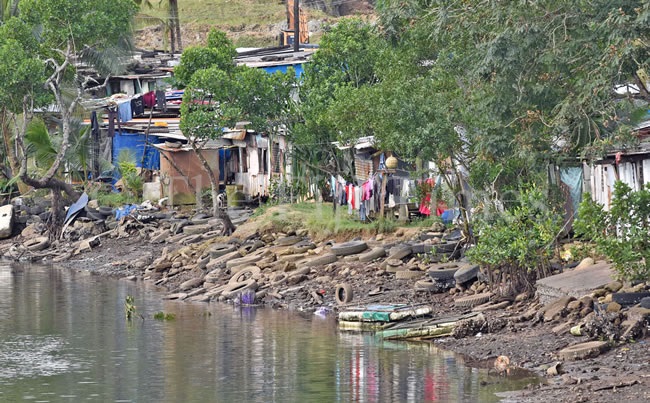
While statistics show that as many as 120,494 people were living in informal settlements in 2017, Public Rental Board general manager Timoci Naleba said this could have increased threefold in the past six years, placing more than 360,000 Fijians in squatter settlements across the country.
He said by committing $134 million every year for four years, the Government could reduce squatter numbers and improve the lives of people who would in turn contribute positively to economic growth.
Mr Naleba said Fiji Bureau of Statistics data showed there were about 120,494 people living in squatter and informal settlements Fiji wide, which represented 13.6 per cent of Fiji’s total population in 2017, with more than 64,417 people living in squatter and informal settlements in Lami, Nasinu and Nausori.
He said affordable housing was a major issue and building more affordable houses was a solution that would have an immediate impact.
“Therefore, it is imperative that the nation pays special attention and makes housing a priority,” he said.
“Government’s commitment should be reflected in the budget.”
Mr Naleba said squatters always lacked basic infrastructure to support health and wellness, including clean water supply, sanitation, waste collection, and were exposed to diseases, crimes, and natural disasters.
Building more affordable residential units, he said could provide immediate solutions and the $134m budget would allow for the construction of 1000 two-bedroom flats at a cost of $134,000 each.
“The issue of affordability is the most important factor in addressing the housing problem for low-income earners.
“There has to be a commitment from providers of infrastructure to bear the costs in providing water, roads and electricity to reduce development costs as well as building costs so that house prices meet low income earners capacity.”
Mr Naleba said PRB’s housing services were an important precondition for people to be able to live healthy, prosperous lives.
“Access to suitable housing is an important factor in the overall well-being of individuals, families and communities — it affects physical and mental health, education and employment, social cohesion, and intergenerational mobility, amongst other outcomes.
“These outcomes also impact communities, broader society, and the functioning of the economy.”

