
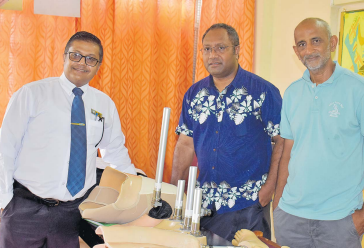
THE spiritual beliefs of Fijians may be the missing link in the fight against non-communicable diseases, says the Northern divisional medical officer Dr Tiko Saumalua.
“One thing that rarely comes out in discussions is the spiritual aspect – what people believe in and how they were brought up,” Dr Saumalua said, adding that a person’s belief influenced their actions and behaviours.
“We need to talk about this more if we want to truly address NCDs, including diabetes.”
While the Health Ministry has been actively raising awareness of lifestyle risks such as smoking, poor nutrition, alcohol, and kava consumption, Dr Saumalua said current efforts were not enough.
“People are hearing the message, but they’re not acting on it. Clearly, something is missing.
“We must take a holistic approach, looking at the physical, social, financial, and spiritual aspects of people’s lives.”
He said if the rate of diabetes continued to increase, then something was clearly missing.
Young patients losing limbs
PATIENTS as young as 16 are being forced to live with prosthetic limbs due to complications from diabetes, says Hope Centre chairman Sanjit Patel.
While elderly patients also require prosthetic limbs, Mr Patel said the younger generation was increasingly being affected by lifestyle-related diabetes.
“There are rare cases due to accidents, but the majority of cases are diabetes related. It’s linked to the amount of sugar people consume, like soft drinks and other sugary beverages,” Mr Patel said.
He said most patients the centre treated could have avoided amputations if they had taken better care of themselves.
“The biggest problem now is pre-care. People only find out they have diabetes once it’s a serious problem and there is a need for amputation,” he said, adding the illness was not just a medical issue but also a social and lifestyle crisis.
“It’s time we take it seriously before more limbs and lives are lost.”
Northern divisional medical officer Dr Tiko Saumalua said the age of patients continued to drop, a trend he attributed to lifestyle and social changes.
“At least 20 to 30 years ago, families worked together in the fields, children, brothers, and sisters helping the family, sweating it out, a natural form of physical fitness,” he said.
“However, today, people are confined to office work and exposed to very little physical activities,” Dr Saumalua said.
He said the influence of nutrition and societal habits also contributed to the increase in the incidence of the illness.
“Children see their teachers drinking (sugary beverages) or eating burgers and then demand the same from their parents.
“Small efforts won’t be enough.
This requires a generational shift.”
He said Fiji should adopt the Japanese education curriculum under which lifestyle practices had been integrated into schools.

