
Watisoni Seru and his family sat down to what could be their last hot meal for the duration of the oil strike.
His story was published on Monday, April 2, 1976 by this newspaper.
Over a meal of seafood, cassava and other hot dishes, Mr Seru said: “We used our last bottle of kerosene to cook Sunday lunch. I do not know what we are going to do now. Probably eat tinned fish and bread.”
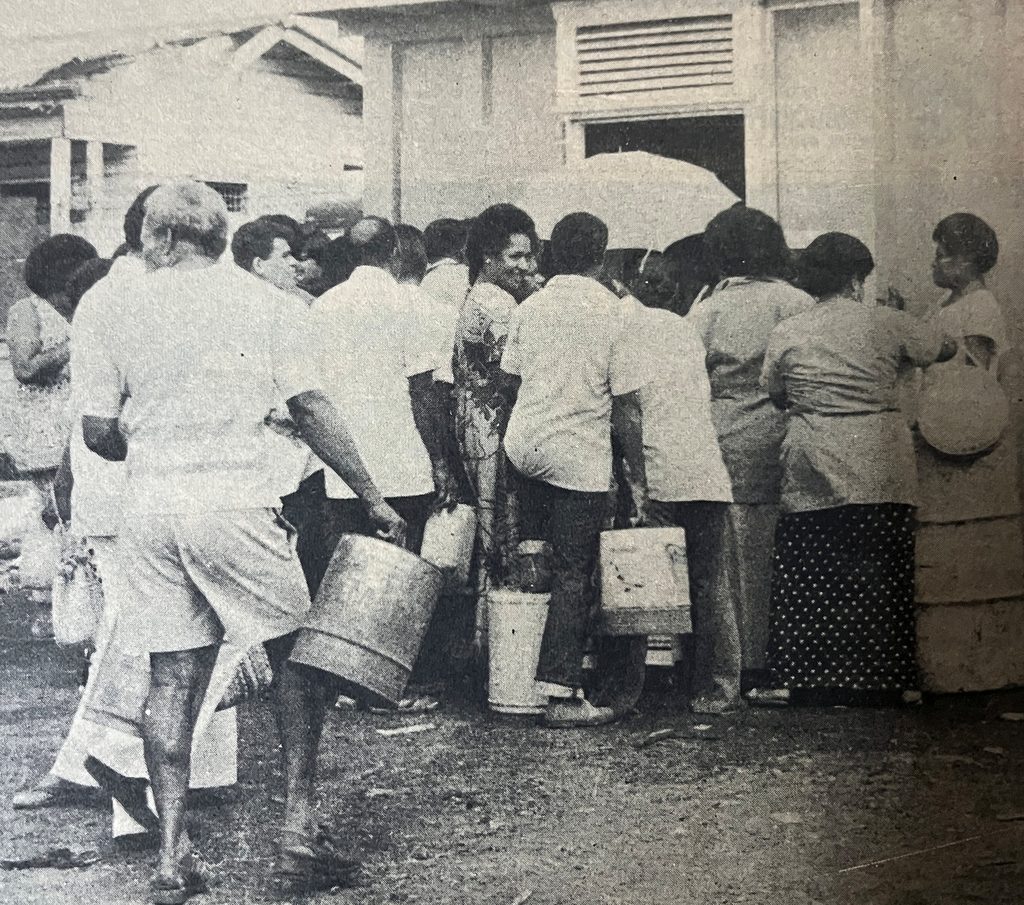
Mr Seru was one of the many people in Raiwaqa who suffered a shortage of kerosene because of the oil workers’ strike of 1976.
Shops at Raiwaqa had to ration supply to their customers.
Housewives said they had to travel miles searching for shops to sell them enough kerosene to cook the day’s food.
The Croker family had to cook outside in a traditional lovo (earth oven) using firewood and hot stones for four days.
They said they had enough dry firewood, but were beginning to worry in case they were unable to obtain more wood when other people began cooking on open fires or lovo style.
Some families living on the bottom floor of the Raiwaqa block of flats planned to cook outside when the kerosene finally ran out.
Mrs Margaret Sawani said she had a gallon drum of kerosene when the strike started, but that had almost run out.
When that happened she planned to cook on an open fire.
Mereoni Kamoto who lived in a first-floor flat said she had one bottle for one day’s cooking.
After that the family would probably have to eat cold meals, she said.
Most people said they were down to their last one or two bottles of kerosene and were unsure of being able to buy anymore.

