
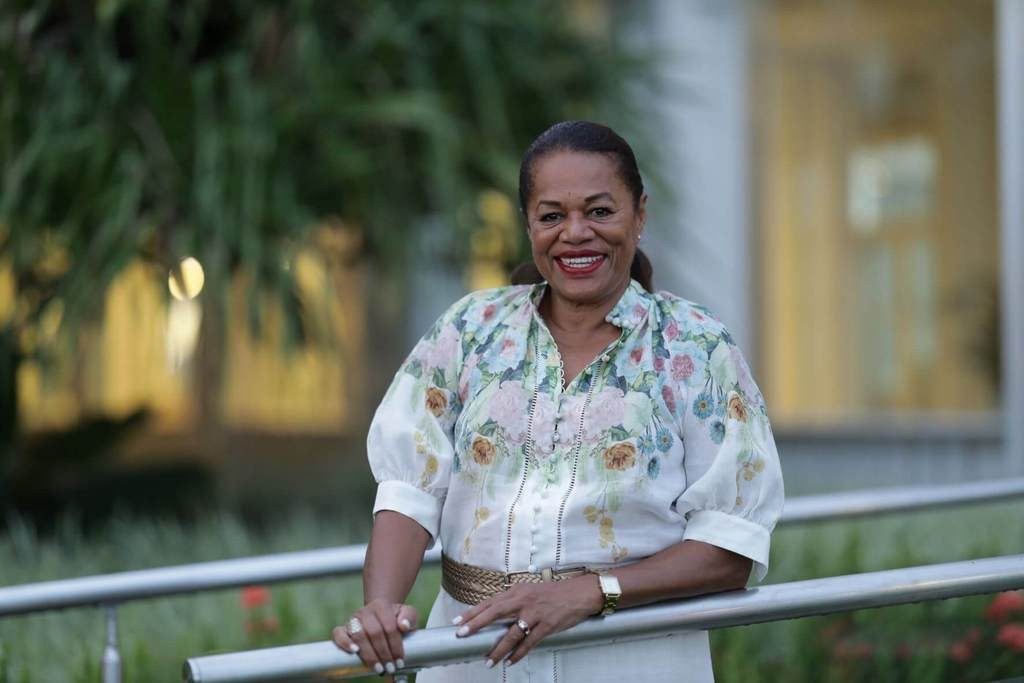
ELLEN Whippy-Knight’s life story is not only defined by fashion and enterprise but is one that is deeply intertwined in Fiji’s history.
The Fiji Fashion Week managing director speaks with pride about a lineage linked with some of the country’s most defining moments.
Her great-great-grandfather, Ratu Qomate Ritova, was among the 13 chiefs who signed the Deed of Cession, while on another branch of her family tree stands Mr David Whippy, an early American settler from Nantucket, who played a role in shaping that historic agreement.
“It means that my family is intrinsically linked to the history of Fiji,” she said.
That legacy extends through her grandmother, Adi Salanieta Ritova, one of the country’s first female chiefs, who held the title of Tui Labasa, which reflects the strength and leadership that runs through her family.
Growing up with an awareness of this heritage, she said, instilled in her a strong sense of identity and responsibility which are values that would later influence her professional life and commitment to nation-building through the creative sector.
A labour of passion
Yet it is her work in fashion that has defined her modern legacy.
As head of Fiji Fashion Week, Whippy-Knight pointed to longevity as her proudest achievement.
Now approaching its 20th year, the event has become the longest-running fashion week in the Pacific, a feat she attributed to resilience, adaptability and personal sacrifice.
Running such an event, she explained, is far from glamorous behind the scenes.
“Fashion weeks are not retail outlets, we don’t have anything to sell,” she said.
Instead, the event relies heavily on sponsorships, ticket sales and partnerships to survive.
With annual costs reaching into the hundreds of thousands of dollars, she and her husband have often stepped in to cover shortfalls, treating the event as a form of philanthropy rather than a profit-driven venture.
“If we didn’t do that, Fiji Fashion Week would not exist,” she said.
She added that the misconception that fashion weeks generate large profits remained one of the biggest misunderstandings about the industry.
In reality, even major international events have faced financial challenges in recent years, underscoring how fragile the model can be without consistent backing.
Beyond the runway
Whippy-Knight was quick to challenge perceptions that fashion is merely about spectacle.
Instead she described it as a vast ecosystem, one that sustains livelihoods across multiple sectors and communities.
From designers and tailors to fabric suppliers, photographers, event crews and retailers, the industry creates a ripple effect of employment and opportunity that extends well beyond the runway.
“It’s not just about a dress on the runway,” she said.
“It’s an entire supply chain.”
Despite its potential, she believed the industry remained under-supported, particularly in areas such as technical training, infrastructure and access to quality materials.
Among her key recommendations is the establishment of a national design school, an initiative that would nurture talent across disciplines including fashion, interior design, photography and product design.
She also highlighted the need for small-run production factories to support local designers who operate on limited scales, as well as policy adjustments to reduce the cost of importing quality fabrics.
“These are small businesses, mostly SMEs,” she said. ”
They need the right environment to grow.”
Reviving a national icon
Beyond fashion, Whippy-Knight has also turned her attention to another beloved Fijian institution, the Hibiscus Festival.
Tasked with leading its 70th anniversary revival, she described the experience as both challenging and deeply personal.
With just weeks to prepare last year’s event, she stepped in determined to restore its former stature and public appeal.
“I grew up with the Hibiscus Festival,” she said.
“It was always something special.”
Despite time constraints, she and her team worked to rebuild key elements of the festival, including expanding participation in the Miss Hibiscus pageant and securing significant sponsorship support in a matter of days.
Now, with more time and planning, she hopes to elevate the festival further, bringing back its vibrancy, organisation and sense of pride for the capital city.
Marking her own 70th birthday alongside the festival’s milestone year added an extra layer of significance.
“It’s a major achievement,” she said, “but the work is not done yet.”
Defining success
At this stage of her life, Whippy-Knight measured success differently.
It was no longer defined solely by professional milestones, but by a sense of fulfilment, good health, strong family ties and the ability to give back meaningfully.
“I’m very happy where I am,” she said.
Her guiding principles remained those instilled by her parents: respect, discipline and generosity.
“My father always said, whatever you have doesn’t belong to you, you share it,” she said.
That philosophy continues to underpin her work, from mentoring emerging designers to sustaining Fiji Fashion Week as a platform for others to grow and succeed.
She also emphasised the importance of reputation, noting that the credibility of Fiji Fashion Week had been built on transparency, professionalism and consistency over nearly two decades.
Whippy-Knight remains focused on legacy, not just her own, but that of an industry she has helped build from the ground up.
The true measure of success lies in impact, in the opportunities created, the lives influenced and the pathways opened for future generations.
And in that regard, Ellen Whippy-Knight’s influence is already woven firmly into the fabric of Fiji’s creative future.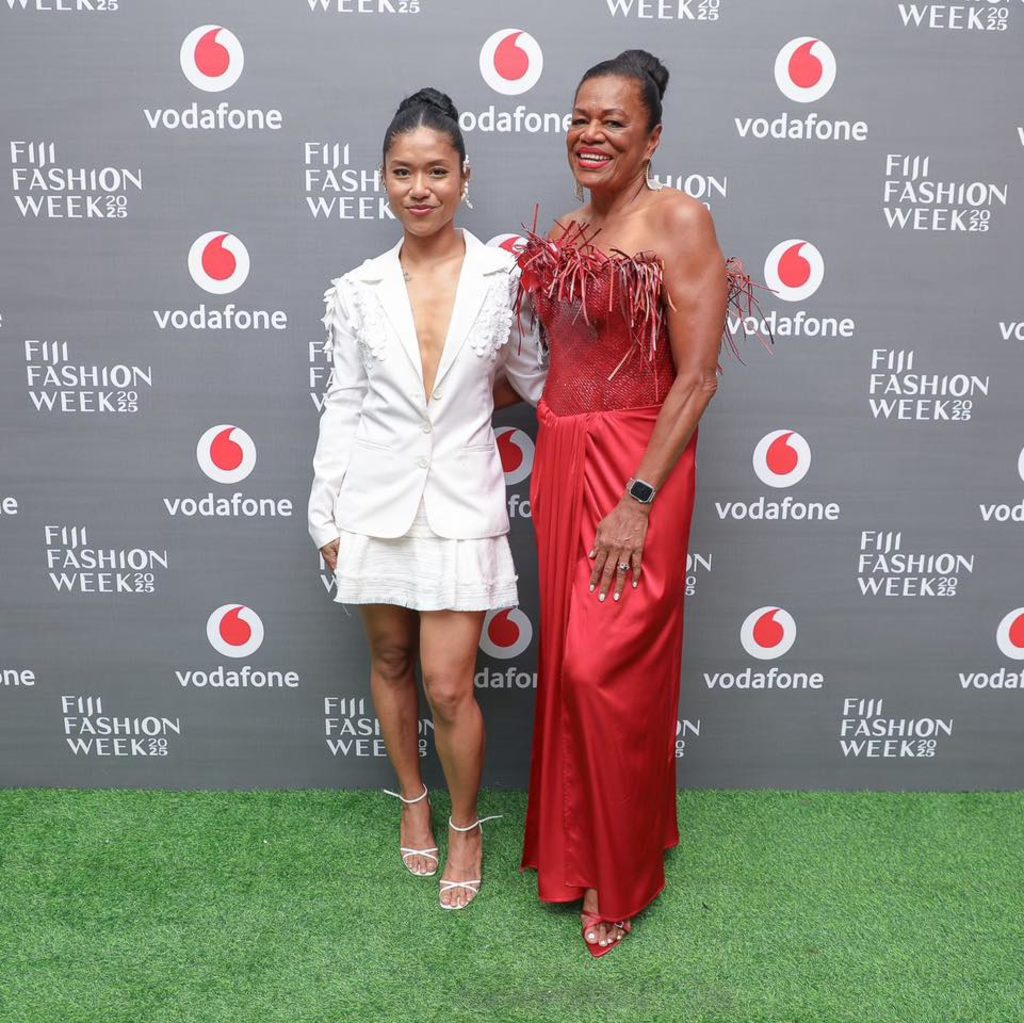
Ellen with local fashion designer, Atelaite Daunibau. She has spoken passionately in support of local designers, calling for stronger investment, training and infrastructure to unlock Fiji’s creative potential and grow a sustainable fashion industry at home. Picture: SUPPLIED

Ellen’s great-great-grandfather, Ratu Ritova was one of the 13 chiefs who ceded Fiji to Great Britain on October 10, 1874. Picture: SUPPLIED

Ellen and her two daughters, Melisha (left) and Tahndra (right) out on the tennis court. Picture: SUPPLIED

