
THE Micronesian Centre for Sustainable Transport is like a voyaging ‘vaka’, steady, deliberate and guided by purpose across uncertain waters.
Within its hull are researchers, technical and legal negotiators, and cultural representatives who serve as the engine room for Oceania’s transition to low-carbon shipping.
This is how MCST technical advisor, John Taukave, describes the demanding work carried out at the centre.
“We do the hard technical work that allows our leaders to stand firm at the International Maritime Organization,” he said.
Translating Complexity for the Pacific
As a technical advisor for the Micronesian Centre for Sustainable Transport, Mr Taukave aids in translating high-level GHG (greenhouse gas) negotiations into language that Pacific communities can understand.
He said effective advocacy at the International Maritime Organization should result in a decarbonised maritime transition that is just and equitable, leaving no one behind.
“It looks like a maritime fleet of decarbonised and wind propelled vessels connecting our Oceania region in trade sustainably with further inspiration from our wayfaring ancestry.”
For John, ocean stewardship is a foundational principle.
“This communal value proves that we don’t look at profit margins, but at the overall health of our oceans for posterity,” he said.
Culture at the negotiating table
Bringing Pacific culture, identity and traditional knowledge into maritime diplomacy, he believes, is essential.
“Without a grounded and rooted identity, diplomacy feels just like math. Our traditional knowledge offers us a 3,000-year-old data set on how to live in harmony with the ocean.
“To ignore it is to navigate blindly.”
Beyond policy language and technical frameworks, John continues to advocate for capacity within Pacific delegations.
“Larger states have teams of 50 lawyers, experts and consultants while we have teams of generally two or three on our delegations who must be experts on everything from safety to maritime law with a capacity to cover multiple conventions and negotiation.
“I like to hope that my role is to help close that gap by providing focused, evidence-based research from MCST and to use storyliving to translate our story back to our communities in ways that they can relate with through performance, ceremony and practice.”
The net-zero imperative
On technical issues, Pacific delegations are currently focused on the Net-Zero framework.
“Our delegations seek guidance on how a delay on this further impact our transport costs, how to look at ways forward as well as addressing issues of process within the IMO structure itself.
“We are also looking at ways we can further integrate wind-assist technology with the example of the SV Jurean Ae to maintain our energy sovereignty.”
Negotiating within international spaces presents its own set of pressures.
When engaging with larger, more resourced countries, John said Pacific delegates often face negotiation fatigue and the sheer weight of bureaucracy.
“Larger countries often try to dilute a ‘Just and Equitable’ language, but our strength is in our moral authority and our collective Oceania voice, even when at times, we may be the only ones in the room holding the moral high ground.
“We also face a system that systematically has made it difficult to listen to our voices through process and transparency and yet, we continue to participate in good faith.”
Preparing for an uncertain transition
Looking ahead, John believes Pacific countries must prepare for a decarbonised shipping transition that may continue to be delayed, leaving them exposed to the existential impacts of climate change.
“I also believe that with the continued evolution in maritime technologies and high-tech shifts, if a transition in decarbonisation does happen, I fear that we may be left behind paying more for a shipping transition, further impacting our economies.”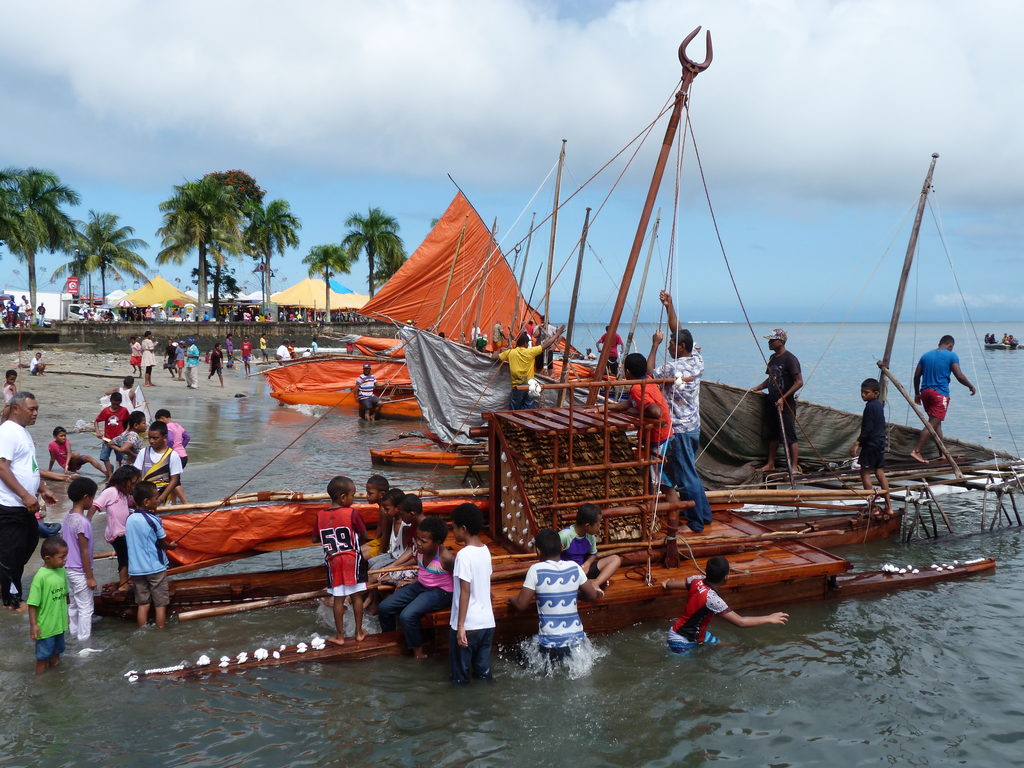
The Micronesian Centre for Sustainable Transport is like a voyaging ‘vaka’ – steady, deliberate and guided by purpose across uncertain waters. Picture: SUPPLIED

