
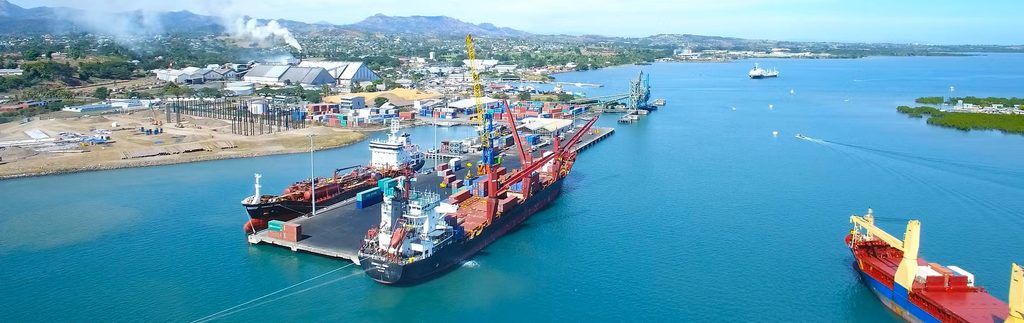
THE new Lautoka Port Master Plan is a document of national significance.
It is envisages that it will help transform Lautoka Port into a resilient, efficient and future-ready maritime gateway, one that is aligned with Fiji’s national development priorities, supports our economic growth and adapted to the realities of climate change.
This was highlighted by the Prime Minister, Sitiveni Rabuka while launching the new plan last week.
During his address, the Prime Minister shared data of what future trade would look like for Lautoka.
“Container throughput currently stands at approximately 80,000 TEUs (2023) and is projected to grow between 2.34 per cent and 2.93 per cent annually – reaching up to 120,000 TEUs by 2045 and between 160,000 and 190,000 TEUs by 2053. That is nearly double the current volumes,” he said.
“Vehicle imports, currently around 2,000 units annually, are expected to grow steadily – with the electric vehicle transition expected to account for 9 to 12 per cent of car imports by 2030.
“Bulk trade volumes, driven by sugar, molasses, fertiliser, LPG, and iron ore – are projected to grow from approximately 600,000 tonnes today to between 768,000 and 800,000 tonnes by 2053. A modest rate of 0.85 per cent to 1.0 per cent per year projected growth.
“Cruise ship calls are recovering strongly post-COVID and are projected to grow from approximately 30 calls in 2024 to between 40 and 50 annually by 2053, with the potential to deliver up to 250,000 cruise passengers regionally by 2040.”
Mr Rabuka said those were not abstract numbers as they represented livelihoods, jobs, businesses, and the economic security of the Fijian people.
“They demand that we act. ”
He said the Lautoka Port Master Plan also highlighted the infrastructure needed to support growth.
“It identifies the need to expand berth capacity, improve yard space, and upgrade operational facilities so that the port can operate efficiently and safely as demand increases.”

