
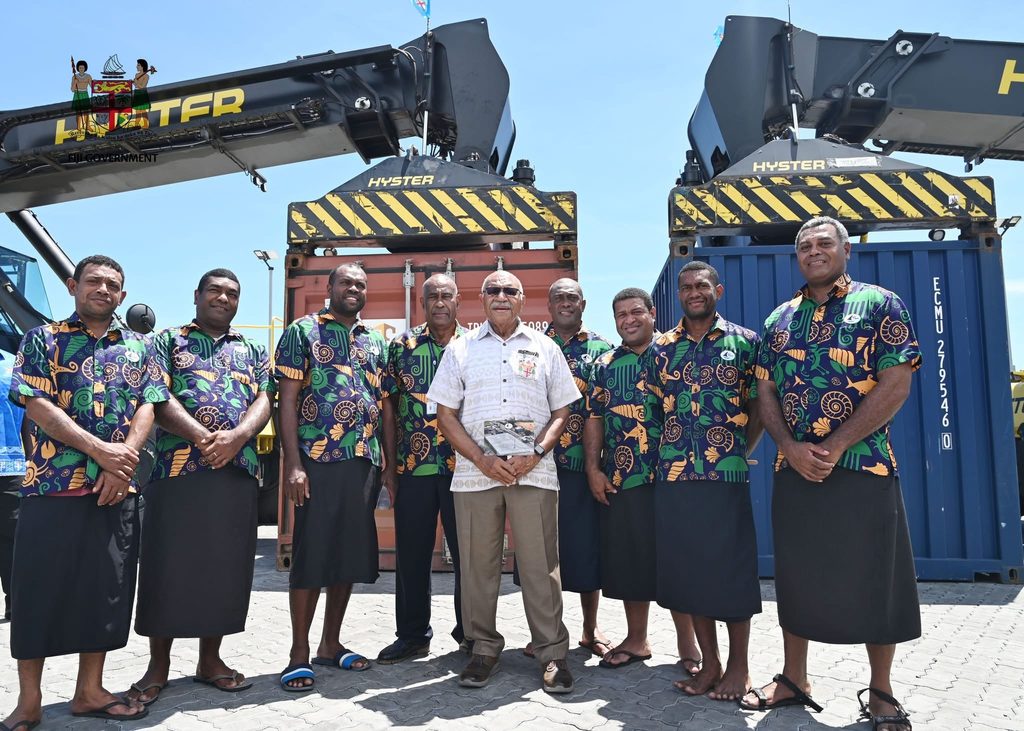
PRIME Minister, Sitiveni Rabuka recently opened the Lautoka Port Yard 4 Container Project and launched the Sugar City’s Port Master Plan.
The project would make Fiji’s economic gateway stronger, smarter and better equipped to serve the next generation of Fijians.
Mr Rabuka said the project was the product of “disciplined planning, strategic investment, and strong partnerships” forged across government, industry and regional development partners.
“In September, 2024, I did the groundbreaking ceremony for this Yard 4 Project and now after 18 months of its completion, I am honoured to be standing before you in officially opening this Container Yard together with the successful completion of Queen’s Wharf rehabilitation, dredging, and the launch of the Lautoka Port Master Plan.”
Mr Rabuka said the Fiji Ports Corporation Limited had made a substantial amount of investment into the projects.
For the Queen’s Wharf Rehabilitation, which is to improve structural integrity and operational safety, Fiji Ports invested $F14 million.
For dredging, which was to enhance operational reliability, improve marine safety and strengthen Fiji Ports Corporation Ltd’s ongoing commitment to maintaining safe, efficient and resilient maritime infrastructure at the Port of Lautoka, Fiji Ports invested $6.81 million.
An amount of $503,754 was invested on Lautoka Port Foreshore Development and Port Master Plan.
It is to provide a structured, long-term development framework that guides the sustainable expansion, modernisation and efficient utilisation of the port.
A total of $24.3 million was invested in the Container Yard 3 and 4 upgrades.
It was to expand container yard capacity and enhance overall port efficiency to meet growing cargo volumes and operational demands.
“The Yard 4 Container Project is a direct and urgent response to one of the most pressing challenges identified in the Master Plan – yard capacity constraints,” Mr Rabuka said.
“The existing container yard, at approximately four hectares, is already operating close to its effective limits, capable of supporting only 85,000 to 89,000 TEUs at efficient utilisation levels.
“Projections confirm that without intervention, additional yard capacity will be needed as early as 2027 to 2029. Yard 4 is that intervention.
“By expanding and activating this yard space, we are not merely adding square metres, we are creating the stacking area needed to handle rising container volumes from Fiji’s growing trade.
“Providing dedicated truck exchange zones to improve port logistics and reduce congestion, supporting the 200 TEU ground slots per hectare efficiency target that will keep Lautoka competitive with regional ports and laying the groundwork for broader port modernisation, including biosecurity improvements, customs infrastructure, and operational upgrades.”
Mr Rabuka said it was an infrastructure that worked for farmers, importers, exporters, and the logistics sector, and enhanced Fiji’s position as a reliable and efficient maritime hub in the Pacific.

