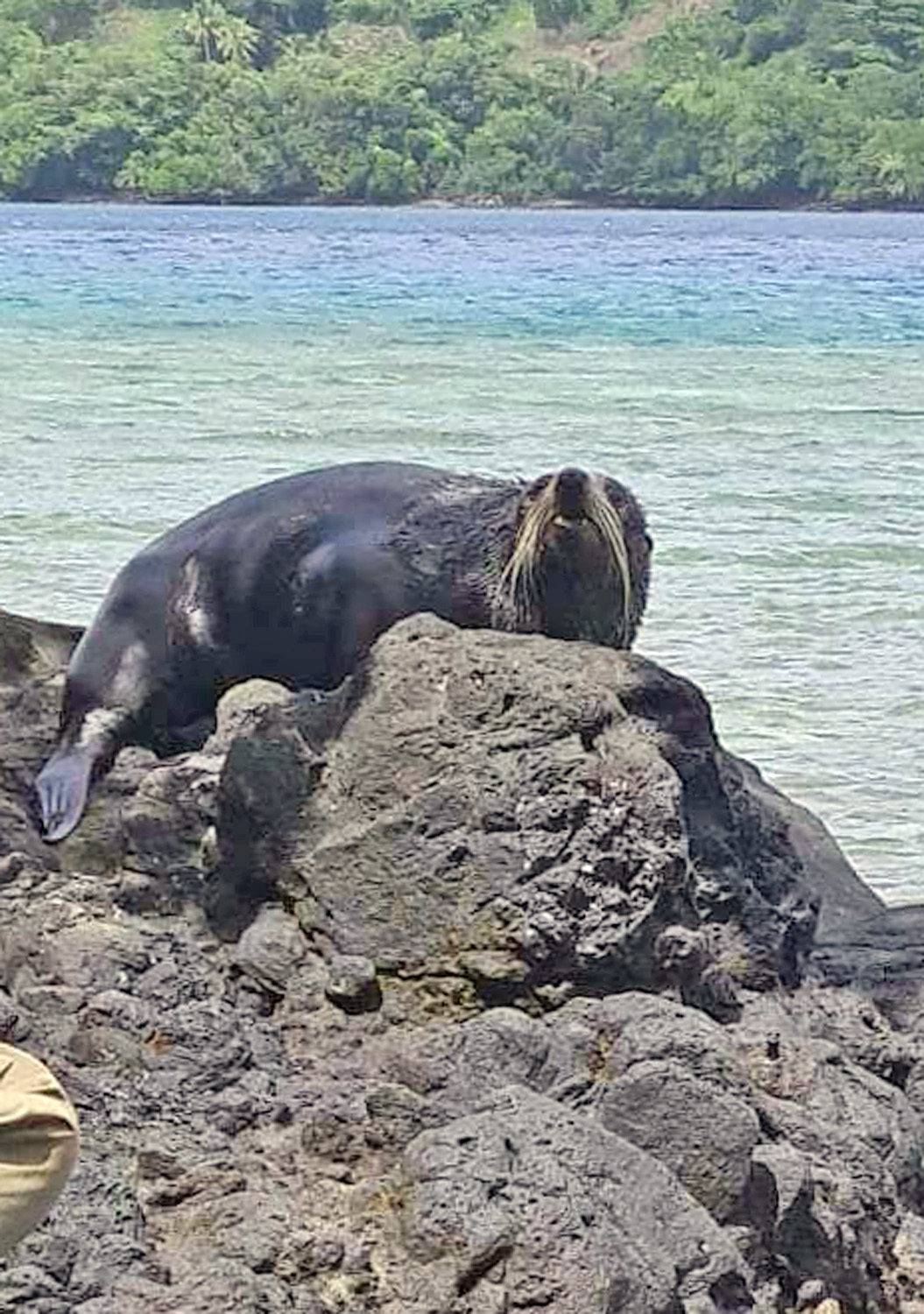
Marine scientists at the Massey University in New Zealand have identified the sea mammal that surprised Rukua Village in Beqa on Tuesday (August 31) as the Australasian fur seal.
It also commonly known as the South Australian fur seal, New Zealand fur seal, Antipodean fur seal, or long-nosed fur seal (Arctocephalus forsteri).
Scientists say it is a species of fur seal found mainly around Southern Australia and New Zealand.
Experts have also confirmed that the sighted seal is a sub adult male identified as a New Zealand fur seal.
In a Government statement, the Ministry of Fisheries advised villagers in Beqa to refrain from harming the mammal.
Director of Fisheries Neomai Ravitu says experts have suggested that fur seals are known to go astray and end up in far-fetched locations for various reasons.
“It could have been swept in by currents as they sometimes like to explore and end up in strange places as they’re also a little adventurous,” Ms Ravitu was quoted saying in the statement.
“It is recommended that we have a ‘hands-off’ approach to seals. They are capable and resilient and given time and space, they usually find their way home.”
Experts have further recommended that people keep 20 metres away from seals and not to get between them and the sea.
Beqa Lagoon Initiative under the Pacific Blue Foundation project manager Sefano Katz has advised islanders not to feed the seal because they can become reliant on humans for food.
“Seals are wild animals and will defend themselves if they feel threatened. Adult seals can move surprisingly quickly on land. While they can look harmless, seals can inflict serious injuries to dogs or people and can carry infectious diseases,” Mr Katz said in the statement.
About this species:
- It can “porpoise” out of the water when travelling quickly at sea
- They can dive deeper and longer than any other fur seal
- Females can dive for about 9 minutes and to a depth of about 312 metres, and can dive deeper and longer in autumn and winter
- Males can dive for about 15 minutes to a depth of about 380 metres
- On average, the species typically only dives for 1–2 minutes
- When they dive for food, they dive deeper during the day but shallower at night, because during the day their prey typically migrates to deeper depths and migrates back up during the night
- Their diet includes cephalopods, fish, and birds
- Octopus and arrow squid make up most of their cephalopod diet
- Individuals located near their Southern range limit have been known to eat penguins as part of their diet
- Seals are very good swimmers and weaned pups will sometimes travel great distances
- On land, seals have been found in unusual places such as backyards, drains and streets
- Despite these odd appearances, seals are best left alone with no human intervention.
Source: Ministry of Fisheries