
The destruction of our forest threatens the existence of innumerable species and risks livelihoods of people like you and me. And not only will people feel the full brunt of climate change experienced by many small island nations today, but humanity will also lose its link with nature.
To commemorate this year’s International Day of Forests, several celebrations were organised in around the country with the theme “Healthy Forests for Healthy People”.
One of the plusses of the day is that it opened up the opportunity for young Fijians to learn about the significance of forest in our day to day lives. According to World Wild Fund for Nature (WWF) over one billion people live in and around forests and depend on them for food, shelter, medicines and fuel.
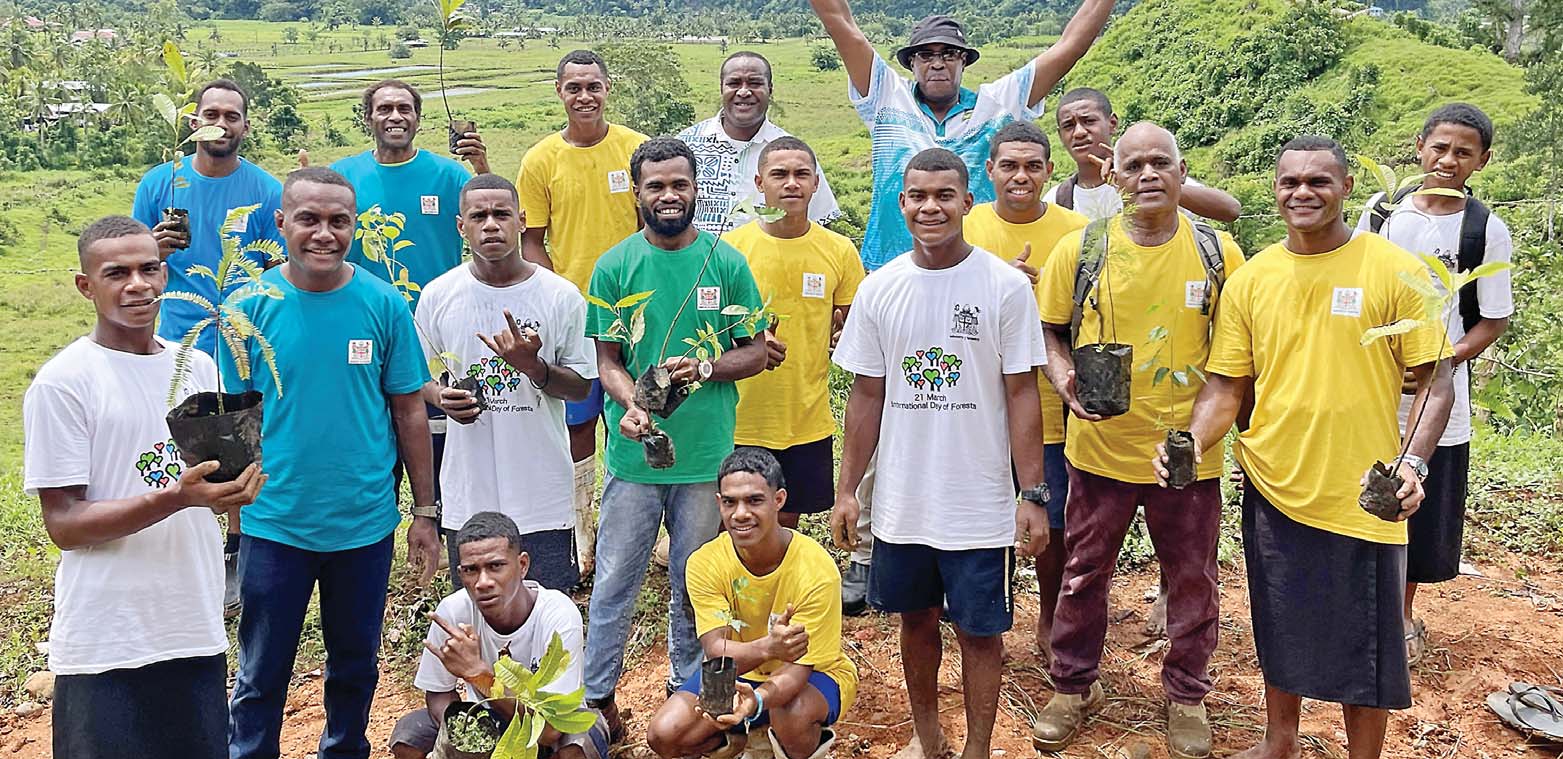
To mark IDF, children from various schools in the central division, stakeholders and Ministry of Fisheries and Forestry staff members participated in a tree planting activity, targeted at “restoring humans’ broken link with nature”.
Conservation International Pacific region senior director Susana Waqainabete-Tuisese, who has a wealth of knowledge on conservation, was the chief guest at the IDF celebration held at the Navuso Agricultural Technical Institute in Naitasiri.
Mrs Waqainabete-Tuisese said Fijians needed to encourage their own comnities to replant forests that have been depleted and degraded. “Fiji is lucky the Ministry of Forestry has been committed to replant and put back the deforested and degraded forest we have,” she said.
“It is important to raise awareness on the fact that we need to continue that process of planting because if we stop planting the next generation will suffer. “If we stop planting today and continue to harvest, siltation levels will continue to go up, our river systems will continue to clog up and we will need to do a lot more dredging and a lot of repairs.”
She says if Fiji maintains a healthy forest that is self-sustaining then the community that lives in and around those forests will not only benefit but everyone else downstream.
“Yesterday (March 20) the Intergovernmental Panel on Climate Change released a report that we are doomed. The world has gone beyond the 1.5 per cent that we all said we should not go over and that the impact of climate change is faster,” she said.
“In fact for us in the Pacific, we are feeling it already and we see the change in climate. “In terms of mitigation we are a small land mass and we cannot contribute that much to the mitigation but we can prepare to adapt.”
One way in which Fijians were adapting was by replanting depleted forests. “Today is important as it signifies that in order to adapt we are planting trees and we are recognising the values of trees in the forest,” she said.
“It gives us traditional medicines, clean water, clean air and the protection of various species from the freshwater system that we all enjoy.” Students who were part of the IDF participated in an oratory and a poster competition. This allowed them to share their thoughts on forests and educate fellow peers on their importance.
Lelean Memorial School Year 11 student, David Whippy said forest destruction was unhealthy. “Nearly one in three outbreaks of emerging infectious disease were linked to landuse change such as deforestation,” Whippy quoted a Food Agriculture Organization (FAO) 2022 report as saying.
He said forest loss and degradation emitted large quantities of climatewarming gases and at least eight per cent of forest plants and five per cent of forest animals were at extreme risk of extinction.
“A healthy environment requires stakeholder engagement, especially at the local level so that communities can better govern and manage the land on which their lives depend,” he said. “Community empowerment helps advance local solutions and promotes participation in ecosystem restoration.
“There is an opportunity to rebuild forest landscapes that are equitable and productive and that avert the risks of ecosystems posed by forest destruction.” Dilkusha Methodist High School Year 13 student, Antra Deo said forest and trees played a significant role in the provision of air, water, food, shelter and medicine.
“All our cities, towns, villages, schools and government stations are supplied with water that is sourced from our forests,” she said.
“Our agricultural plains that supply our markets with food are irrigated by rivers that flows out of forests. “Basically forests and trees are the backbone that provides support to the economy and national development too.”
Furthermore, forests harbour most of earth’s terrestrial biodiversity according to the FAO UN environment programme 2020 brief “The State of the World’s Forests” . According to the brief, forests provided habitats for 80 per cent of amphibian species, 75 per cent of bird species and 68 per cent of mammal species.
Forests also covered 31 per cent of the global land area but are not equally distributed around the globe. FAO statistics show that the world’s total forest area covers 4.06 billion hectares.

