
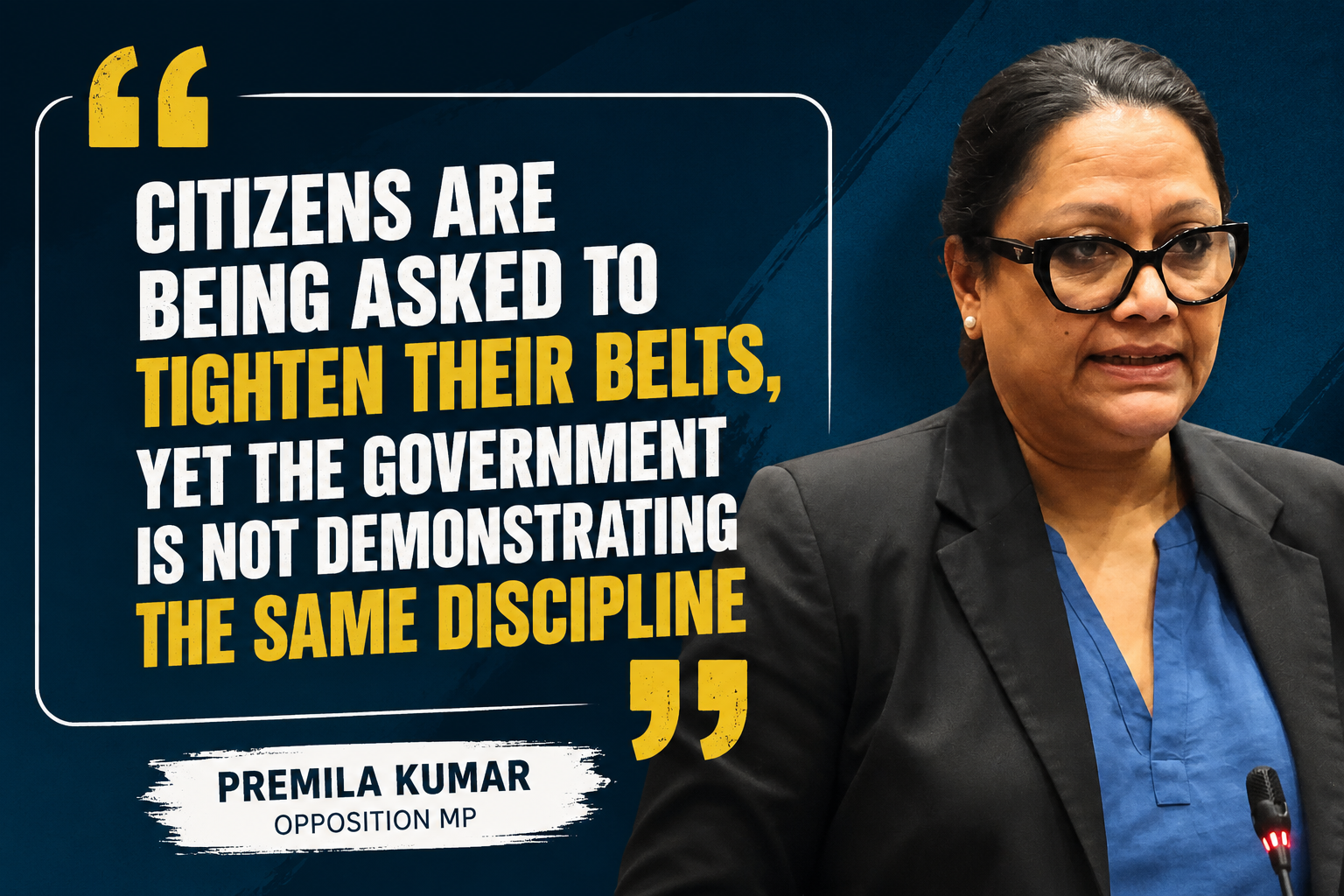
Opposition MP Premila Kumar has called on the Government to do more to shield Fijians from the worsening global fuel crisis, arguing that years of record revenue collection have not translated into stronger fiscal resilience.
In a statement issued today, Kumar said rising fuel prices are already increasing transport costs, food prices, freight charges and the overall cost of living, warning that the situation could deteriorate further if global fuel market pressures continue.
She said Fiji has entered the crisis with limited fiscal flexibility despite what she described as record levels of government revenue collected over the past three and a half years.
Kumar noted that since the Coalition Government took office, VAT was increased from 9 percent to 15 percent before later being reduced to 12.5 percent, while corporate tax rose from 20 percent to 25 percent. She said a range of duties, fees and charges had also been increased, contributing to government revenue collections exceeding $4 billion in the 2024–2025 financial year.
However, Kumar argued that public debt had continued to rise despite the higher revenue intake.
She claimed government debt had increased from approximately $9.1 billion to around $11 billion by April 2026, while spending on capital projects and productive investments had declined.
“The government is expected to borrow more than $2 billion by the end of July 2026. Yet there is little evidence of major new infrastructure projects, hospitals, roads, markets or other transformative developments that would justify borrowing on such a scale,” Kumar said.
She said more prudent management of public finances would have given Fiji greater capacity to respond to external shocks such as the current fuel crisis.
Kumar also highlighted what she described as growing expenditure pressures, including an annual wage bill of approximately $1.3 billion for civil service salaries and allowances and debt servicing costs of around $534 million a year.
She further criticised the size of the executive, describing the current administration as one of the largest in Fiji’s history with 35 Ministers and Assistant Ministers, while also questioning overseas travel expenditure by government officials.
“Citizens are being asked to tighten their belts, yet the government is not demonstrating the same discipline,” she said.
Kumar said while the Government had announced travel restrictions and cost-cutting measures, more decisive action was needed to provide relief to households and businesses struggling with rising fuel costs.
Among the measures she proposed were temporary reductions in fuel taxes, the removal or reduction of VAT on fuel, the introduction of a fuel price stabilisation mechanism, cuts to non-essential government spending, a review of Fiji’s overseas missions, suspension of taxpayer funding for political parties, targeted support for micro, small and medium enterprises, and temporary relief for market vendors and small traders.
“The fuel crisis requires decisive leadership and practical action. It is not enough for the government to merely manage the consequences while ordinary Fijians bear the burden,” Kumar said.
She said the Government must demonstrate leadership by reducing wasteful expenditure and providing meaningful relief to families and businesses facing mounting cost-of-living pressures.

