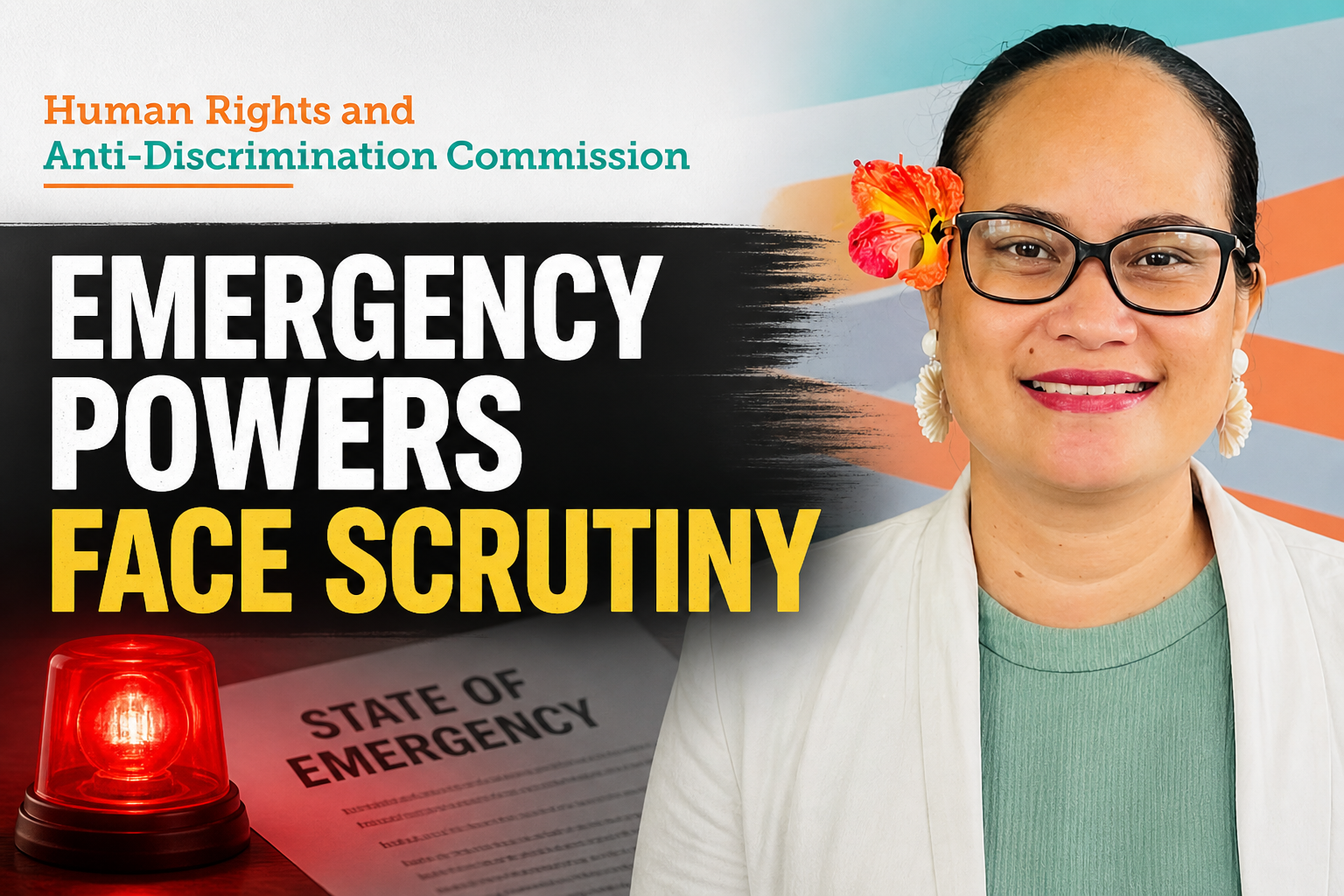
The Fiji Human Rights and Anti-Discrimination Commission has raised caution over proposals to declare a State of Emergency (SOE) to tackle the country’s escalating illicit drug problem.
Director Loukinikini Lewaravu said the Commission acknowledged both public concern and Government efforts to address the issue.
“The Commission shares the concerns of the public and the Government on the very grave social, health, safety and security impacts of illicit drugs on individuals, families and communities,” she said.
Ms Lewaravu noted that the impact was particularly severe on young people, children and vulnerable groups, including those living with drug dependence or mental health challenges.
She said the Commission was also aware of ongoing joint operations by the Republic of Fiji Military Forces and the Fiji Police Force aimed at disrupting drug networks.
“The Commission welcomes their public commitment that all actions will be carried out in accordance with the Constitution, the rule of law, and human rights standards,” she said.
However, she stressed that any intensified enforcement or emergency powers must not compromise fundamental rights.
“These operations must remain consistent with Fiji’s human rights obligations, at all times,” Ms Lewaravu said.
The Commission confirmed it was closely monitoring developments, particularly around the roles of the military and police, the use of force, and the legality of arrests and detentions.
“There must be no use of excessive force. Any use of force must be necessary, proportionate and in accordance with applicable legal requirements,” she said.
She added that accountability mechanisms, including independent oversight and judicial review, must remain active to allow for complaints and redress where violations occur.
The Commission also highlighted the need to maintain proper detention conditions and ensure humane treatment during operations.
Ms Lewaravu warned that enforcement strategies could disproportionately affect vulnerable communities if not carefully implemented.
“Authorities must ensure that these efforts do not lead to discrimination, racial, gender or social profiling, or the stigmatisation of any individual or group,” she said.