
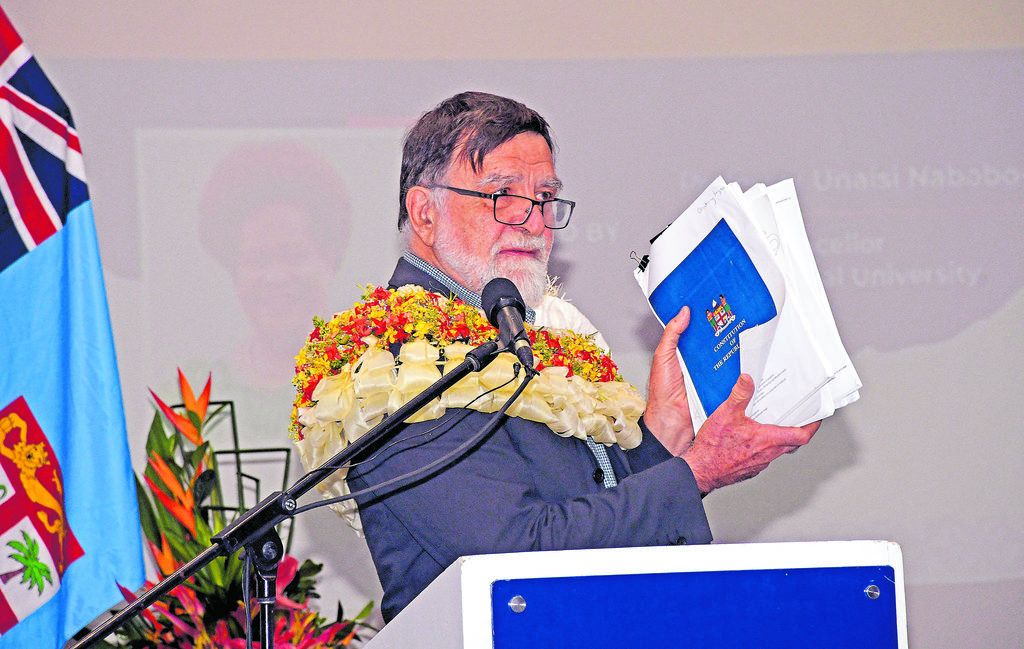
As we enter the first month of the new year of 2025, the good and global and democratic fight for free speech and for redress of grievances without fear of retaliation against the evil monsters of big government and big business and big finance is more important than ever. This global fight is ongoing, and is far from over. Moreover, the end result of outright socialist values (equality, stability, justice, peace, and compassion) cannot be seen as a given.
But let’s not kid ourselves here. The fight for redress of grievances and the fight to redress the grievous wrongs suffered by the people of Fiji and suffered under the Bainimarama government will surely be long and hard, but it is one on which people’s lives and a country’s fortunes depend, and there is no task more urgent and more important for us right now than this.
So, this year, and beyond, it is time for redress.
It is indeed time for everyone, male and female, rich and poor, young and old, famous and unsung, indigenous and non-indigenous, to sign up to a concerted and successful and organised campaign to redress the grievances of Fiji’s population and to discredit the previous government and to persuade the present government to reject and abolish the 2013 Constitution, which is an instrument of thievery, abuse, retaliation, and repression. Systems and petitions for redress of grievances to the government to abolish the Constitution of 2013 and dissolve the FijiFirst party and its officials, and to overturn laws and rules and Acts promulgated during the last 16 years of the previous Bainimarama administration and even more importantly, in fact most importantly, to overturn the retrospective elements of the unconstitutional rule, should be open, accessible, transparent, inclusive, simple and speedy.
The agenda of the Bainimarama government was in almost every conceivable way the opposite of order, freedom, equality, justice, and security. This incredible culture of cowardly cruelty and impunity and callousness screams for redress and real reform and for accountability and solutions. These grievances are long, legitimate, and stark, and are also politically and pragmatically viable.
We need to think deeply about what inclusion, openness, engagement, collaboration and authenticity in the global landscape really mean, and how best to create socio-political environments that foster it.
If we want to see real meaningful change, and if we want to collectively make the country function, we need to, first and foremost, abolish the 2013 Constitution, which is an instrument of oppression and control and persecution, and replace it with a new and modern constitution. We also need to look at fundamental reforms and greater transparency across all branches of government. Therefore, there is urgent need to rectify the distortions of history and politics and the grave violations of human rights under Bainimarama. It was an orgy of nonstop belligerence and aggression and injustice and atrocity against the people of Fiji. And the sooner that revolting, arrogant, ignorant, corrupt and incompetent system of theirs is consigned to the dustbin of history, the better.
Press freedom and freedom of expression and speech are inalienable human rights, as defined in the Universal Declaration of Human Rights, and the Rabuka government, of course, is to be commended for restoring and preserving this inalienable right, which had been severely suppressed to the point of exhaustion if not extinction by Mr Bainimarama and then deep-sixed by Mr Sayed- Khaiyum. “If freedom of speech is taken away,” as General Washington rightly said in 1783 to his officers, “then dumb and silent we may be led, like sheep to the slaughter”.
The reasons for such censorship and suppression vary widely and wildly, but the end result and goal remains stubbornly the same. It is the complete annihilation, as Benjamin Franklin rightly observed, of the principal pillar of a free government. Indeed, when this support is taken away, the constitution of a free society is dissolved, and tyranny is erected on its ruins. Prophetic words indeed. We have witnessed this firsthand in our own country. I do think overturning the media decree is just a start, and it is a very good start. But more needs to be done, and the Rabuka government will have to do more to accelerate progress and deliver meaningful reform and change and improve quality, safety, timeliness, and efficiency.
Let me highlight a few of these grievances here. The FNPF board and management team continue to remain silent and continue to be in denial about the illegal reductions in contribution payments. As if that isn’t bad enough. We are being told, day in, day out, an unsatisfactory and unacceptable story that there are major hurdles that must be overcome before the 2013 Constitution can be abrogated, abolished, and annulled. This false narrative belongs in the dustbin of history. I don’t buy that line at all. And no one should buy into these deceptive and false and misleading claims. This claim strikes me as absolutely incorrect and as a deepity and the height of stupidity.
Bainimarama’s Fiji literally copied and pasted the 1997 constitution, but the results were not the same. Indeed, it was never meant to be. Meli Bogileka hits the proverbial nail on the head when he describes the 2013 Constitution as “mostly a cut and paste of the 1997 constitution with a lot of changes through enforced “decrees” to suit Bainimarama and Sayed-Khaiyum’s lust for power”. Truer words, spoken by a teller of truths, were never spoken.
The 2013 Constitution was and is a total disaster. It was (and still is) illegal, and hence is null and void and unenforceable. It is a barbaric Bainimarama-era law, ruling the country through force or the threat of force, and has no place in Fiji society. But it belongs in the trash bin of history.
The duo considered themselves to be infallible and omnipotent, glorifying themselves at the expense of the citizenry, and under the 2013 Constitution had a right to exercise absolute power and demand abject self-abasing obedience. Let us remember that the primary purpose of any constitution is to limit the power of government over the community and the individual rather than to concentrate even more power in the hands of the government and the governing party and in the hands of the politicians themselves. Moreover, it imposes duties and obligations upon governments and politicians to promote the well-being of individuals and communities.
In addition, great anomaly exists in choosing the Prime Minister, and it just strikes me as the height of foolishness, when in fact the inverse is true, and the prime minister must be appointed or chosen by the winning party, and is not verified or validated by a parliamentary voting scheme in which members of parliament vote for the best ‘candidate’. In other words, politicians sitting in parliament rather than voters and the party winning power choose the prime minister.
The supporters of Mr Bainimarama and Mr Sayed-Khaiyum, having opened everybody’s eyes to the essential corruption of the illegal regime, fostered and promoted the development of ever greater anomalies and deviations and offenses and schemes. Of course, befitting the pathetic state of Bainimarama’s Fiji, the executive branch’s excess, stupidity, greed and self-indulgence had open, warm, and good company from Parliament and the courts.
The current state of society is a wake-up call to all those who care about this nation’s founding promise of “equal protection” of the laws. The problem is that the money needed to fix the system and the infrastructure and to restore health, life, normalcy, safety, education and economic well-being to the people of Fiji who have endured brutal repression is not likely to be found simply by increasing significantly existing budgets, given recent information on the pathetic state of the country’s infrastructure, land use, education system, medical services and facilities, and water and power systems.
Not surprisingly, diseases and sickness are rife, and availability and accessibility and affordability of medicines and other supplies remains inadequate and problematic. Availability and accessibility and affordability are preconditions for universal access, but low availability and poor affordability of essential medicines as well as limited access to modern medicine and modern health care and modern health facilities are issues that deny this inalienable right to health care and to a better future.
Fiji’s health, education and welfare systems are in a shameful state of collapse, and many of our citizens dream of escaping overseas, in particular to advanced industrial Anglo countries, or the “Core Anglosphere” (Australia, Canada, New Zealand, the United Kingdom, and the United States).
The brain drain continues to destabilise our country and public health and education systems and wreck our economy. Meanwhile, the country continues to bleed and suffer, and continues to suffer the effects of brain drain. This “brain drain” will unfortunately continue and intensify in the coming years, and it will continue to negatively affect the country and the future of the people of this country.
The impact of the Bainimarama government’s actions in undermining growth and development and reinforcing poverty and deprivation and eroding health, education and social protection systems is enormous and cannot be underestimated and cannot be understated. Indeed, the impact of the previous government’s actions, the good, the bad and the ugly, has deeply resonated socially, culturally, politically, personally, economically, and militarily. This is the pathetic state of affairs in Fiji as we approach a new astrological age.
So, just how bad will the effects of Bainimarama-era corruption, impunity, poverty, depravation, exploitation, nepotism, cliquism, profiteering, and bad government be? One thing is for sure. The effects will be felt for years and years to come.
The education system is in a state of freefall collapse and utter confusion, and, God forbid it will result in mediocre training and I dread to think what will happen in the next 10 to 15 years, and of the impact it will have on the people and children of Fiji. People in this situation are easy prey for bullies, exploiters and rule-makers, and for abuse and theft and exploitation, and are unable to assert their rights as equal citizens under the law and with democratic rights. Disunited and disparate and ill-disciplined and fissured with mutual suspicion and animosity and distrust, we may become easy prey for demagogues and dictators like Mr Bainimarama and Mr Sayed-Khaiyum, and even to a handful of cowardly invaders and colonialists.
Dictators like Mr Bainimarama work on absolute and unscrutinised and unfettered power, but the aspirations of the people are not, and were never, compatible with dictatorship and division and personal rule. Most significantly, a government intent on maintaining absolute power will, as the New York Times rightly points out, eventually generate too much antipathy to endure. As they say, absolute power corrupts absolutely. Pragmatic and amiable and collaborative interests will win out over ideological and political and epistemological differences.
The reality, however, is that Fiji is dumbing down, and highly qualified and talented and motivated people cannot be found in many fields and professions for love nor money in the country.
There is no question that Fiji’s drug problem is out of control, and drug cartels, moreover, are using Fiji to import drugs into lucrative markets, as the ABC (Australian Broadcasting Corporation) noted recently. But even more disturbing is the fact that the drug problem, as the ABC observed, has now spread into the Fiji communities. This alone should raise red flags. But it’s important to remember that this did not happen overnight in a vacuum. In fact, it has taken more than ten years. And not surprisingly, it all happened right under the noses of the Bainimarama government. FICAC (the main investigative body of the country) has been hampered by “dysfunctional” staff and management and shortages of technically competent staff and of funds. I am very concerned that FICAC will get dumbed down and investigation, development, enterprise, innovation, and progress lost.
The biggest culprits are still free. As is often said, justice delayed is justice denied, and people are waiting and waiting and waiting and waiting. And wondering why? If, as the adage goes, justice delayed is justice denied, then Fiji’s investigative agency can be said to customarily live in a state of denial and delusion and collusion and delay and defiance. The public is right to be alarmed and is right to expect better. Our public has the right to expect better vigilance and monitoring and response and less complacency from the investigative agency.
A question that must also be asked is this: Why, and how, was the FEA sold off, right-under-our-noses, to a foreign entity? The Fiji Electricity Authority is a national asset and must be rescued and protected. It belongs to the people of Fiji. The public demands a full explanation of how and why it was sold. I never understood why it was sold, and it would have made good sense to allow local companies and entities to buy it.
Other issues for immediate investigation and response, of course, include the Walesi case, the massive purchase, which was awarded without tender, of flowers for decoration on the roads (a pet project of Mr Sayed-Khaiyum), and the Navua Hospital construction and tendering costs. The purchases of computers, computer program by inexperienced friends of FijiFirst party and also solar panels and equipment and motor vehicles need to be fully investigated. The list goes on, and on, and on. And we’re only scratching the surface of the iceberg. It should also be pointed out that the FNPF was forced to become a majority shareholder in Aspen Medical, which has been embroiled in a top-level money laundering investigation, as ABC’s Four Corners investigation has revealed. Indeed, as Public Services International noted, the Aspen Medical expose raises serious concerns in Oceania. It’s a complete mistake and it ought to be investigated unravelled and FNPF partnership to be dissolved as it is costing the country a very high cost for such mediocre service. FNPF should concentrate on what it is supposed to do restore the illegal cut in pension to members in 2012.
Let Bainimarama’s Fiji’s fate serve as a lesson, learned at an exorbitant cost, that neglect of the nation’s infrastructure, schools, education systems and health-care systems, all of which are stretched to breaking point, and the unequal distribution of wealth and power for the benefit of the privileged few at the expense of the citizens of Fiji, will not and will never end well.
We seriously need to reflect and stimulate the rich diversity of Fiji and learn from one another, and acknowledge different perspectives. 2025 has the potential to be a landmark year for Fiji. We must do it right, and we must do it now, before it is too late. The voice of the People is the voice of God! And it cannot be ignored or wished away. It is the voice of change and reason, the voice of compassion and respect, and the Voice of the Future. Or of alternate futures. It is, indeed, the voice of Fiji at its best. A happy new year indeed.
Siliva Roko (left) with fellow Nasautoka villagers , happy after winning 32 inch TV and Walesi set up box at Naveicovatu Village in Wainibuka. Picture: JONA KONATACI

One of the nicest qualities of bougainvillea is the variety of colours of the flowers.
Picture: FLORA & FATUNA PAGE
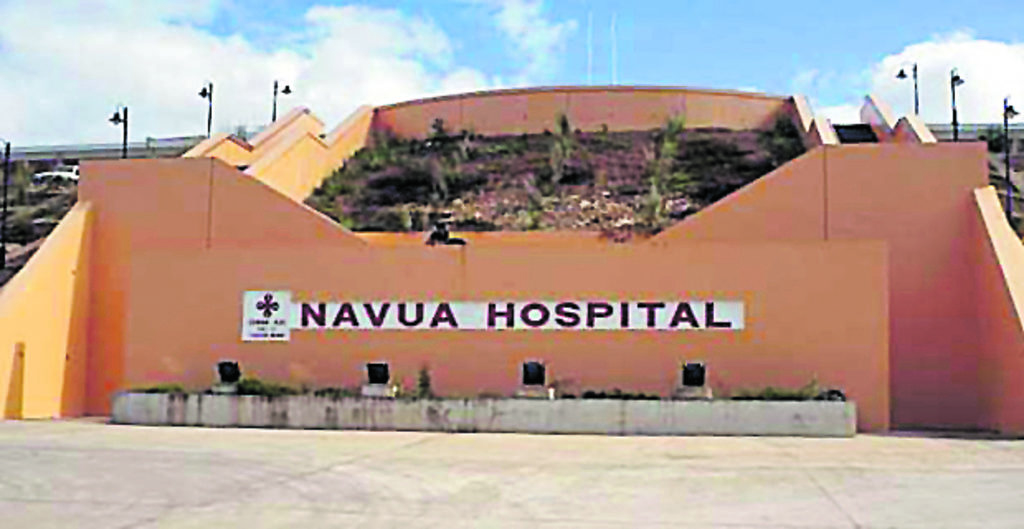
Navua Hospital. Picture: FILE
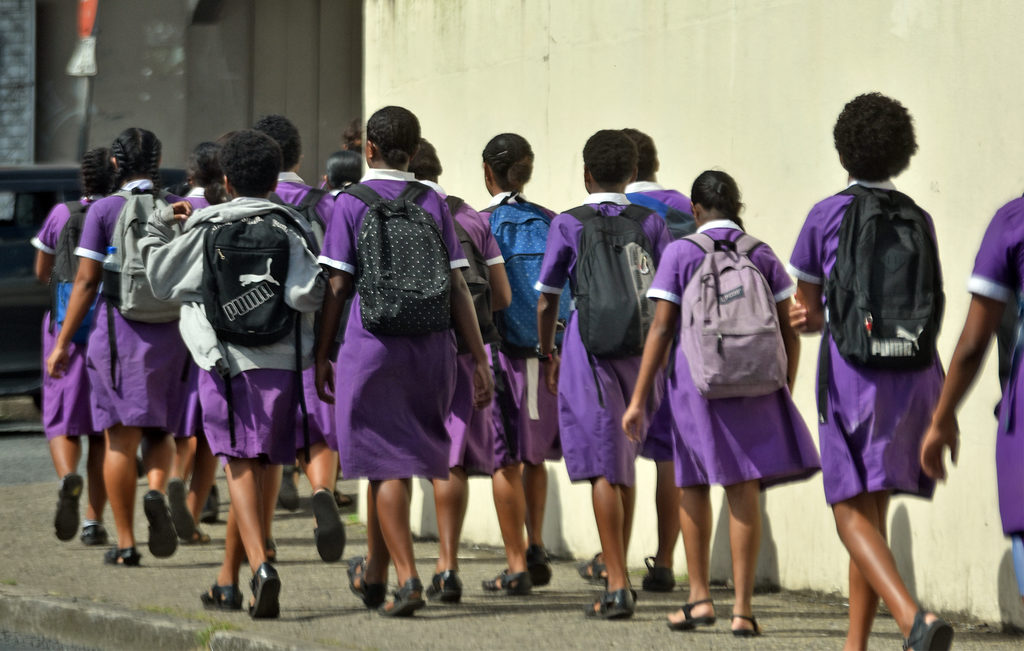
School students. Picture: FILE
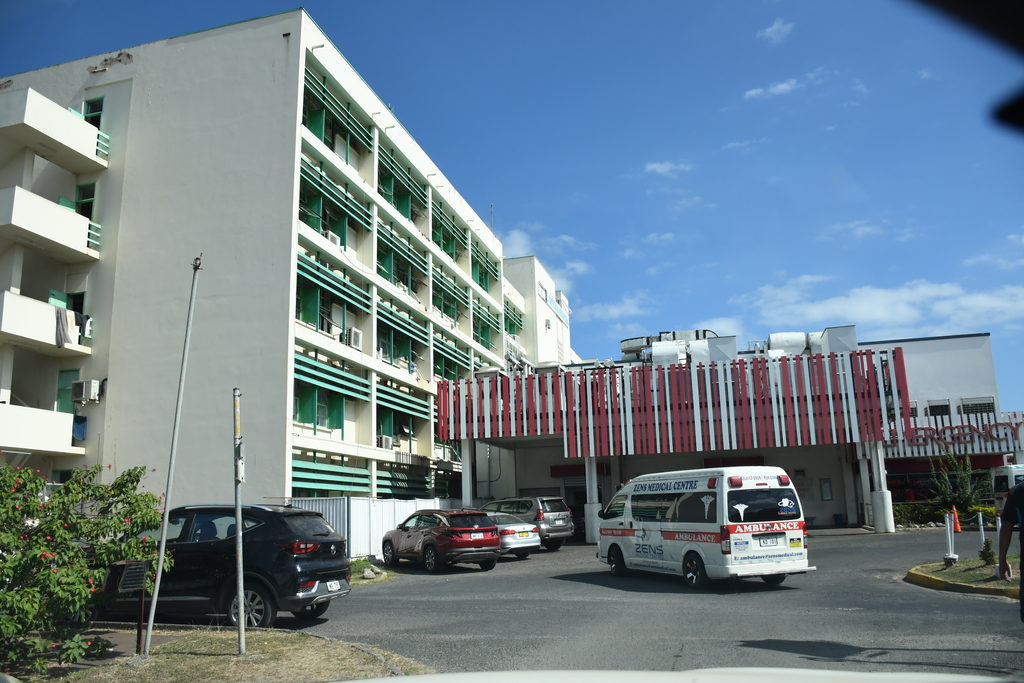
A view of the Aspe Medical Lautoka Hospital. Picture: REINAL CHAND
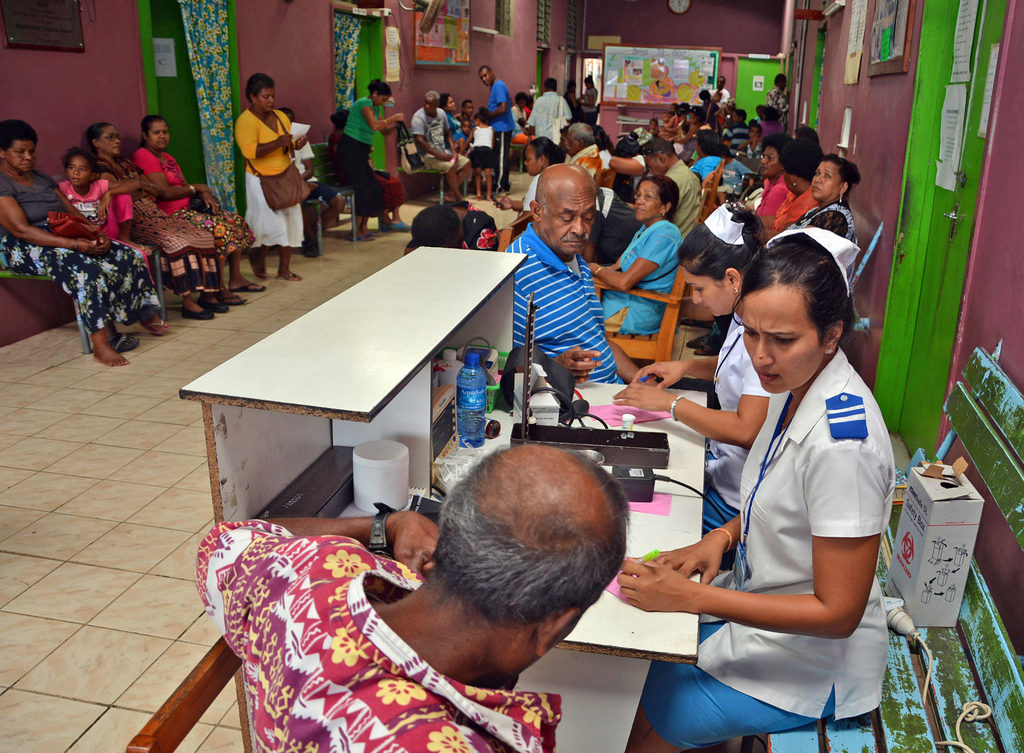
Nurses attending to patients at the Makoi Health Centre. Picture: FILE
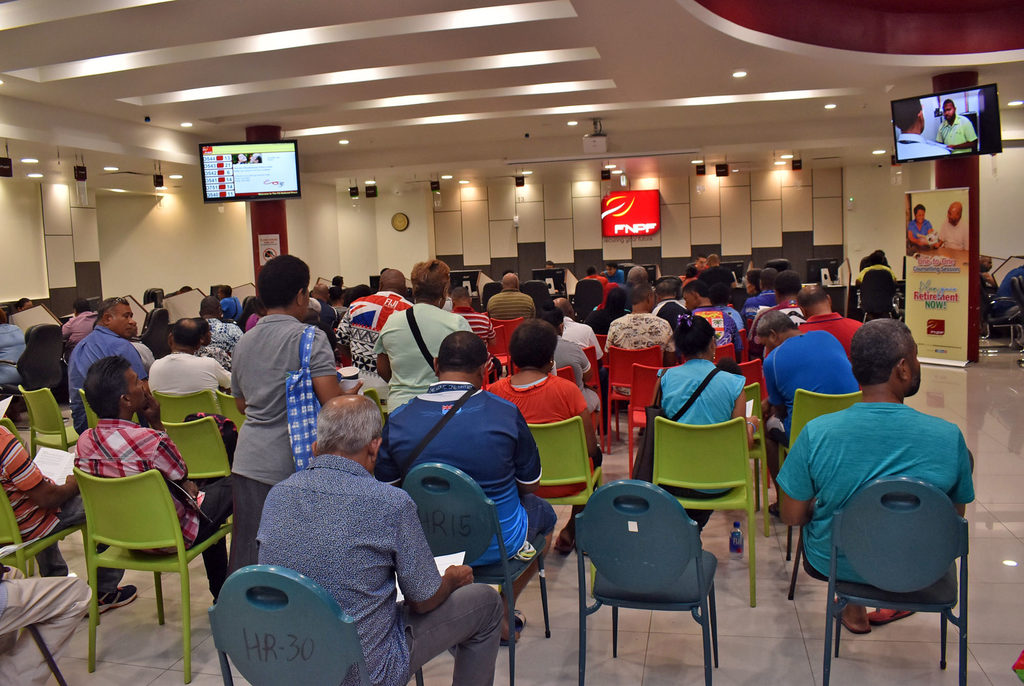
Customers waiting to be served at the FNPF building in Suva. Picture: FILE

Motor vehicles queue up in one of the busy streets in Suva.
Picture: JONACANI LALAKOBAU

