
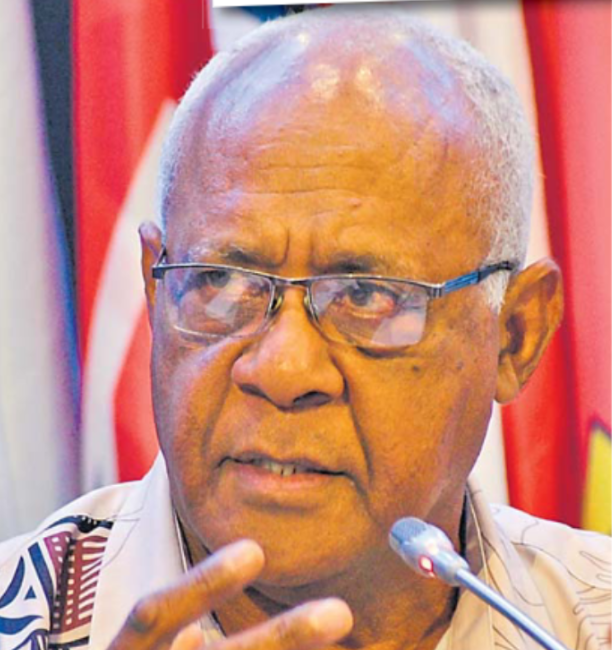
THE nation’s drug crisis is partly the result of the Fijian society allowing the social structures that once held families and villages together to weaken.
Great Council of Chiefs chair Ratu Viliame Seruvakula told the “Pacific Peace and Security Dialogue” that traditional leaders had reflected on the situation and acknowledged their own responsibility for the challenges now facing communities.
“It is of great concern by government,” Ratu Seruvakula said.
“Concerns about crime, particularly drug-related crime and HIV issues, have featured prominently in discussions since the Great Council of Chiefs was reconvened.”
Ratu Seruvakula said Fiji’s traditional social framework, built around families, sub-clans and land-owning units, had historically provided stability and accountability within communities.
“In all of those structures, they are held together by values.”
He said those foundations had weakened over time as leaders assumed the structures would continue to function without active support.
“We took our eyes off the ball some time ago.”
Ratu Seruvakula said the effects of globalisation and the impact of the COVID-19 pandemic placed significant pressure on traditional systems, exposing underlying stresses within communities. He said the emergence of a major drug problem in the country had reinforced the need for traditional leaders to take a more active role in strengthening community structures.
“The families are the foundation in the fight for what we try to fix here.”
Ratu Seruvakula said traditional leadership believed the most effective way forward was to reform and strengthen those structures to better support families and communities.
“The only way from where we sit, to believe the country effectively in moving this forward, is to reform that structure.”

