
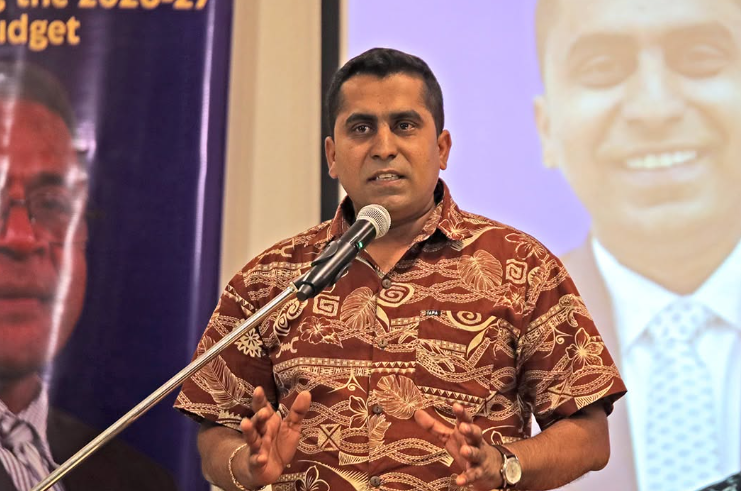
The Permanent Secretary for Finance, Shiri Gounder, has warned that Fiji should stop believing the sugar industry can be restored to its former glory, saying it could cost taxpayers more than $1 billion with little prospect of success.
Speaking at the Dialogue Fiji National Budget Forum in Nadi last night, Gounder said the country needed to have an honest conversation about the industry’s future and the continued use of public funds to keep it afloat.
“We should stop fooling ourselves about reviving this industry because we can’t. It’s going to cost a billion dollars if we try, and if we realise after spending a billion dollars that we can’t revive the industry, it’s taxpayer money down the drain,” he said.
Gounder said, as the custodian of taxpayer funds, the Ministry of Finance had a responsibility to assess whether continued investment in the sugar industry represented the best use of public money.
“I know this is a very, very sensitive issue, and I’ll need to very carefully choose my words. But as the Permanent Secretary for Finance, leading a ministry that is the custodian of taxpayer funds, I think it’s time for us to rethink the sugar industry.”
He said the financial realities facing cane farmers also needed to be acknowledged, arguing that many growers were producing such low volumes that the returns were no longer attractive.
“Nobody is interested and should not be interested in sugar farming because there’s no returns. I think we need a frank discussion on this.”
His comments came in response to remarks by Fiji Sugar Corporation Chief Executive Officer Bhan Singh, who said the corporation was considering major operational restructuring, including the possibility of replacing Viti Levu’s two existing sugar mills with a single new mill.
Gounder questioned how such a project could be funded, given FSC’s financial position.
“We are running an insolvent FSC, which has taken significant amounts of taxpayers’ money in the form of debt guarantees.”
He said Government had already written off $200 million in FSC debt and continued to repay other loans on the corporation’s behalf, including borrowings from the Exim Bank of India and the Fiji National Provident Fund after FSC defaulted.
“Should we build a new mill? Where’s the money to build the new mill? FSC, if it’s an insolvent entity, does not have the money to build the mill. Should the taxpayers put in more money to build the mill for an industry that’s dying a natural death? I don’t think so.”
While acknowledging the industry’s historical importance and the livelihoods it continues to support, Gounder stressed that Government could not ignore competing priorities.
He said around $100 million is already allocated each year to support cane prices, in addition to other subsidies provided to the industry.
“When we are allocating funds, we have to decide how much should we provide for the sugar industry, how much should we provide for yaqona, how much should we provide for dalo. We need to put that money into cocoa.”
Gounder said billions of dollars that could be required to revive the sugar industry would instead be needed to improve hospitals, roads, drainage systems and wastewater infrastructure.
“What do we need that billions for? To fix our hospitals, our roads, our wastewater infrastructure, our drainage and every other thing.”
He said the greatest concern should be for cane farmers themselves, many of whom had been given unrealistic expectations about the industry’s future.
“I feel really sorry for the farmers because of the false hopes and false promises that have been given. Unfortunately, they are the ones struggling today because of these false hopes and false promises.”
Gounder said the best path forward was a carefully managed transition that would help farmers diversify into more profitable agricultural activities while gradually reducing dependence on sugar.
“In the interest of the farmers, we need a planned intervention, which means we need to diversify and, at some point in time, exit the industry.”

