
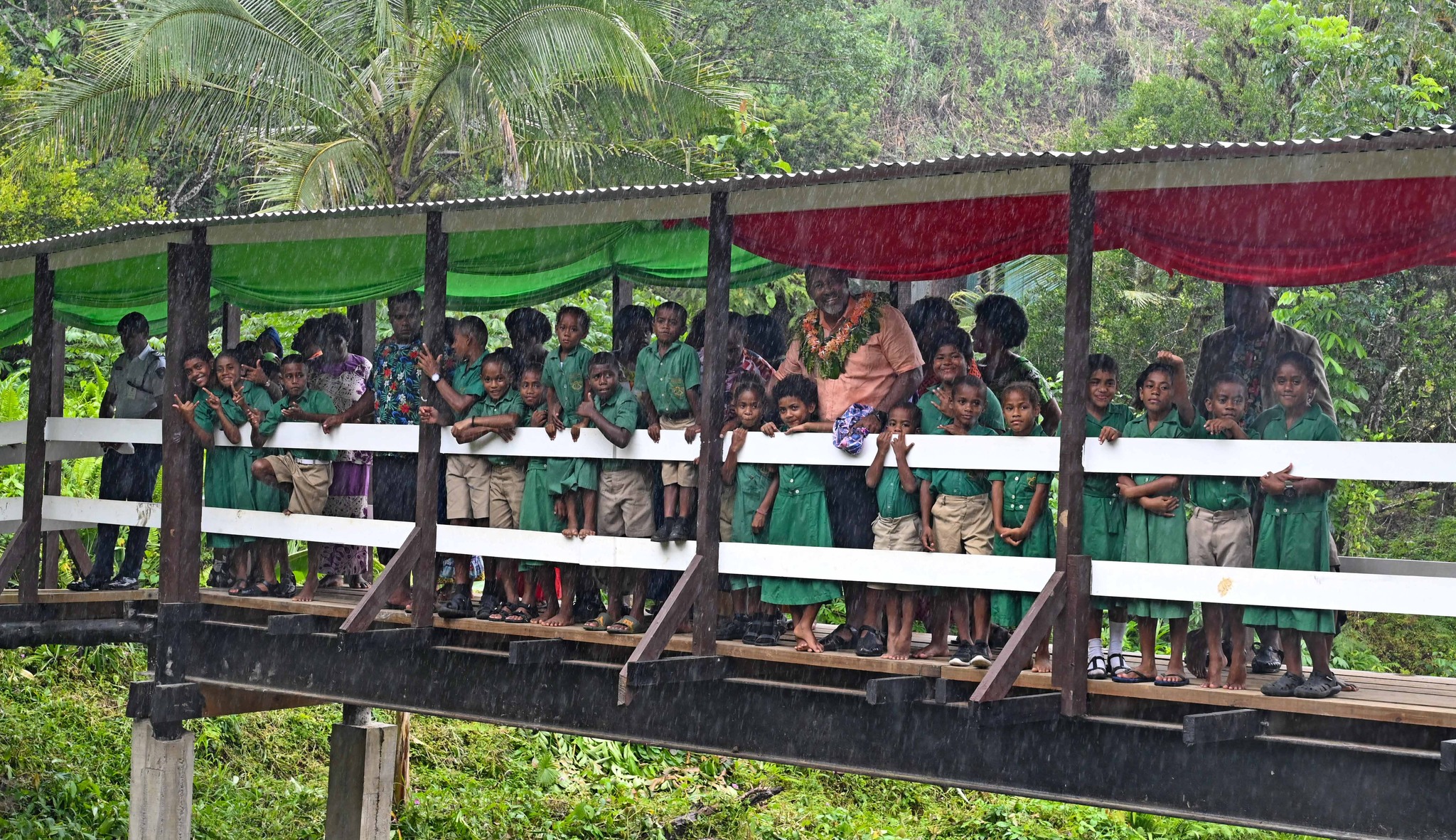
Four completed projects were handed over to the villagers of Wainilotulevu and Nasoqo yesterday by the Minister for Rural and Maritime Development and National Disaster Management, Sakiasi Ditoka.
The projects ranged from footpaths to ecological purification systems as well as sanitary infrastructure which were welcomed by the people of Wainilotulevu and Nasoqo as it was a big progress towards uplifting their livelihoods.
The highlight of the day was the official opening of the cement footpath linking both Wainilotulevu and Nasoqo providing convenient access for children from both villagers that attend Venuqa Primary School.
Mr Ditoka emphasised the positive impact this footpath would have on the daily lives of the villagers, particularly children who previously travelled through heavy mud to reach their school.
“With this project, children will have the opportunity to attend school regularly, and our teachers are pleased to take on the responsibility of educating our youth,” Mr Ditoka said.
Recognising the importance of clean water, Mr Ditoka introduced the Ecological Purification System (EPS) designed to provide safe drinking water to the residents of both villages.
“This initiative is an important move towards ensuring a healthy and sustainable environment for the communities,” he said.
Addressing sanitary concerns, Mr Ditoka emphasised the installation of five flush toilets as a crucial infrastructure of improving village hygiene standards.
He stressed the importance of maintaining these facilities and urged the villagers to develop a village development plan to safeguard their newly commissioned infrastructures.
In addition, Mr Ditoka emphasised the importance of utilizing land resources effectively.
Encouraging villagers to engage in agricultural activities and explore investment opportunities, he highlighted the potential for economic and self-empowerment.
Recognizing the vulnerability of these communities to natural disasters, Mr Ditoka underscored the importance of disaster preparedness and urged villagers to remain vigilant and responsive to early warnings.
Following the official commissioning, Mr Ditoka engaged in talanoa sessions with the villagers, through open dialogue to address their concerns and hopes for future development initiatives.
The commissioning of these projects was a collaborative effort between the Ministry and the local communities, showing the government’s commitment to improving the quality of life for all Fijians, particularly those in rural areas.

