
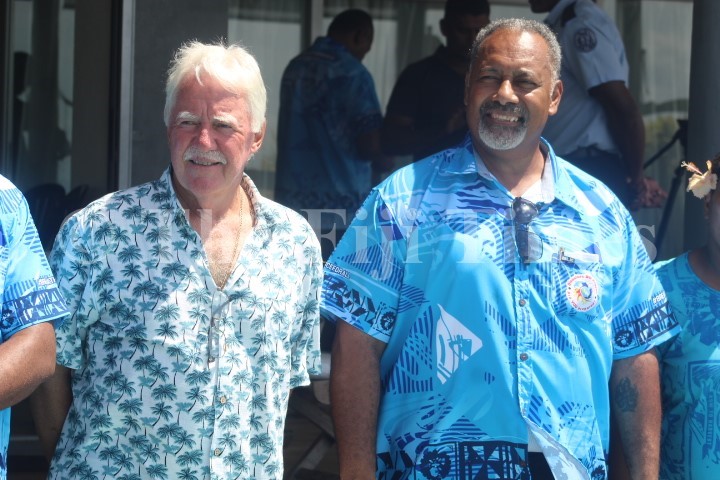
Hydro power project work by Hydro Taveuni Pte Ltd is expected to start before the end of the year.
The company is developing a project to extract renewable hydro energy from clean mountain creeks on Taveuni island and to supply this to residents.
It will finally put power in the hands of those living in the rural areas of Taveuni.
The company was established in 2018 by its Australian parent company Hydro Developments Pty Ltd.
Managing director Dr Philip van der Riet said they have identified world class mini hydro potential on two creeks in Eastern Taveuni unknown to Energy Fiji Ltd or Government.
Limited demand
“There is limited demand in Taveuni itself but significant demand from high-end resorts in islands to the East including Qamea, Laucala and Matagi,” he said. Dr Philip said the project would be carried out on Wainisairi Creek “A catchment fed by a lake and receiving 10 millimetres of rainfall annually while the secondary project identified on Drekeniwailevu Creek on Salialevu Estate in South Taveuni.” While briefing the Minister for Rural, Maritime Development and Disaster Management Sakiasi Ditoka, Dr van der Riet said development lease have been signed with the clan of Matakuro, a sole landowner in the power plant area. “We have completed the topographic survey and drone mapping for the power plant,” he said. “Also, we have signed a grant agreement signed for $US500,000 ($F1.128million) each with Asian Development Bank and New Zealand’s Ministry of Foreign Affairs and Trade for environmental and technical development work. “The technical feasibility study and initial environmental evaluation have been completed.”
Stage one
In August 2022 the company, he said he applied to Fijian Competition and Consumer Commission for conditional licenses under the Electricity Act 2017 to generate and transmit electricity in areas not covered by Energy Fiji Ltd. “This allows stage one of the project to be built without Energy Fiji Limited,” he said. “Stage one would generate 18 gigawatts per hour in a year from a 2500 kilowatts power plant at Lavena, catering for current and expected future demand in an Eastern Taveuni mini grid, and would include the capability for easy addition of stage two.” Dr van der Riet said the company has conducted consultations with landowners along the routes of the transmission lines. “We have received conditional agreement with Asian Development Bank regarding debt financing of project,” he said. “However, we were supposed to get the final consent and easement from landowners along transmission line, also the environmental and social impact assessment carried out which is expected to be carried out from February to July 2024. “We are also yet to conduct the topographic survey and drone mapping for transmission lines with the construction of pilot farm road which is expected to be carried out from March to April 2024.” Stage one of the project, he said, was for the company to provide affordable renewable electricity for the first time to communities, resorts, and industries in Eastern Taveuni, Qamea and other neighbouring islands.
Fuel savings
“This would be an annual saving of 4.5million litres of diesel fuel for Government and avoiding 12,000 tonnes of carbon dioxide emissions while protecting against the electricity cost impacts of sudden fuel price rises due to international instability,” Dr van der Riet said. “It will greatly improve prospects for value-add agro-industries such as coconut oil and drying of taro or kava while also enhancing eco-tourism with expanded access to waterfalls and other key attractions in East Taveuni. “The knock-on effect is more tourists visiting Taveuni, leading to economic growth and more job opportunities.” Dr van der Riet said stage two of the project would be the provision of 7500 kilowatts renewable energy project for the North of Fiji, with long term impact matching that of Monasavu in Viti Levu. This, he added, would bring affordable electricity for the first time to at least 10,000 inhabitants in the north of Fiji that still live without power. Again, a savings of more than 12 million litres of diesel fuel, avoiding 35,000 tonnes of carbon dioxide annually and protecting Vanua Levu against the electricity cost impacts of sudden fuel price rises because of international instability.
Reliable power supply
“Development of a power grid in the North would have great impact on reliability of power supply, especially if larger consumers can inject energy from their backup diesel plants in cases of emergency. “Fibre optic cabling within the transmission system resulting in great improvement in communications and internet speeds.” Dr van der Riet said it would provide road access to Viani Bay, facilitating the development of resorts at a beautiful but scarcely known potential tourism hotspot, close to world famous Rainbow Reef and other attractions including manta ray viewing and Polynesian cultures on Kiowa and Rabi. “It may provide the opportunity of constructing a new jetty at Viani Bay in conjunction with road access, halving ferry travel time between Vanua Levu and Taveuni,” he said. “This will also allow establishment of amenities for divers at Rainbow Reef including a hyperbaric chamber planned at Natuvu Mission should economic power become available.” He said it would also enable the development of a reliable high quality water supply system in the south of Taveuni, replacing existing supplies including a desalination plant and emergency water cartage, both of which are heavily diesel intensive.

