
PART 2
Last week, we shared Vijay Madhavan’s memories of growing up under the gentle strength and discipline of his parents.
Today, we turn to the life of his father, former educator and politician James Madhavan — a man whose journey carried him from the shadows of girmit to the centre of Fiji’s political development.
For Vijay Madhavan, understanding his father’s story means understanding the history that shaped an entire generation.
“My father always reminded us of who we were and where we came from,” Mr Madhavan recalled.
“He wanted us to remember our roots, our culture, and the struggles our grandparents endured.”
Those reminders began long before James Madhavan entered politics — they began in the hard years of girmit.
Roots in Girmit Fiji
Born on September 8, 1913, in Veisari near Lami, James Madhavan grew up in a community still rebuilding itself after the end of indenture. His parents, Dorasami (also known as Vasudewan) and Kalu (sometimes spelt Kallu), had journeyed from India to Fiji as indentured labourers, carrying hope more than possessions.
“Dorasami and Kalu had left India on steamships from Madras, Dorasami on the Sultana in 1906, and Kalu on the Sutlej in 1912, carrying nothing but the hope of a new life and the skills of a generation shaped by indenture.”
The resilience of that generation shaped James’s worldview — a belief in dignity, self–respect and service to others.
Education and early life
Mr Madhavan attended Marist Brothers School in Suva and later the Methodist Mission School in Levuka before training as a teacher at the Davuilevu Training Institute.
It was at Davuilevu that he met Eunice Anamma Pillay, who had been raised at the Dilkusha Girls’ Home after losing her mother during childbirth. Her strength and commitment to service matched his own, and the two married in 1936. Together, they built a life devoted to education, faith and community while raising their 10 children.
“Amma was always called teacher, and Pitaji was Masterji; that was how the community saw them — guides, mentors and protectors.”
A leader in education
By 1939, at just 25 years old, Mr Madhavan was already a school principal.
In 1942, he became the first local principal of All Saints Secondary School in Labasa, Vanua Levu.
He viewed education not simply as academic instruction, but as the training ground for leadership and citizenship, particularly for Indo–Fijian children whose opportunities remained limited under colonial systems.
His work with students and families introduced him to the daily struggles of cane farmers — struggles that would eventually call him into public service.
Entry into public life
In 1947, Mr Madhavan contested the general elections for the Eastern Constituency of Vanua Levu and won. His election gave many Indo–Fijian families a long–awaited voice in an unequal political landscape.
“For the public, who knew him, James Madhavan was a hardworking public servant who always looked out for them.”
He became known for helping farmers draft letters, navigate bureaucracy and seek justice within systems that often overlooked them. For many, he was a mentor as much as a politician.
The 1960 cane contract dispute
One of the most defining chapters of his political life came during the 1960 dispute with the CSR sugar company, after the company attempted to change cane contracts without consultation.
James travelled settlement to settlement, meeting farmers and explaining the effects of the proposed changes. He often did so in a Land Rover purchased through contributions from the farming community. When colonial authorities attempted to halt his work by confiscating the vehicle, James refused to surrender the keys. He was arrested and fined, but an anonymous supporter paid the penalty.
The Land Rover became a symbol of his loyalty to the people who trusted him.
The Madhavan household
Despite the demands of public life, James and Eunice created a home filled with structure, culture and warmth.
Their house in Labasa, located near the Sikh temple and opposite the Labasa Social Club, became a gathering place where political discussions blended with family life, storytelling and meals shared with relatives and neighbours.
“Discipline: never saw it as discipline. It would now be called ‘abuse’ ha, but I always knew when I’d done wrong,” Vijay said with humour.
The children were encouraged to speak Hindi, understand their heritage and appreciate education. Those values carried into their adult lives.
At the heart of Fiji’s national journey
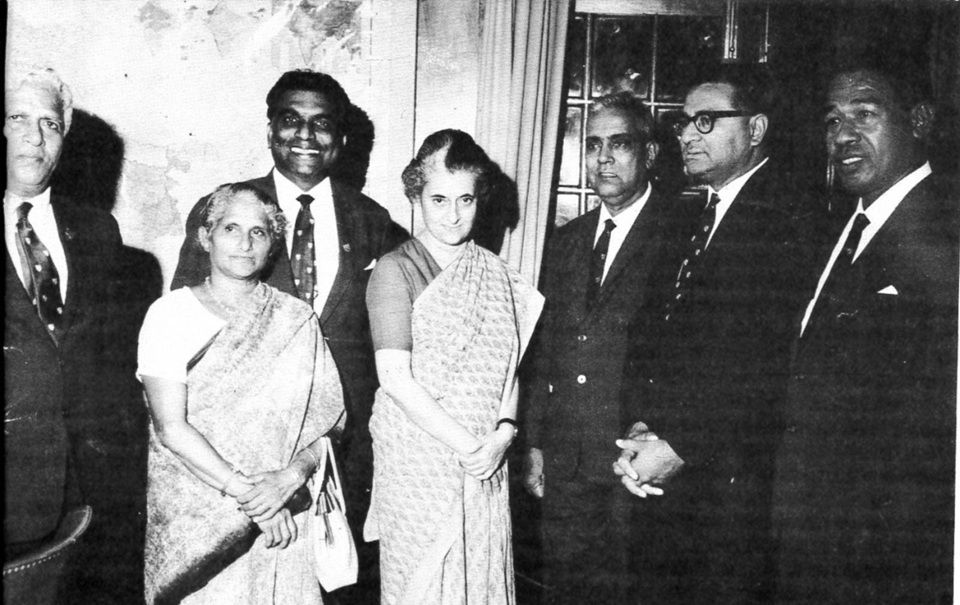
Mr Madhavan served on Fiji’s delegations to London in 1965 and 1970, where negotiations laid the foundation for the country’s internal self–government and eventual independence.
Throughout his political career, he advocated strongly for the rights of cane farmers and supported reforms such as retaining the death penalty only for seditious crimes.
Alongside him, Eunice continued her own work as an educator and later as a community leader.
Her decades of service were recognised in 1980 when she was awarded the MBE.
“Education first, for women especially,” Amma usually told us.”
An enduring legacy
Mr Madhavan passed away on December 20, 1973, during a sitting of the House of Representatives.
Eunice continued their shared mission until her passing in 1988.
For Vijay and his siblings, their parents’ legacy is woven into memories of family outings, community gatherings, and everyday lessons taught in love and discipline.
“I am who I am because they loved me! Great people, our Amma and Pitaji. Humble, never seeking publicity but sharing all they had.”
Today, the living children of Mr and Mrs Madhavan — Philip Satyawan, Shakuntla Gitanjali, Indranjali, Vimal Rattan Prakash and Chitranjali — continue to uphold the values taught to them, ensuring the story of James and Eunice remains alive across generations.
From the grit of girmit to the halls of political power, from village homes to national negotiations, the life of James Madhavan stands as a testament to resilience, service and a deep commitment to community — a legacy his children and grandchildren continue to honour.

