
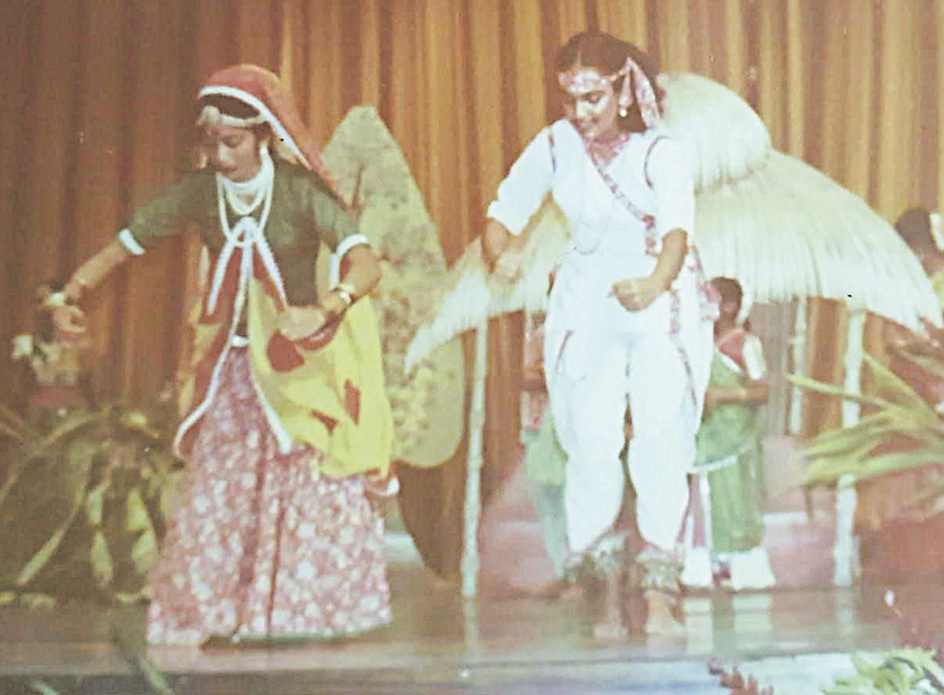
The sound of ghungroo bells has returned to Monica Raghwan’s life after 38 years — not as a performance cue, but as a quiet reminder of where her discipline, resilience and sense of self first took shape.
At 58, the former parliamentarian and long-time construction executive has returned to classical Kathak dance, the art form she first learned as an 11-year-old in the late 1970s.
This time, however, there is no stage, no spotlight, and no expectation beyond personal wellbeing.
For Ms Raghwan, the return is not nostalgic. It is grounding.
She began learning Kathak through the Indian Cultural Centre in Suva, training under respected teachers Mrs Shakti Roberts, Mrs Urmila Goel and Mr A. Sayed Tirmizi. As a student, she was part of a large dance group that performed more than 200 times across Fiji, from cultural festivals to charity events.
“At that time, everything was performance driven. We were always rehearsing, always preparing for the next show,” Ms Raghwan said.
Classical dance was not introduced casually in the Raghwan household. It was something her mother, Mrs Martha Raghwan, deeply valued and actively nurtured. Determined that her children be exposed to culture and discipline, she ensured Monica attended classes regularly, arranged transport and made sure costumes were prepared for every performance.
“She worked very hard for us,” Ms Raghwan said. “From taking us to classes to organising our costumes — that was all my mother.”
Dance, initially introduced to channel youthful energy, quickly became her first encounter with structure and discipline. Long before politics, science or construction entered her life, Kathak taught her timing, coordination, commitment, and the importance of collective effort. Those lessons never left.
Born and raised in Suva, Ms Raghwan spent her early childhood in Lami, close to the sea. Some of her fondest memories are of weekends spent fishing and boating with her father, the late Mr Vijay Raghwan, and growing up in a neighbourhood where community life extended beyond ethnicity or background.
“We were always outdoors. Fishing, being on the boat, running around,” she said.
The family later moved to Nasese, where her childhood took on a different rhythm — one defined by neighbourhood friendships, scraped knees and endless games. She grew up playing marbles, climbing trees, cycling through the streets, and spending long afternoons with her siblings and neighbourhood friends.
“There were always boys around. “So, we just joined in.”
She attended Veiuto Primary School before moving on to Suva Grammar School, experiences she credits for exposing her early to multicultural spaces and strong discipline.
Growing up, she was surrounded by people of different races and cultures — an environment that quietly shaped her worldview and comfort in diverse, often male-dominated settings.
Ms Raghwan comes from a close-knit family of three siblings — herself, a younger sister, and a brother — but her sense of family extends far wider. Her mother comes from a large family, and Ms Raghwan grew up with more than 20 cousins.
“Sundays were always about family. Big lunches, everyone together.”
Life eventually pulled her away from dance — studies in India, a career in agricultural research, public service, and later, decades of responsibility within the family-run Raghwan Construction business.
The break from Kathak stretched into nearly four decades.
Earlier this year, while enquiring about Hindi language classes, Ms Raghwan learned that Kathak lessons were once again being offered in Fiji. The discovery prompted a decision she describes as instinctive.
“I thought, why not?
“You don’t forget everything, there is muscle memory. When you’ve had strong training, the basics return.”
This time, she is learning under a different gharana and under the guidance of Pandit Avijeet Chakravarty, whose work she credits for reintroducing classical dance to Fiji in a more inclusive and sustainable way.
“He has created an environment where classical dance is not just for the young or for performers.
“It’s about understanding the art.”
Ms Raghwan has no intention of returning to the stage. For her, Kathak is now about fitness, mental clarity, and balance.
“There is no pressure,” she said.
“This is about keeping healthy and staying active.”
She believes classical dance should be viewed not only as a performance art, but also as a discipline that supports long-term physical and mental wellbeing — and she encourages older adults and men to consider it.
“You don’t have to perform.
“You just have to be willing to learn.”
Beyond dance, Ms Raghwan is known among those close to her as deeply private, reflective, and grounded. While her public life has often placed her in male-dominated spaces, she has never defined herself by confrontation.
Her parents, she said, shaped her in different but complementary ways. Her mother instilled discipline, faith, and cultural grounding, while her father encouraged independence and freedom.
“He never stopped us from doing anything, he allowed us to grow.”
Today, caring for her 86-year-old mother is her top priority.
Professionally, Ms Raghwan works alongside her siblings in the family business.
Her sister, Malini Raghwan, oversees financial operations, while her brother manages hospitality interests. Ms Raghwan herself handles operations and human resources — a role that keeps her closely connected to long-serving staff, some of whom have been with the company for more than two generations.
Away from work, she values solitude as much as company. She enjoys camping, trekking, snorkelling, travelling, and reconnecting with school and college friends across Fiji, Australia, and India. She has a quiet love for films, experimenting with new cuisines, and dreams of writing one day. Painting, she admits with a laugh, is still a work in progress.
Faith continues to anchor her life. Raised in a Christian household, prayer and service have remained constant threads, reinforced through church groups, women’s fellowships, and community work over the years.
In returning to Kathak, Ms Raghwan sees a deeper symmetry — a return to the first discipline that shaped how she moves through the world.
Dance taught her that progress comes from repetition, patience, and humility. That leadership, like choreography, requires listening and timing. That strength does not always need an audience.
After nearly four decades, the rhythm has found her again — not to redefine her life, but to remind her of its beginning.

