
THE lives we build are often shaped by the people who choose to build them with us. Last week, we followed LNA’s journey into Levuka, where a young man from Australia began finding his place in a town that was still holding onto its past while adjusting to change.
But as detailed in The View from Delanasau: The Life and Times of Leslie Norman Anderson (LNA) by his grandson, James Norman Stevenson, Levuka was not just where LNA found work.
It was where his life began to take shape.
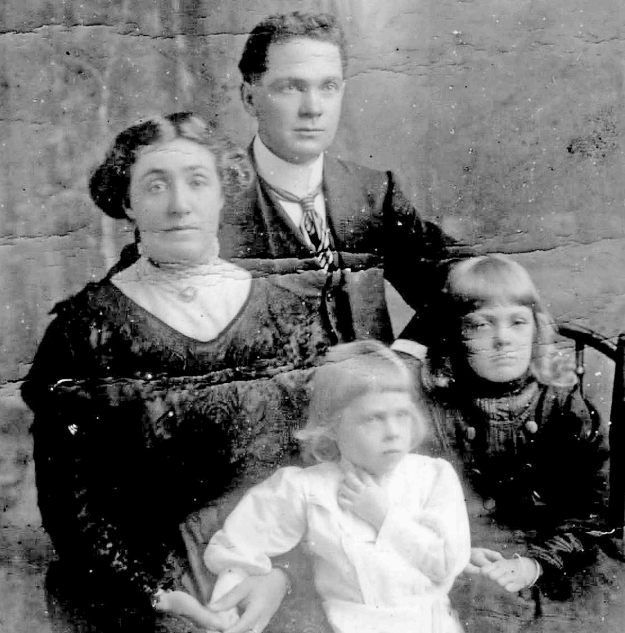
If you can still recall from last week, it was in Levuka’s Anglican Church where LNA, settling into community life, first met Hilda Ethel Wilson, who would go on to become his wife and the anchor of the life he built in Fiji.
And in many ways, this part of the story belongs just as much to her.
Already rooted
Unlike LNA, who arrived in Fiji searching for opportunity, Hilda was already part of its story.
Her family, the Wilsons, had been in Fiji long before Cession in 1874, part of a generation that didn’t just witness the colony’s formation but helped shape it.
According to Stevenson, they came from seafaring Northern European origins, with business ties stretching across Australia and the Pacific.
Her father, Sydney Wilson, had served as a customs official under the pre-Cession government before eventually becoming Levuka’s Town Clerk, even leaving behind a lasting mark with the construction of the now well-known Mission Steps.
Yes, if you’ve ever been to Levuka and lost your breath climbing those 199 steps, you can thank Sydney Wilson.
That’s definitely a story for another day.
So while LNA was still learning how Fiji worked, Hilda already understood its rhythms, its people, and its place in a wider world.
Stevenson says in his book, their meeting, then, wasn’t just chance.
It was the intersection of someone arriving and someone who had always been there.
A life taking shape
They married in February 1903, just two years after LNA’s arrival. That’s a long time for some Fijian men nowadays.
And with that, what began as a personal gamble began to look more like a life taking shape.
The couple settled into Levuka, where the years unfolded with a sense of steady progress. Their daughters, Una Margaret and Jean Allison, were born in 1905 and 1908, respectively, anchoring the young family further into the town’s fabric.
LNA’s role within the community also grew.
Beyond his work, he became secretary of the influential Ovalau Club, a space where Levuka’s leading figures gathered and where relationships that would later shape his future quietly formed.
It was here, among business discussions and social exchanges, that LNA was no longer just finding his footing.
He was becoming part of the town’s inner circles.
Yet even within this stability, there was movement. Life in Levuka, as Stevenson describes it, was both settled and shifting.
The Andersons’ regular visits to ‘Cleeves’, Hilda’s family home overlooking the town, offered glimpses of a life surrounded by familiarity and connection.
From its hillside vantage point, the house looked out over the Koro Sea, where sailing vessels moved in and out of harbour, while the green hills and bright hibiscus framed a scene that felt almost timeless.
But time, in Levuka, was already beginning to move on.
Though still active, the town’s importance was gradually fading as Suva, now firmly established as the capital, drew commerce and attention away.
The rise of the sugar industry on Viti Levu further shifted the economic centre, pulling focus away from copra-based trading hubs like Levuka.
And in that quiet shift lies something important. Because while LNA and Hilda were building a life, the world around them was already changing.
The years before the leap
For a time, life continued in a kind of rhythm.
Work remained steady. The children grew. Social ties deepened.
There were moments of colour too, small stories that linger at the edges, like the controversial figure Alfred Kienzle, a German manager whose actions would eventually see him expelled from the Ovalau Club, a reminder that even in a small town, tensions and personalities ran deep.
But beneath it all, something was building.
Because Levuka, for all it had given LNA, was no longer the centre of opportunity it once was.
And for a man who had already chosen to leave one life behind, the idea of “staying put” may never have been enough.
In next week’s edition, we take you to “The View from Delanasau” the plantation where LNA leaves behind salaried work in Levuka to take on the risks of running his own copra estate, turning it into the centre of his family’s life for more than three decades.
Here, you will see how the land demanded everything of him, managing labour, production and isolation, while also becoming the place where he built his home, raised his children and ultimately defined who he was.

