
THERE are some family enterprises whose beginnings can be traced through company records, business registrations and annual reports. Others are remembered through stories repeated around dinner tables, recollections of long days and longer nights, and memories of a time when success was far from guaranteed and every decision carried with it an element of risk.
For the Chute family, the origins of Value City belong firmly to the latter.
Long before the company grew into a network of stores stretching across Fiji’s major towns and cities, before warehouses were established in Labasa, Lautoka and Suva, and before generations of Fijian families came to regard a visit to Value City as part of their regular shopping routine, there was a modest wooden building standing in the back streets of Labasa and a husband and wife who were contemplating what their future might look like beyond salaried employment.
The story begins on Vanua Levu, although its roots reach even further north to Udu Point in Cakaudrove where the Chute family’s ancestral connections remain today.
Speaking from the perspective of more than three decades in business, Value City managing director Vera Chute said the family was raised in Labasa, a town which in the late 1980s and early 1990s was experiencing its own steady rhythms of commerce, agriculture and community life.
At that time, her father, Patrick Chute, was employed by Fiji Gas while her mother, Rosie Chute, worked for the Housing Authority. Like many working families, they were looking towards the future and considering how they might establish something that would provide security beyond their years of employment.
What neither could have known then was that a venture initially intended as a means of preparing for retirement would evolve into one of Fiji’s most enduring retail success stories.
According to Vera, the circumstances surrounding the establishment of the business reflected a different era of entrepreneurship, one in which personal relationships often carried as much weight as formal contracts.
Her father met an Australian businessman named George, and his wife Heather, and through conversations that would eventually shape the family’s future, the foundations of a business partnership began to emerge.
Remarkably, there were no legal agreements setting out obligations and expectations, no memorandum of understanding (MOU) and no lengthy negotiations.
Instead, Vera recalls, the entire arrangement rested on trust.
“Through a handshake, they established that business,” she said.
“There was no formal MOU signed.”
Soon afterwards, the first container arrived in Labasa and with it the beginnings of what would become one of Fiji’s most recognisable retail brands.
Even the name itself emerged through circumstance. The family had initially hoped to call the business Value Village, but upon discovering that the name had already been registered in Fiji, they settled on Value City, a decision that would eventually see the name become familiar in communities throughout the country.
The first store occupied a simple wooden building located in the back streets of Labasa. It was not an imposing structure, nor was it positioned in what many would have considered a prime retail location. Yet as word began to spread through the town that a new kind of store had opened its doors, curious shoppers started making their way there.
Vera recalls stories told within the family of customers crossing the tram lines and hurrying towards the premises, eager to see for themselves the goods that were generating so much interest.
The business commenced with only a handful of employees. Family members and friends filled the gaps wherever assistance was required, and in those early days there was little distinction between management and staff because everyone was involved in every aspect of the operation.
The work did not end when the shop doors closed.
Throughout the day, products would be sold from the store, and throughout the evening the family would continue working from home to prepare stock for the following morning. The family garage became a workspace, the lounge became a storeroom, and the boundaries between home life and business life gradually disappeared.
“Our garage, our lounge all became working space,” she added.
Looking back now, she remembers the sacrifices required during those formative years.
“Working 16 to 18 hours a day wasn’t easy, but that’s how we tried to keep our customers satisfied.”
Alongside the long hours came another challenge, one that could not be solved simply by working harder.
At the time, second-hand clothing often carried a stigma. Many consumers associated it with necessity rather than choice, and there remained a degree of social reluctance around purchasing pre-owned items.
Vera said her parents recognised early that if they were to succeed, they would need to change not only the products they offered but also the way those products were presented.
Better quality merchandise was sourced. Greater attention was given to presentation. Stores were designed to provide a more welcoming and customer-friendly environment than many people associated with second-hand retail.
Gradually, attitudes began to shift. Customers discovered that affordability did not need to come at the expense of quality, and as the years passed, Value City established a reputation built on both.
For Vera, the business was not originally part of her career plans.
She was employed by Westpac and, by her own admission, had not necessarily envisioned a future in retail. However, only a year after Value City commenced operations, her parents approached her with a proposal that would alter the course of her life.
Leaving secure employment for a young family business required a considerable leap of faith, particularly at a time when the company was still finding its way.
She remembers being hesitant.
Her parents had established the business only a year earlier, while she enjoyed the stability that came with a career in banking.
Yet she trusted her father’s conviction.
“I took the leap,” Vera said.
More than three decades later, she remains part of the enterprise that her parents established.
As the company expanded, so too did the responsibilities place upon its leadership. When Vera assumed control of the business in 2006, Fiji was once again entering a period of political uncertainty, and she found herself navigating challenges that extended beyond the normal demands of retail management.
At the same time, she was operating within a business environment where women in senior leadership positions remained relatively uncommon. She recalls that gaining acceptance and respect often required women to work harder, prove themselves repeatedly and demonstrate capabilities beyond what was expected of their male counterparts.
Those experiences would later shape her leadership philosophy and influence the culture she sought to build within the organisation.
Today, approximately 70 per cent of Value City’s workforce is female, while women occupy most senior management positions throughout the company, a reality that perhaps reflects both the challenges she encountered and the lessons she drew from them.
Over the years, the company expanded far beyond its Labasa beginnings. Warehouses were established in Labasa, Lautoka and Suva, while branches appeared across Fiji’s major towns and cities.
Yet despite the growth, Vera often measures success through observations that cannot easily be reflected on balance sheets or financial reports.
Since her earliest days working on the shop floor, she has watched children accompany their parents into Value City stores, only to return decades later with children of their own.
Many of those customers now purchase clothing, books and household items for families of their own, continuing a relationship with the business that spans generations.
For Vera, these moments speak to something deeper than commercial success. They represent the trust customers have placed in the company over three decades, and the role Value City has come to occupy in everyday family life throughout Fiji.
Today, as Value City enters its thirty-sixth year, the company continues to expand its focus beyond retail alone. Through donations of books and clothing to rural and maritime communities, support for children living with cancer through WOWS Kids Fiji, and financial literacy initiatives for staff, the business has increasingly embraced a broader social role.
The years have also brought challenges that tested both the resilience of the family and the company.
Political upheavals, economic uncertainty, severe tropical cyclones and a global pandemic have all left their mark on Fiji’s business landscape.
Yet Value City endured.
Reflecting on the journey, Vera speaks with quiet pride about what the company has overcome.
“We’ve survived two coups. We’ve survived numerous cyclones. We’ve survived one pandemic.”
As younger family members gradually assume greater responsibilities within the business, her thoughts increasingly turn towards legacy.
Today, three siblings remain involved in the company, joined by spouses and members of the next generation who are learning the business much as their parents once did.
For Vera, however, the future is measured by more than growth or expansion.
She hopes those who follow will continue to embrace the principles that have guided the company from its earliest days, while recognising their responsibility to the communities and environment around them.
“You need not only to grow the business – but you have to leave the planet a better place than you found it.”
It is a sentiment that perhaps captures the evolution of Value City itself.
What began in a small wooden building in the back streets of Labasa, founded through trust, hard work and determination, has grown into a business employing more than 200 people across Fiji.
Yet at its heart remains the same family story that began 36 years ago with a handshake, a shared belief in opportunity and a willingness to take a chance on an uncertain future.
Like many stories that emerge from Fiji’s towns and provinces, it is ultimately a story of resilience, adaptation and perseverance, one that continues to unfold with each new generation that walks through the doors of Value City.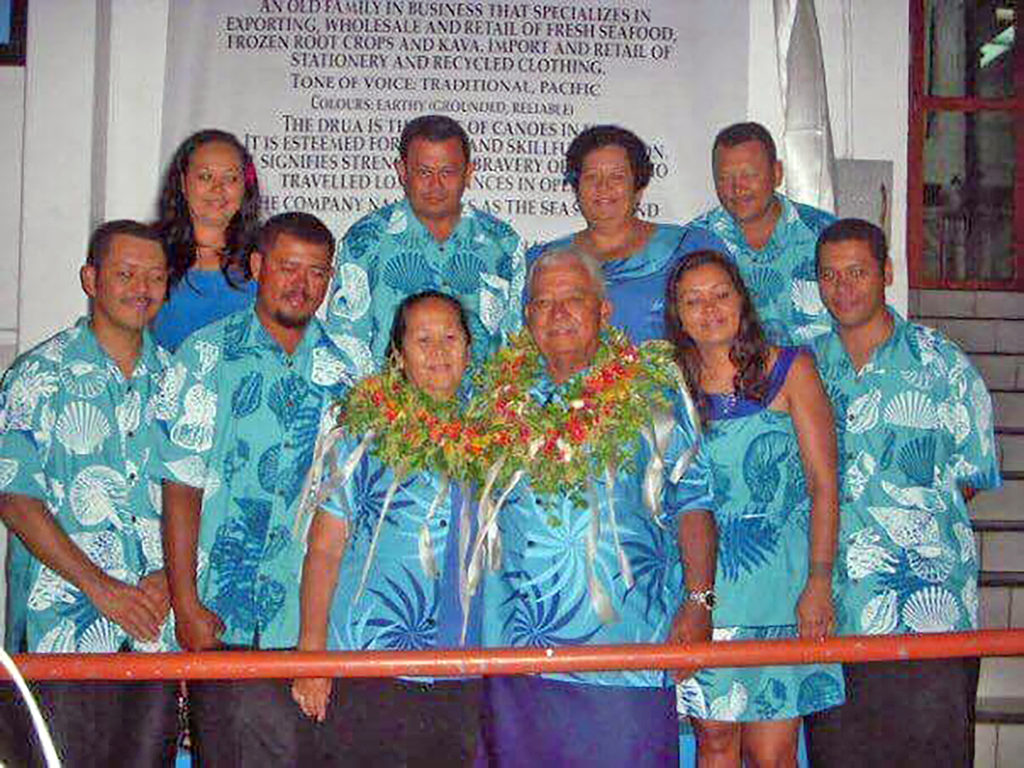
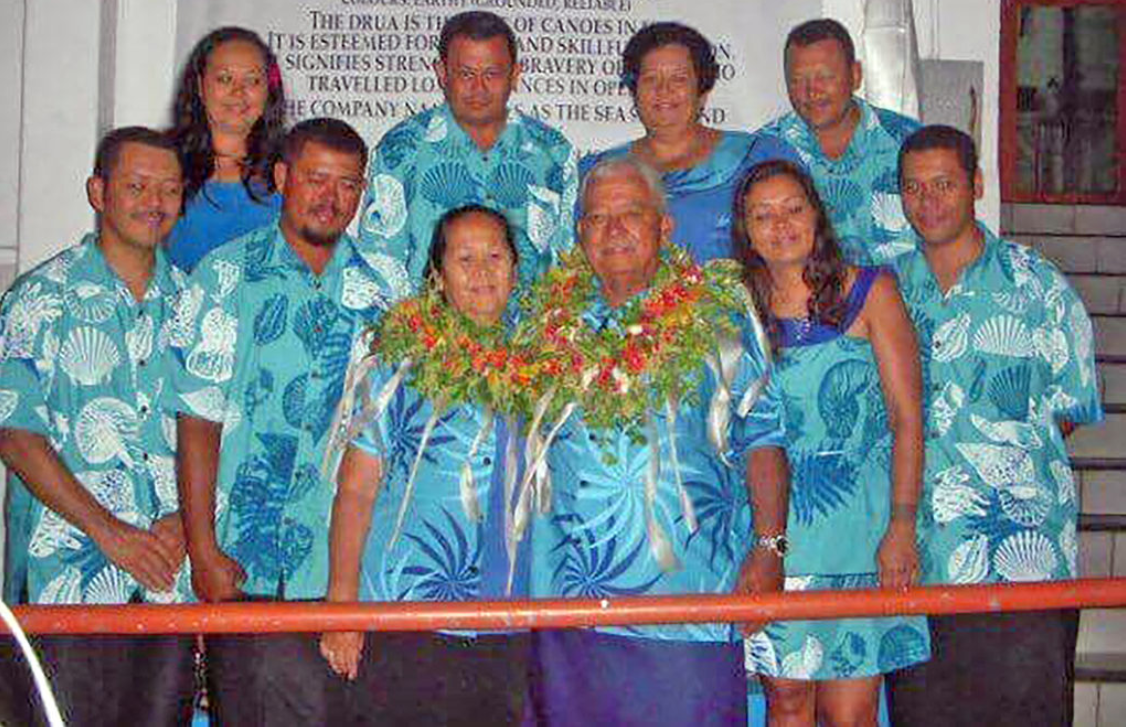
Mr and Mrs Chute pictured with their children. Picture: SUPPLIED
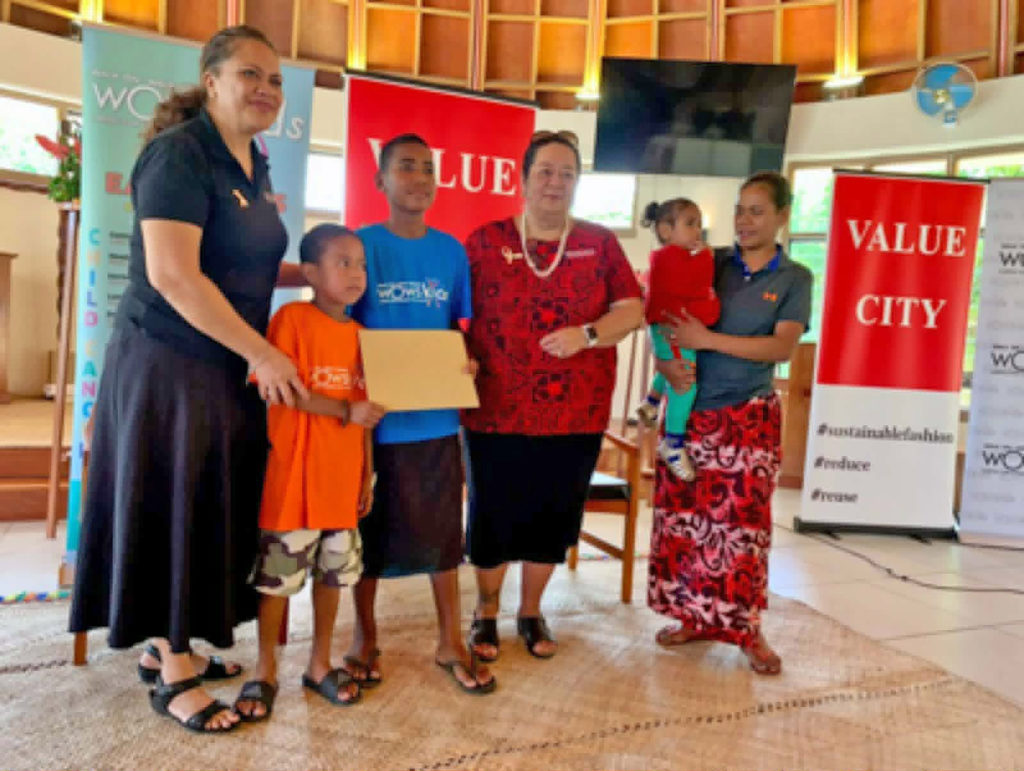
Ms Vera chute handover WOWS Kids cheque presentation. Picture: SUPPLIED
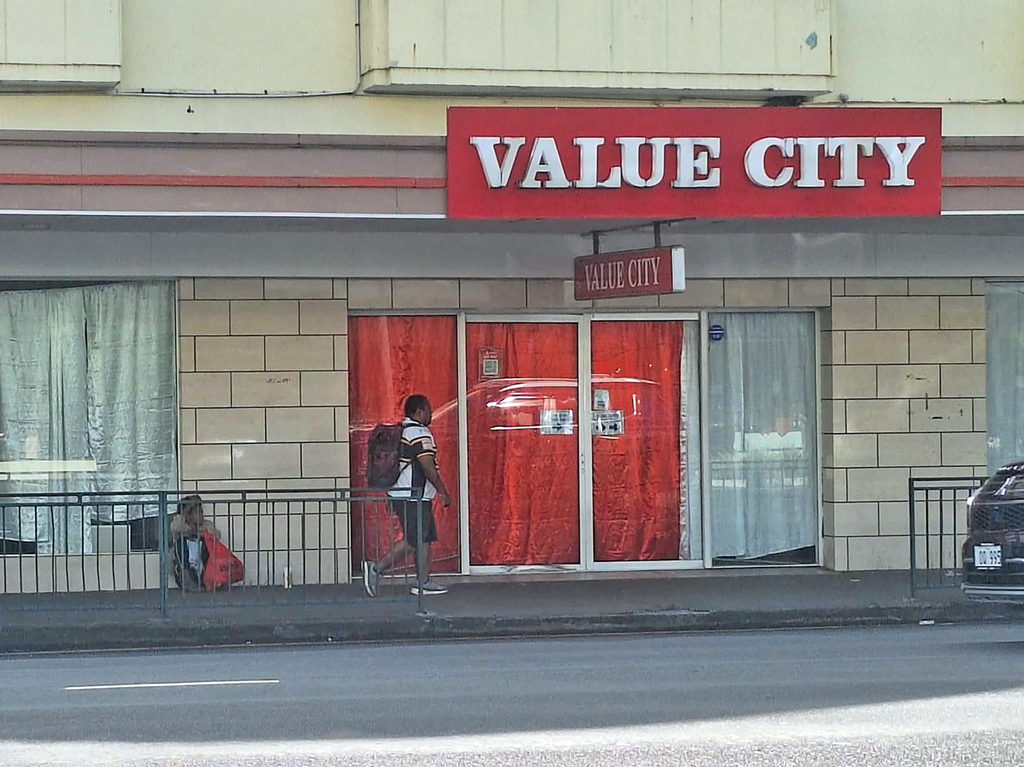
The Value City outlet in Suva. Picture: JONACANI LALAKOBAU

