
IF you’re old enough to remember the feel of a postcard between your fingers, the grainy photographs, the handwritten notes, the quiet excitement of sending a piece of Fiji across oceans, then you already understand how powerful those small images once were.
Long before the age of live photos, Instagramming and ChatFiji, postcards were how Fiji was seen and imagined. They captured moments in time, villages, markets, ceremonies, and everyday life, preserving a version of our country that might otherwise have faded.
Behind these images were a handful of pioneering photographers and publishers whose work helped shape Fiji’s visual history. Their names may not be widely spoken today, but their contributions remain deeply embedded in how Fiji was presented to the world.
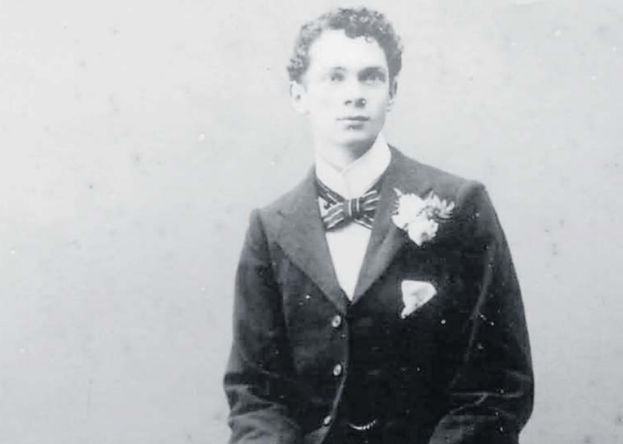
Among these early figures was Leslie Norman Anderson, better known as LNA.
Best known for his early 20th-century postcards and photographs, LNA captured scenes of Fiji with a rare combination of artistry and historical value.
His images offered a glimpses into a Fiji that was still evolving under colonial influence and global change. Many of which are persevered for reference at the National Archives.
Despite his contribution, there are few widely known accounts of his life.
Much of what is known today comes from the work of his grandson, James Norman Stevenson, who compiled a detailed family history in the book “The View from Delanasau: The Life and Times of Leslie Norman Anderson (LNA)”, published in April 2008.
But before we step into the story of young LNA, we need to go further back, far beyond him, beyond Fiji, beyond even his first breath.
Because this story didn’t begin with him. It began with his grandfather, Melville Anderson, in 19th-century Scotland.
Scottish soil to Southern Seas
The Anderson story begins in Scotland, where little is definitively known about the family’s early origins.
However, in the book, Stevenson suggests that the family eventually settled in Edinburgh, part of a broader pattern of movement from rural areas to urban centres in search of opportunity. A key figure in this lineage was Melville Anderson, born in 1822.
Like many Scots of his time, he sought a new life abroad, making the decision in 1855 to migrate to Australia at the age of 33.
His journey marked the beginning of the Anderson family’s transition into the Southern Hemisphere.
Arriving in New South Wales, Melville settled in Singleton, where he worked as a painter and began building a new life. Within a year, he married Mary Morton, an Irish-born woman whose own journey had taken her to Australia just a few years earlier.
Together, they established the first generation of Andersons in Australia.
Raised through hardship
From this family line came William John Anderson, father of LNA, who was born in 1857.
Like his father, he worked as a house painter, but his life was cut short when he died at the age of 29.
According to Stevenson this early loss had a profound impact on the young Leslie Norman Anderson.
Born in 1880 in Singleton, New South Wales, Stevenson said LNA’s early life was marked by instability.
After his father’s death, his mother moved away, likely in search of work, leaving him and his sister Mary to be raised by their grandmother.
Tragedy struck again when his sister died of diphtheria at just twelve years old.
For those still trying to pronounce that, “Diphtheria” is a serious bacterial infection that mainly affects the throat and nose. It causes a thick grey coating to form in the throat, which can make it hard to breathe or swallow.
Before vaccines and modern medicine, diphtheria was often deadly, especially for children, like in LNA’s time. It’s now very rare because of vaccines (like the DTP vaccine), but it can still be dangerous if untreated.
Anyways, despite these hardships, LNA’s upbringing instilled in him a strong sense of discipline and responsibility.
He progressed through his education and entered the workforce at the age of 15, joining James Moore & Company, a major business in Singleton.
Starting as an office boy, he worked his way up to clerk and bookkeeper, earning respect from colleagues and building the skills that would later define his career.
The turning point
As LNA approached adulthood, he faced a defining moment. Although he had a stable job and the support of family, there was a growing desire to establish himself independently.
That opportunity came in 1901, when a trading company in Fiji, Hedemann & Evers, based in Levuka, was seeking staff.
LNA applied, and his credentials impressed. He was offered a position in bookkeeping and accountancy, with the company even covering his travel expenses.
Stevenson says in his book that the decision to leave Australia was not an easy one.
According to him, LNAs family was apprehensive, aware of the uncertainties that lay ahead. But they ultimately supported his choice, encouraging him to pursue a new life.
And at just 21 years old, LNA set sail for Fiji.
As he builds a home and family in the islands, he faces the challenges of plantation life and the sweeping impacts of World War I.
-Next week, we follow young LNA as he leaves Australia behind and arrives in Fiji, stepping into a new life in Levuka before taking a bold leap into the unknown as a copra planter at Delanasau.

