They came carrying the warmth of Catholicism and the hope of beginning something beautiful not knowing what was ahead of them.
As Bishop Bataillon, Father Breheret, Father Roulleaux, Brother Perol, and the two Wallisian catechists, alongside Mosese Monatavai, stepped ashore at Lakeba in August 1844, they were entering a place that was already familiar with the Christian faith.
Nine years earlier, on October 12, 1835, Wesleyan missionaries Reverend David Cargill and Reverend William Cross had arrived at Lakeba from Tonga.
Among those who came with them was Josua Mateinaniu, a Fijian from Fulaga who had converted to Christianity in Tonga and would play an important role in spreading the new faith among Fijians and Tongans.
The Wesleyan arrival had been made possible through the strong links between Lakeba and Tonga.
Tongan Christians had already been travelling through the eastern islands, and their influence helped prepare the way for Cargill and Cross.
According to Cargill’s diary, when the Wesleyans arrived, Tui Nayau received them and granted them land for their mission.
Their houses were built within days, and their first services were held in the open air.
By the time the Catholic missionaries arrived almost nine years later, the situation was very different.
They were not entering an island waiting to hear about Christianity for the first time.
They were entering a community where the Wesleyan mission had already established relationships, built a church and gained followers.
A chief says no
At the centre of Lakeba’s traditional authority was Tui Nayau, Taliai Tupou, the paramount chief of Lakeba and its surrounding islands.
For the Catholic missionaries, his response would shape their first days in Fiji.
According to Catholic and Marist records, Tui Nayau initially refused to receive them as he was under the influence of the powerful Tongan chief Finau, who was a Wesleyan.
Marist account records his position simply – he already had one group of priests and wanted no others.
The Catholics had arrived hoping to establish a mission. Instead, they found themselves looking for somewhere to go.
Hope shattered
The missionaries were not a large group with supplies and support behind them.
After rejection instead of a warm welcome, the missionaries then sailed to Namuka.
For a time, it appeared that Namuka might become their home.
The people of Namuka initially received them, and the missionaries hoped they might establish their mission there instead.
That hope did not last.
A canoe arrived from Lakeba carrying news that Tui Nayau had already refused to receive the missionaries.
The Namuka people were also told that, on the orders of King George of Tonga, the islands of Lau were not to allow the Catholic priests to remain.
The people of Namuka became frightened.
There was another problem. The missionaries themselves soon realised that Namuka was too small and unsuitable to become the base they needed.
So, they turned their attention back to Lakeba.
It was there that the real test of their mission began – their difficulties were not simply religious.
The mission was also caught up in the political and chiefly relationships that connected Lakeba with Tonga.
Finau, the Tongan chief who had influence on the island, wanted the Catholic missionaries removed, and have them taken to Somosomo all the way in Taveuni.
The missionaries, however, wished to remain.
They walked through the villages. They looked for people willing to listen. They tried to establish themselves despite the uncertainty surrounding them after which they soon discovered that even people who had initially shown an interest in Catholicism could come under pressure.
Monatavai had nowhere to go
Perhaps the clearest human picture of the struggle can be found in the story of the late Monatavai in his attempt to establish the catholic mission before the missionaries even arrived.
When Father Roulleaux returned to Lakeba, he found Mosese in what the Catholic record describes as a state of misery.
He had been separated from his family, rejected by those around him and was struggling even to find food.
The religious contest was no longer something happening between missionaries and chiefs.
It was affecting the very people with ties to the vanua.
Catholic records said that under pressure from Wesleyan ministers, Monatavai had begun reading their Bible and had stopped wearing his rosary.
For the Catholic missionaries, his experience showed just how difficult it would be to build a new Catholic community in a place where another Christian tradition already had influence.
But the relationship between the two missions was not always one of hostility.
When Father Roulleaux later became seriously ill, the Wesleyan missionaries came to his aid.
According to letters he wrote, they provided him with food and medicine and allowed him access to their homes.
It was an unexpected act of kindness in the middle of a growing religious rivalry.
Hope in the midst of chaos
Meanwhile, the political situation on Lakeba was changing.
Finau died, and Ma’afu took his place as the Tongan governor.
Catholic records show that opposition against the missionaries became more severe. They were insulted as they walked through villages, and stones were sometimes thrown at them.
Father Roulleaux in his letters would later describe those first 15 months in Fiji in stark terms.
In a letter written from Lakeba on November 12, 1845, he wrote of scorn, insults, accusations, persecution, sickness, lack of clothing and hunger. He said the small Catholic mission had been tested in many ways.
Yet that did not stop the missionaries from continuing the mission … and then came a turning point.
In July 1845, Tui Nayau came to see the Catholic missionaries himself.
The same chief who had initially refused to receive them now spoke differently.
Tui Nayau told them — “Priests, don’t worry, we Fijians know that all the words of the European Wesleyans, all the words of Ma’afu are pure lies.”
A place to call home
He then offered them land in the Chiefly village of Tubou in Lakeba where the missionaries could establish themselves there, build a house and remain.
For the Catholic mission, it was more than a piece of land and more than simply a place to stay.
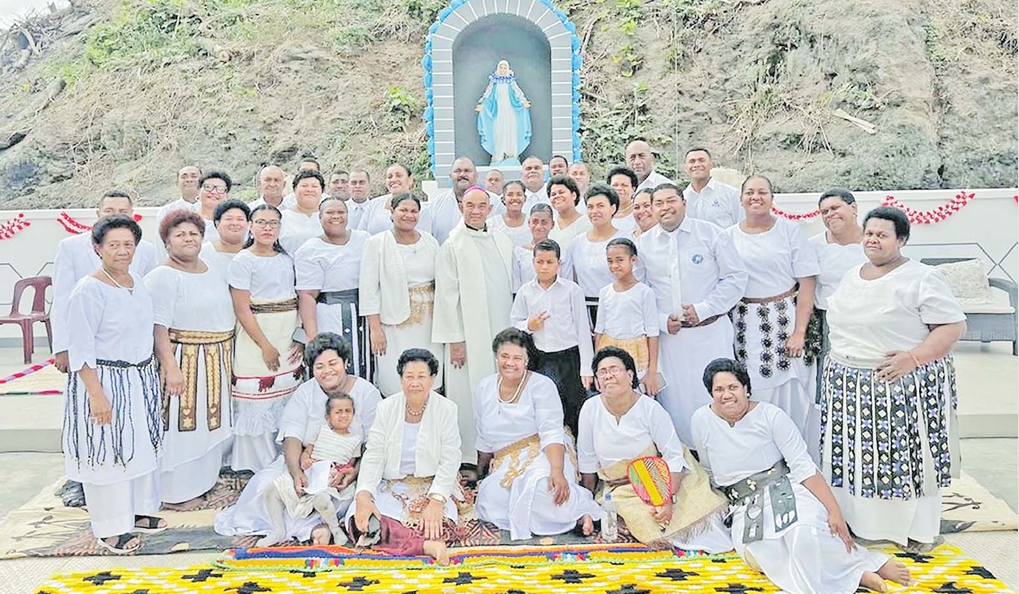
It was the ground on which the Catholic mission would take root, and more than 180 years later, the church that stands on that very land remains a living part of the community, with people from Tubou and nearby villages gathering there each Sunday to worship and keep their faith alive.
After months of uncertainty, rejection and movement between islands, the missionaries finally had an opening to put down roots on Lakeba.
The Catholic story in Fiji had begun with an arrival.
But its survival would depend on what happened next.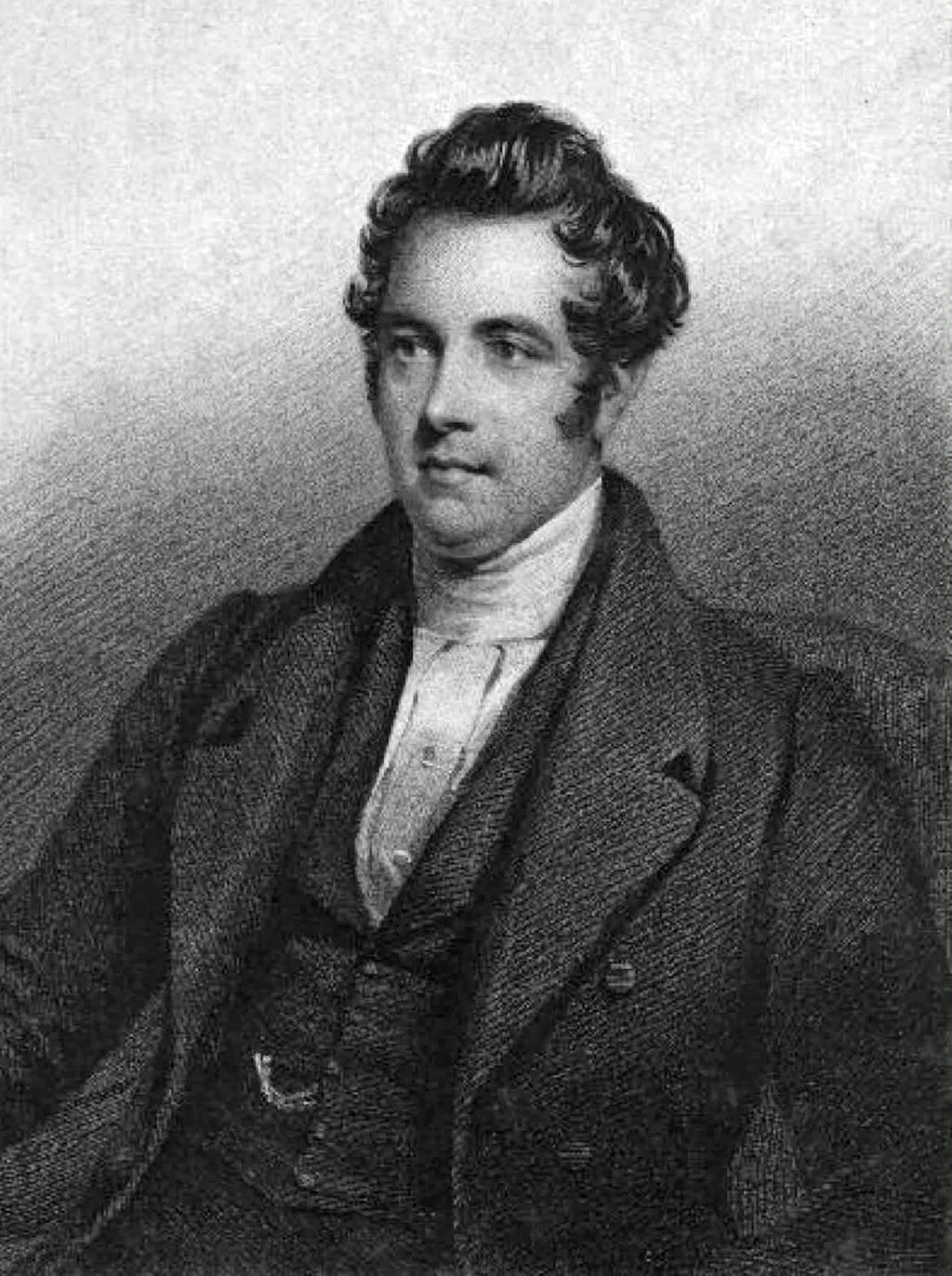
David Cargill of the Wesleyan church. Picture: SUPPLIED
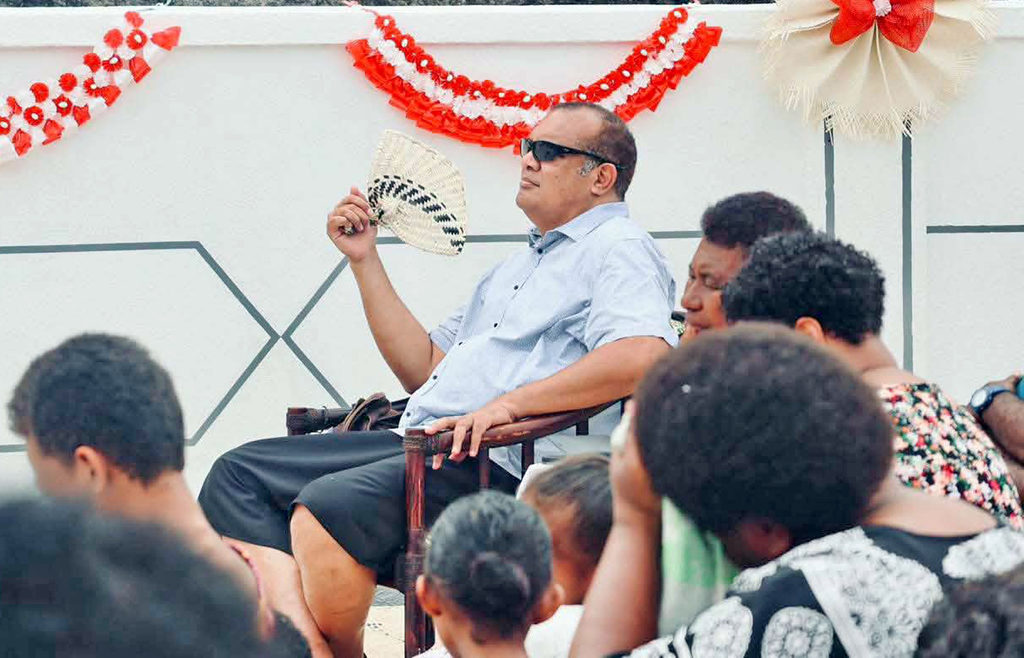
Tui Nayau Ratu Tevita Uluilakeba Mara in Tubou during the 182nd anniversary of the missionaries. Picture: PHYLLIS SIMPSON