
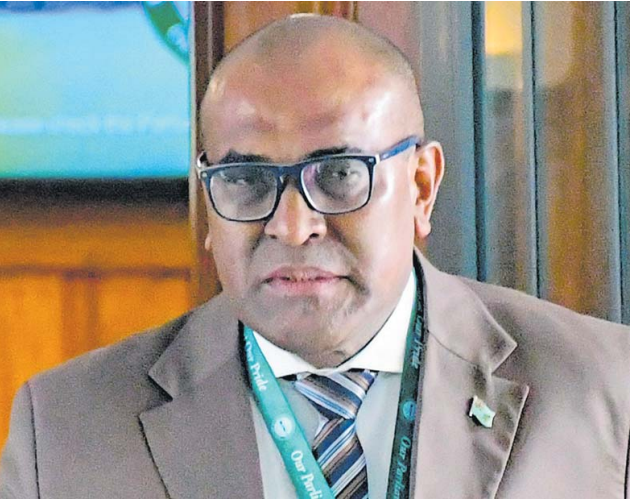
HEALTH Minister Dr Ratu Atonio Lalabalavu has urged the public to bear with the ministry as limited space continues to affect bed availability at the Colonial War Memorial Hospital (CWMH).
Speaking to this newspaper, Dr Lalabalavu said the issue at CWMH was not necessarily a lack of beds, but insufficient space to accommodate them.
“Double beds (bunk beds) are not allowed, only single beds,” he said.
“So the issue there is space and it is something that cannot be addressed overnight.”
Dr Lalabalavu said the ministry was working through the CWM Hospital Priority Infrastructure Plan and the phased implementation of the Pacific Healthy Islands Transformation (PHIT) project to address infrastructure pressures at the hospital.
“Not only that, but also by ensuring that we build capacity with the satellite facilities around CWMH to take the load off.
“So that is something we continue to do as well.”
He urged members of the public to make use of health facilities outside CWMH where beds were available, including Wainibokasi and Korovou.
“I would suggest you take that opportunity because those are areas where beds are available as well as treatment.”
Dr Lalabalavu said referrals to CWMH were based on bed availability and the triage system, with emergency patients usually prioritised.
“So for the time being, I would ask the public to please bear with us. We only have a limited number of beds within the hospital.
“It is not an issue of the availability of beds, it is the space.”
The PHIT project, Dr Lalabalavu referred to, is a $US239.5million ($F528m) regional initiative aimed at modernising Fiji’s healthcare infrastructure, with implementation expected to span six years and conclude by August 2030.
The CWMH Priority Infrastructure Plan is a $63million urgent repair roadmap identifying 138 high-priority fixes to keep the facility operational while a new national hospital is designed, with current first-phase upgrades scheduled for completion by mid-2026.

