
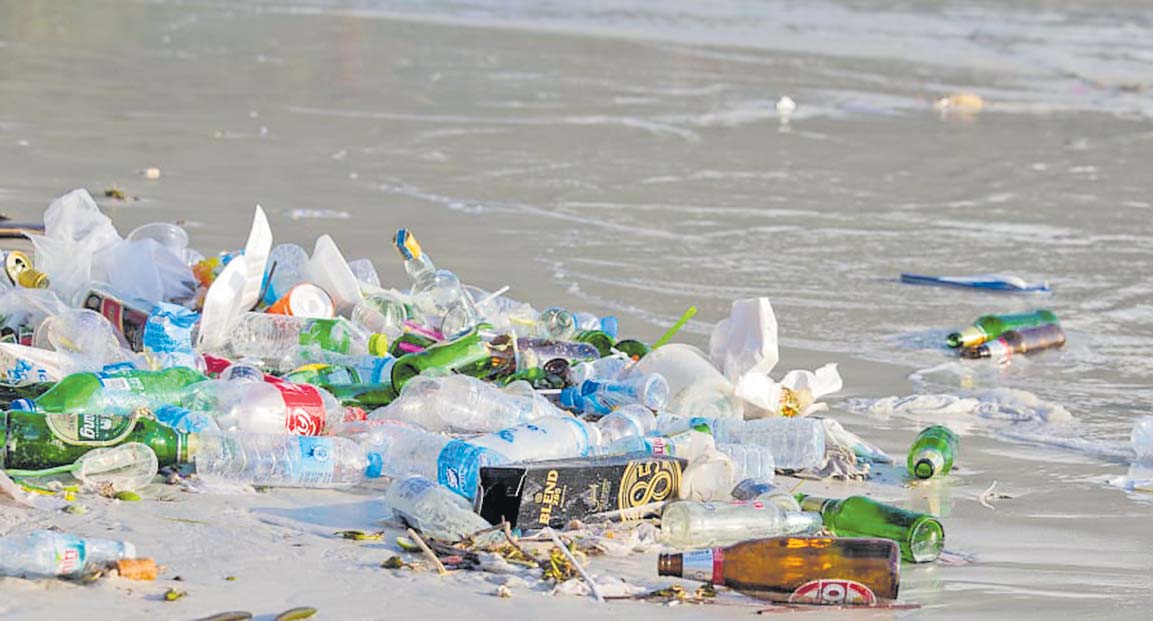
AN ESTIMATED 311,090 tonnes of plastic waste are generated within 50 kilometres of Pacific Island country coastlines each year, according to the International Union for Conservation of Nature (IUCN).
The union’s Pacific Regional Report 2021 says that of this, 73 percent has the potential to leak into the marine environment from littering, dumping directly into inland waterways, or wind-blown into the ocean from uncontained disposal sites.
“Solid waste management in Pacific Island countries (PICs) is unique and presents significant challenges,” the report said.
“Executing waste management methods employed by developed economies is not always practical and does not translate into PICs.”
At present, the report stated, many Pacific Island countries do not have sufficient infrastructure or capacity to successfully manage the deluge of problematic waste, illegal dumping and leakage from imported materials such as single-use plastic packaging, waste oil, tyres, end-of-life vehicles and white goods.
“Plastic within the Pacific region accounts for 7–17 percent of the total waste stream, second only to organic material (35–70 percent).
“In addition, plastic wastes from other countries, carried by trade winds and ocean gyres, and other offshore sources of marine plastic pollution, such as abandoned, lost or otherwise discarded fishing gear (ALDFG), can represent the most significant types of debris on these islands.”
The report added plastic consumption and disposal across the region were creating a myriad of challenges.
“A lack of appropriate infrastructure and landfill space, in addition to a lack of suitable, feasible export markets, all increase the risk of plastic leakage into the environment.
“Reliable waste collection services are primarily only available to communities living within metropolitan areas (capital cities and major urban centres).
“Most people living on city fringes in peri-urban and regional, rural communities including outer islands, lack any formal waste collection services.”

