FIJI is stepping up efforts to prevent online radicalisation, with the Government warning that the internet has become the primary operating environment for violent extremist messaging and content.
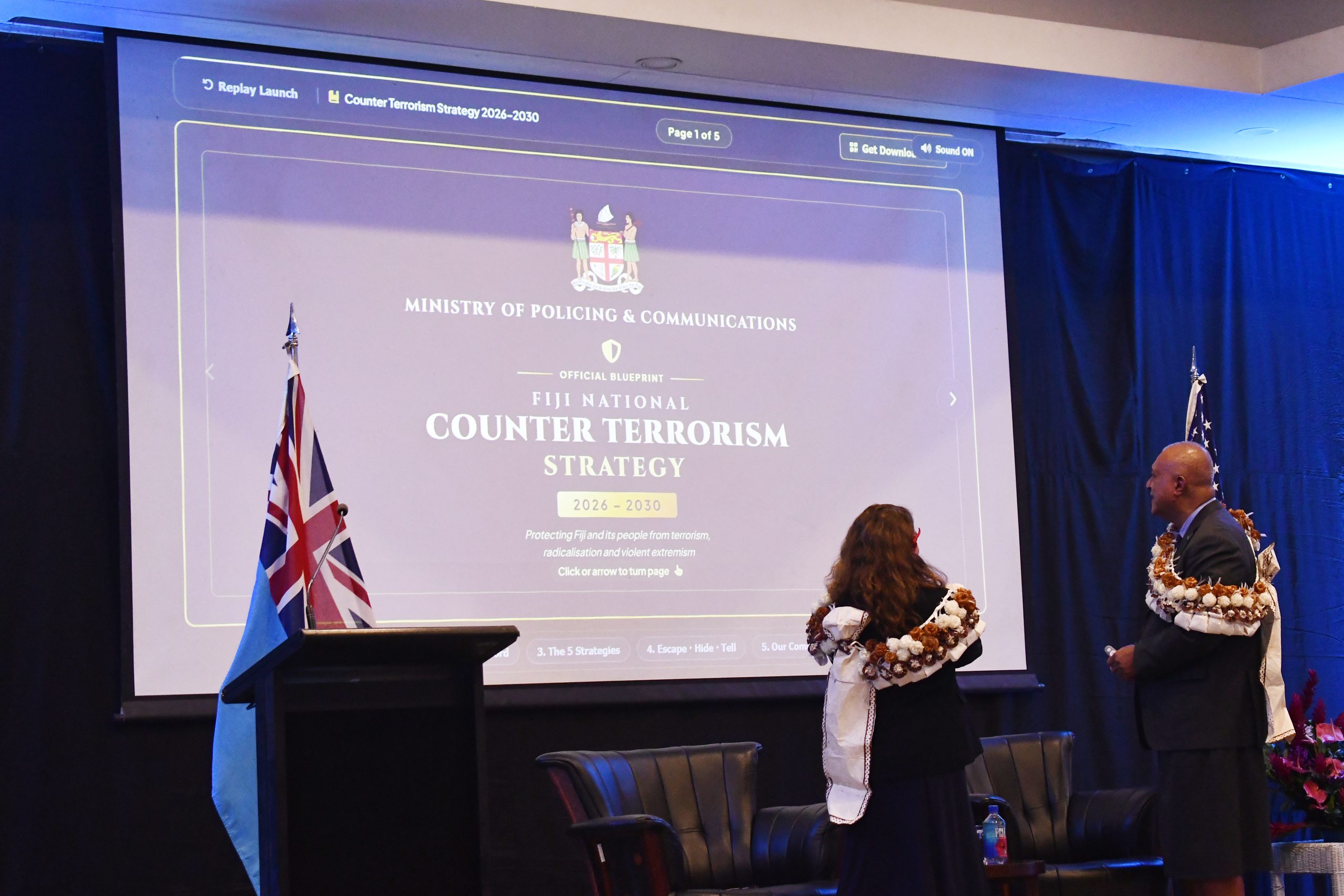
The warning is contained in the National Counter-Terrorism Strategy 2026–2030, launched in Suva last Friday.
The strategy said the Government and communities will work together to identify and divert people considered at risk of being drawn into violent extremism, while supporting those already influenced to disengage from violence.
It said the objective was to help individuals “get their lives back on track” while strengthening social cohesion and challenging extremist ideologies.
A key concern was the emergence of mixed, unclear and unstable (MUU) ideologies, where individuals combine personal grievances, conspiracy theories, online subcultures and an interest in violence.
The strategy said Fiji would respond through targeted digital literacy programs, community-based monitoring and flexible interventions.
It also called for training to improve the early identification of warning signs and risk assessment.
The strategy said social media and the internet provided opportunities for connection and inclusion but could also be exploited to spread terrorist and violent extremist content, and radicalise individuals.
It highlighted particular concern over an increasingly younger audience accessing such material online.
The Government will promote digital literacy and critical thinking among Fijians of all ages to help them identify misinformation, disinformation and conspiracy theories linked to extremist narratives.
The strategy also called for stronger cooperation with technology industry and international partners to counter malicious cyber activity and remove terrorist content and extremist narratives from online platforms.