
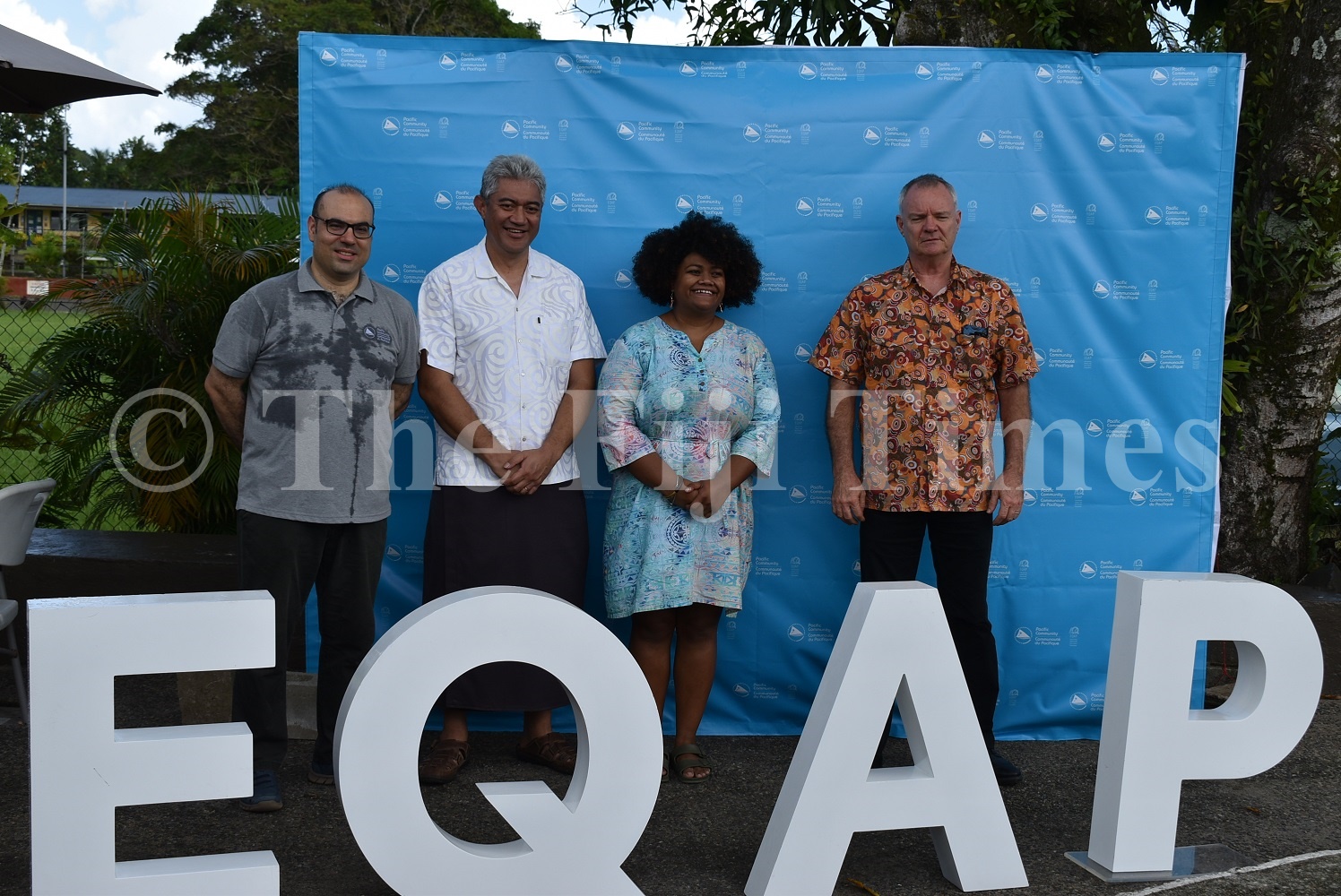
Pacific island countries (PICs) are adopting several measures to ensure signatories meet the Sustainable Development Goal 4 (SDG 4) by 2030. SDG 4, the education goal, aims to “ensure inclusive and equitable quality education and promote lifelong learning opportunities for all”.
Pacific Community (SPC) deputy director general Dr Paula Vivili said one of the ways to monitor progress in the academic field was through the Pacific Islands Literacy and Numeracy Assessment (PILNA).
A Pacific-specific initiative, PILNA was first administered in 2012 and focuses on the numeracy and literacy proficiency skills of Year Four and Year Six students and is carried out every three years.
Dr Vivili said PILNA results told the organisation and its partners on the work that still needed to be done. He said COVID was a factor in the results of 2021.
“As we progress forward, we need to be looking at specific areas where we can make interventions which can bring about tangible results for countries,” he said.
“We use the PILNA as one of the measures for us to assess our progress with SDGs. PILNA was developed with an initiative supported by all the countries as a measure for us to look at how we are doing in real time and we are able to do it a little bit frequently.
“We did it in 2018 and 2021 and repeated at frequent intervals to tell us how we are doing.”
He said this could be used by countries as a tracking mechanism of how they were doing in primary education.
“As I mentioned, we are ahead when looking at the numeracy but in Year Four we are a little behind in literacy. We feel COVID was a reason for this and with children now coming back to face-to-face education, the next time we do PILNA, we anticipate that it will be better.”

