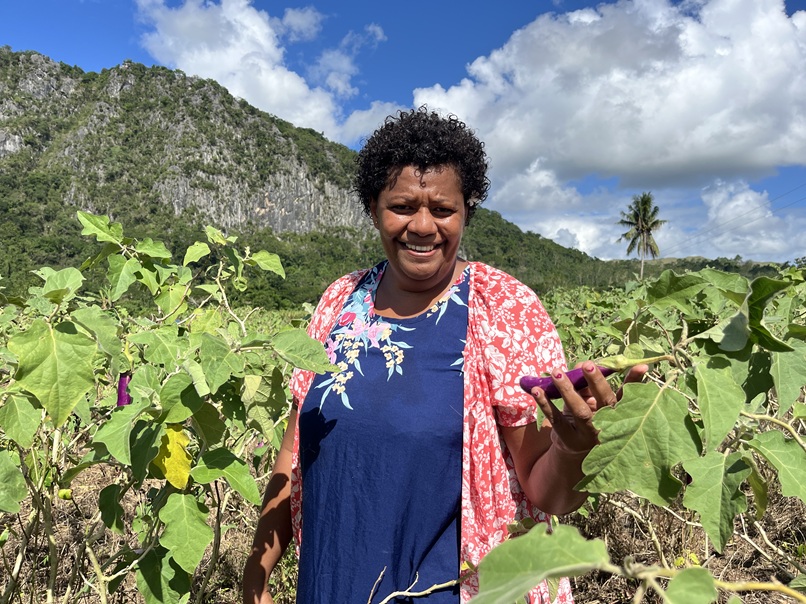
For farmers like Susana Tuiyauyau and her husband Joseva Boa, working the land in the famous Sigatoka Valley is all about having the patience and trust in what it yields.
As early as 6am, Susana Tuiyauyau and Joseva Boa are among rows of vegetables – watering them down before the heat sets in.
For the couple, farming is more than daily work. It is a life they have slowly built together.
Susana, who has paternal and maternal links to Tagaqe Village in Nadroga, now spends most of her days tending to the farm they took over earlier this year in one of Fiji’s busiest agricultural communities.
Raunitogo is well known for supplying a significant portion of the country’s fresh produce, and the couple’s days revolve around keeping up with the constant demands of the farm.
“The first thing we do when we get into the farm is water the crops,” Susana said.
“We usually do it early in the morning when it’s still cool.”
Cassava remains one of their main crops, but over the months they have also started planting vegetables such as eggplants, long beans and capsicum.
Among them, eggplants have become one of their biggest sellers.
“We grow two different varieties of eggplant, but we have yet to grow the big round ones,” she said.
“A lot of customers often go for the big round eggplant because it’s big compared to the normal thin eggplant.”
On another side of the farm, freshly cleared land waits to be planted with watermelons, a sign of the couple’s determination to continue growing despite the demanding conditions.
Water is carefully managed on the farm. In the afternoons, Susana and Joseva fill large drums to prepare for the next morning’s work.
The couple relies mainly on water from a borehole shared among several families in the area.
“There are a few families in this community that use the borehole, so we follow a schedule,” she said.
Because the farm sits close to the river, they also use river water to irrigate their crops when needed.
Once watering is complete, their attention turns to customer orders.
“If we have orders from buyers, we make sure everything is ready,” Susana said.
The farm supplies middlemen as well as nearby villages, especially during large gatherings and special occasions when demand increases.
Most days are spent harvesting eggplants and tomatoes, spreading manure, pulling weeds and making sure the farm remains tidy and productive.
By morning, Joseva leaves for the market to deliver produce before returning home around midday.
When the afternoon heat eases, the couple heads back into the fields to finish the work they started earlier in the day.
Their move to Raunitogo in January marked a new chapter for the family.
Before that, they lived in the village where they maintained a smaller farm and a piggery. Although they now work full-time at Raunitogo, they still visit their village farm.
Susana said adjusting to life in the valley was not difficult because they already understood the basics of farming operations before taking over.
Still, life in Raunitogo comes with its own challenges.
“The difference is the weather and the size of the land,” she said.
“It’s extremely hot here compared to the village where it’s cooler because of the sea breeze.”
But despite the heat and the long hours, the couple continues to work side by side, driven by the hope that every harvest will bring better returns.