
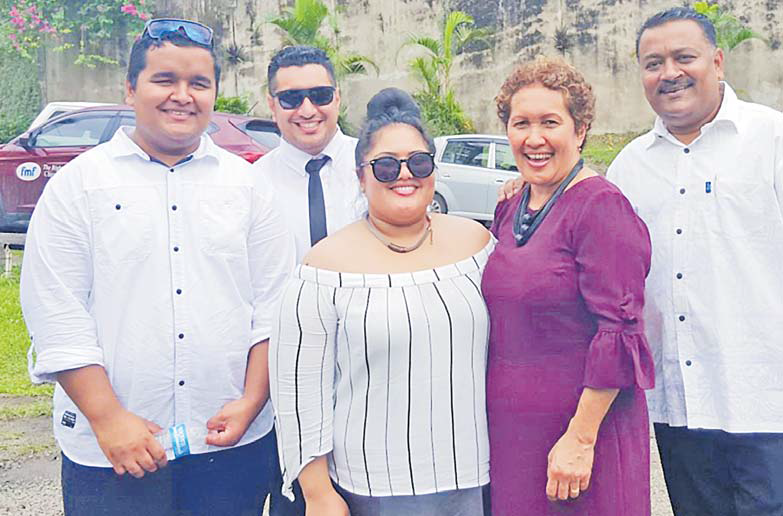
Daniel Lal learnt about the harsh realities of life while growing up in the Raiwai housing estate in Suva.
He said it was a crash course in survival of the fittest, especially in the early stages of his life.
Mr Lal said violence and racial abuse was the norm and one had to develop a thick skin just to get through each day.
“It was a daily struggle in Raiwai and I was a victim of racism initially,” he said.
“However as I grew older, I was eventually accepted and respected as a human being rather than being considered a person of another ethnicity.
“Dad was a taxidriver and mum the boss of the household. I lived with my parents, an elder brother and younger sister in a one-bedroom flat.
“I was educated at Marist Brothers Primary School and attained secondary school education at Marist Brothers High School until I reached Year 12 level.”
While his father competed with other cabbies for passengers in and around Suva, Mr Lal fought physical, mental and emotional battles with racism in Raiwai.
“Life for us was literally about survival. Dad was the sole breadwinner in the family and he had the responsibility of putting food on the table, footing the bills and schooling his children.
“I missed out on further education due to the unfortunate political events of 1987 and obtaining a decent employment became an arduous task.
“I spent part of my life on the streets and was hanging out with the famous local reggae band, Rootstrata.”
Mr Lal dabbled in rugby union for the Lomaiviti Colts, the home team at Raiwai, but he eventually quit because he was targeted all the time due to his ethnicity.
“The realisation crept in that I was likely to get injured seriously, hence I stopped playing competitive footy.”
Mr Lal moved onto soccer and eventually to squash.
“I was chasing a football career at school, although I played squash as an optional sport when I was 14 at my home club in Raiwaqa.
“While recovering from a football injury, I came across some articles published in The Fiji Times, which highlighted that a few of my friends from the squash fraternity had made it into the national team.
“It inspired me to take the sport of squash seriously.
“I got my first job through squash, met my wife only because of squash and represented the country through the sport as a player and official.
“I was even able to build a working career because of the popularity I achieved through squash, including the many great friends that I met over the years.
“My fellow squash friends both locally and in New Zealand have become family.”
Mr Lal was the first Pacific Islander to become president of the Royal Oak Racquets Club in Auckland, a 116-year-old institution steeped in sporting tradition.
“The club has five tennis and squash courts, a sophisticated gymnasium, pro-shop, restaurant and bar, with a membership of more than 500.”
At present, he is the president of Northern Club, Lautoka, and still plays squash thrice a week.
He participates in numerous squash tournaments locally and most recently was crowned the B-Grade winner in the first squash tournament to be hosted in the Western Division after some COVID-19 sports restrictions were eased. Mr Lal is married to Norma Tivoli and they have three children – two boys and a girl.
He is the general manager sales and operations at Arrow Group Concrete and Engineering based at Natabua, Lautoka.

