
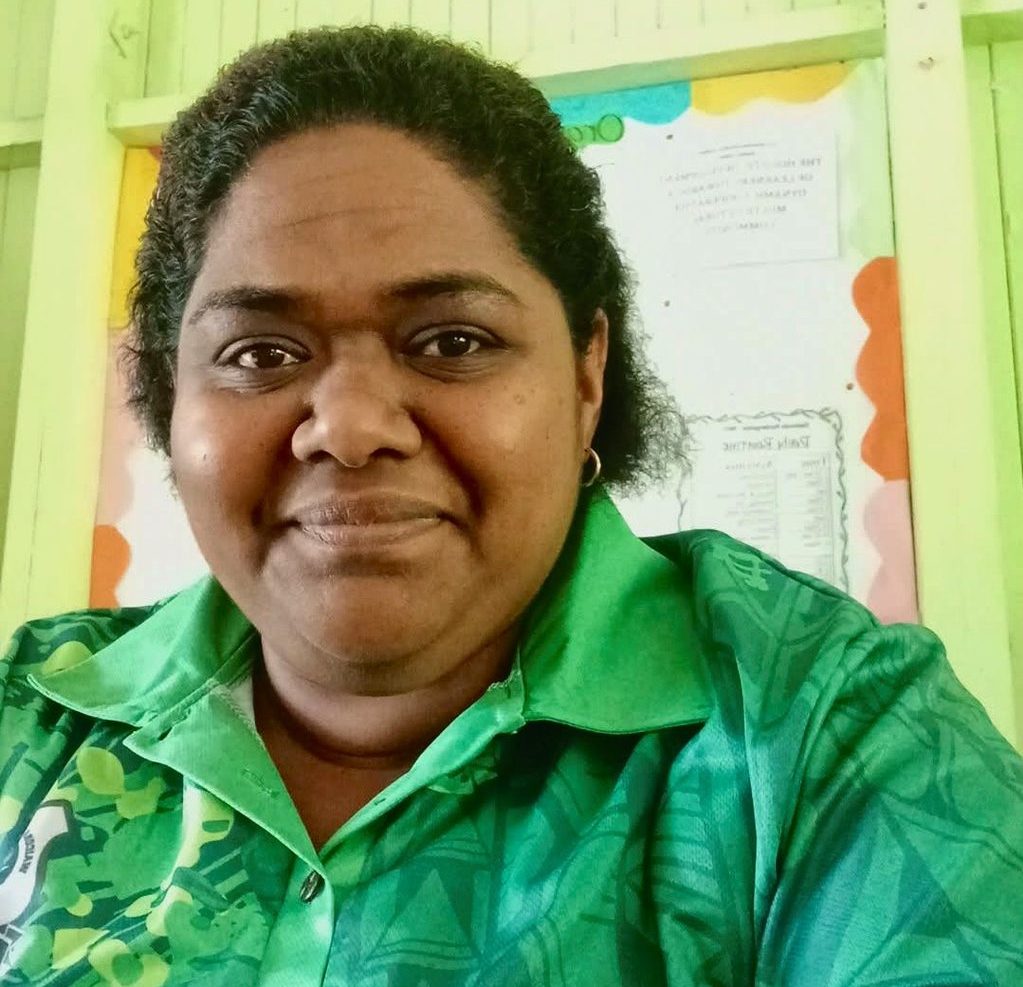
KINDERGARTEN classrooms are dynamic spaces.
For Miriama Dravikula they are filled with laughter, unpredictability and, at times, emotional weight.
Children arrive carrying innocence and unfiltered trust and she loves caring for them daily.
Ms Dravikula is a kindergarten teacher at Delaivula Kindergarten (part of Waicoba District School) in Nadroga.
As a mother to three children, she is accustomed to high-energy and has the patience to nurture a young people with love.
Growing up as the eldest and only daughter of a pastor shaped Ms Dravikula sense of responsibility early.
“We moved around a lot due to my parents’ profession as Salvation Army officers (pastors), so I was educated at a lot of schools over the years,” she said.
Frequent relocations meant adapting to new schools, new communities and new expectations.
It cultivated adaptability – a trait she would later rely on in her profession.
“Firstly, becoming a teacher never crossed my mind. Being a pastor’s child, I took up the role of being a Sunday school teacher at the age of 16.
Teaching began not as an ambition for Ms Dravikula but as a way to simply help others.
At 16, she was already leading Sunday school classes – guiding children through scripture, nurturing their understanding with patience and care.
It was when an aunt had suggested her being a kindergarten teacher that she started to consider the idea.
What began as a suggestion soon became her purpose.
“I quickly did my research, pursued my studies and become a qualified teacher.
Into her ninth year of teaching, she has learned a lot along the way.
“The first five years I was a private teacher in a private school then later in 2021 I joined the Ministry of Education. Now I’m teaching outside of the city in Nadroga and it’s been good.
Ms Dravikula’s decision to move beyond urban centres was intentional – a desire to experience life and work in rural communities.
“Teaching these little ones, you’d expect new things every day, it is fun at times but sometimes it can be heart breaking. These little ones they have so much love and trust to give,” she said.
“Children they come from different backgrounds, and they are full of life.
Diverse backgrounds mean diverse needs. Some days are smooth; others demand extra patience. Yet she finds energy in their vitality.
She has observed clear contrasts between rural and urban classrooms.
Rural children often demonstrate deep respect and eagerness to learn.
In towns and cities, children are more exposed – confident, rights-aware and shaped by digital influence.
“This is my first time teaching in a rural community, and the language barrier is a challenge.
“Children converse in the Nadroga dialect here and coming from a household that speaks the common dialect (Bau) and English I have to learn to adjust so I can understand my students better.
“I can say that this profession is a calling. From the students’ first day coming into class not knowing how to write their names let alone how to hold a pen – to the last day recognising their names and being able to write it is a big win for us teachers.
“Children have taught me to be kind, patient, loving, caring and to take one step at a time when dealing with a situation.
The lessons move both ways. In shaping young minds, she has learned so much herself.
“During my difficult days I always remind myself ‘if you won’t do it then who will do it’. These are God’s greatest gift.”
Faith remains her anchor, particularly on difficult days and her hope extends beyond literacy and numeracy.
She envisions her students as future contributors, a blessing within their families and communities.

