
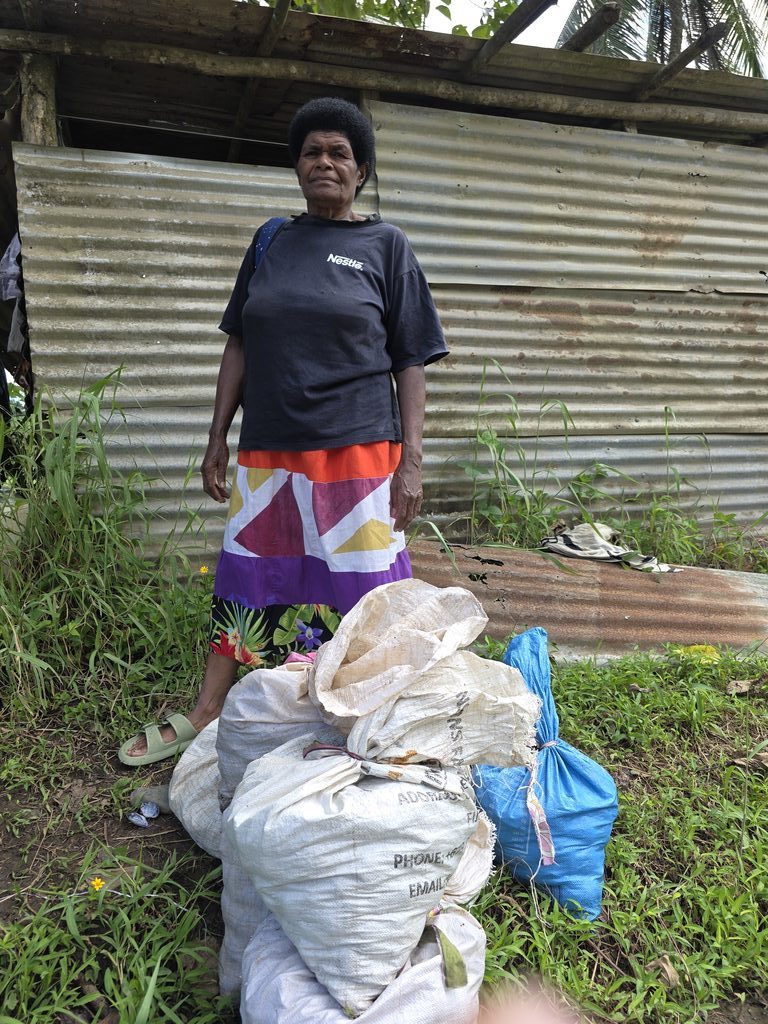
SEREIMA Matea, 69, collects kai (freshwater mussels) from the Rewa River and sells them for $90 a sack.
At the end of her day in the water, her hands often go numb from the cold and her feet get exhausted and cramped.
Moments like these remind her of how far life has carried her, and how much strength a woman can discover within herself.
Sereima grew up in Nanuku, Yakete, in the interior of Ba. Life, however, had other journeys planned for her.
She fell in love with a man from Naganivatu and after marriage, she left home to begin a new chapter among the people of Naitasiri.
They say, “When in Rome, do as the Romans do”. She took those words to heart.
“In Naitasiri, women carry responsibilities different from those I knew growing up. One of them is collecting kai from the river.
“Buying a heap of kai from the market for a family meal may seem easy, but gathering it yourself—from the riverbed—is a different story altogether.”
Collecting kai is not for the faint-hearted. It is back-breaking work.
One must endure the cold water numbing the legs, the heat of the sun burning the back and face, and the exhaustion that settles deep into the bones.
Yet some mornings, women from villages near the farming community of Baulevu begin as early as six o’clock, wading into the river while the world is still quiet.
They do it, because the lives of their families depend on the money earned from selling kai.
“I learned this skill from my mother-in-law, who patiently guided me soon after I got married. Step by step, she taught me where to look, how to feel for kai beneath the riverbed using my feet, and how to endure the long hours without complaint,” Sereima said.
“I was not taught these things back home in Ba, but marriage taught me something just as important, the ability to learn, to adapt, and to persevere.”
“I have been collecting kai since my children were little. Today, I am 69 years old, and I look back with pride. The money I earned from selling kai at the market helped put my children through school—two boys and a girl, all now married, all with families of their own.”
After a long day in the river, her grandchildren bring laughter and light into her life. Every ache in her body carries the memory of sacrifices made for the family.
“Over the years, the work of collecting and selling kai was never easy, but it was meaningful. Each sack of kai I collected represented food on the table, school fees paid, and hope for a better future,” she said.
“Even when the work felt overwhelming, I reminded myself why I was doing it.”
Today, Sereima is proud of what she has achieved, proud of the life she built far from her birthplace, and proud that she dared to learn new skills when life demanded it.
“I am a woman from the interior of Ba who learned the ways of Naitasiri, not because it was easy, but because it was necessary.”
“Marriage life teaches us many lessons. One of the greatest is we must be willing to listen and learn if we are to thrive in the homes we marry into. Strength is not only found in what we know, but in our courage to learn what we do not.”

