
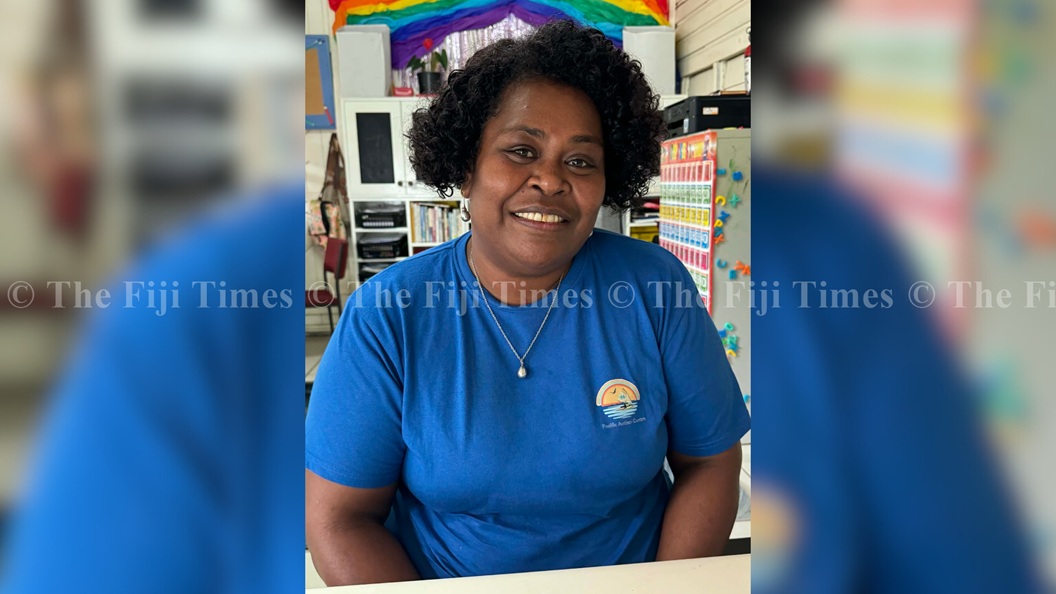
There was a time Marica Tikoicina felt she had done her part with children.
The 45-year-old from Nayavu, Wainibuka in Tailevu had spent years teaching in her church, raising her family and carrying the responsibilities of single motherhood.
When the opportunity to join the Pacific Autism Centre came up, her enthusiasm had waned, but she still decided to give it a try. What followed was an introduction to a new world and a change she had not expected.
“When I first joined, I was given about a month to observe and bond with the kids,” she says.
“I was thinking that I would stop working with kids but since joining the centre, my experience of working with kids with autism completely changed my outlook.”
That first month exposed her to a different kind of communication. Children who avoided eye contact or did not speak, and children whose responses came slowly and only after trust was established.
Marica found herself drawn in by the pace and the small signals that showed she was breaking through.
“I work with kids who have issues with communication and interacting with others. I sit with them and help them through these things — communicate with them and help them communicate with others and interact with them too.
“Over time, those who hardly spoke began opening up. They would nod in response to show they understood what I was telling them.”
Working with the children often means slowing everything down. She sits with them, guides them through small steps and helps them make sense of the classroom setting. Much of her day is spent repeating routines, shaping responses and teaching them to recognise the teacher’s voice.
Marica is upfront about the realities of the job.
“It can be a bit rough — I won’t say it’s easy because I’d be lying because we deal with children with special needs,” she says.
Yet the children lift her in ways she did not expect.
“If I come to work feeling down, as soon as I see them, they just make me happy and my mood improves.”
She remembers the moments when the children refused to leave her, a sign that the trust she had worked hard to build was finally taking root.
“There came a time children wouldn’t want to go home after school, they would cry and hold on to my hand and didn’t want to go home — all because we had formed strong bonds with the kids.”
As a mother to five daughters and four sons, Marica is familiar with the struggles and sacrifices of raising a family.
“Before PAC, I worked in other places that helped me look after and provide for my children without asking for help,” she says.
“I want the best for them. They’re the ones that keep me going, they give me the drive to try and be better.
“The children at the centre also keep me going and I look forward to seeing them every day.”
Her message to other women bearing the weight of parenting alone draws directly from her journey.
“It’s not the end of the road. Sometimes we tend to think it’s the men who bring us everything, but we have it in us to do that for ourselves and our children. We are strong, and we can do it.”

