
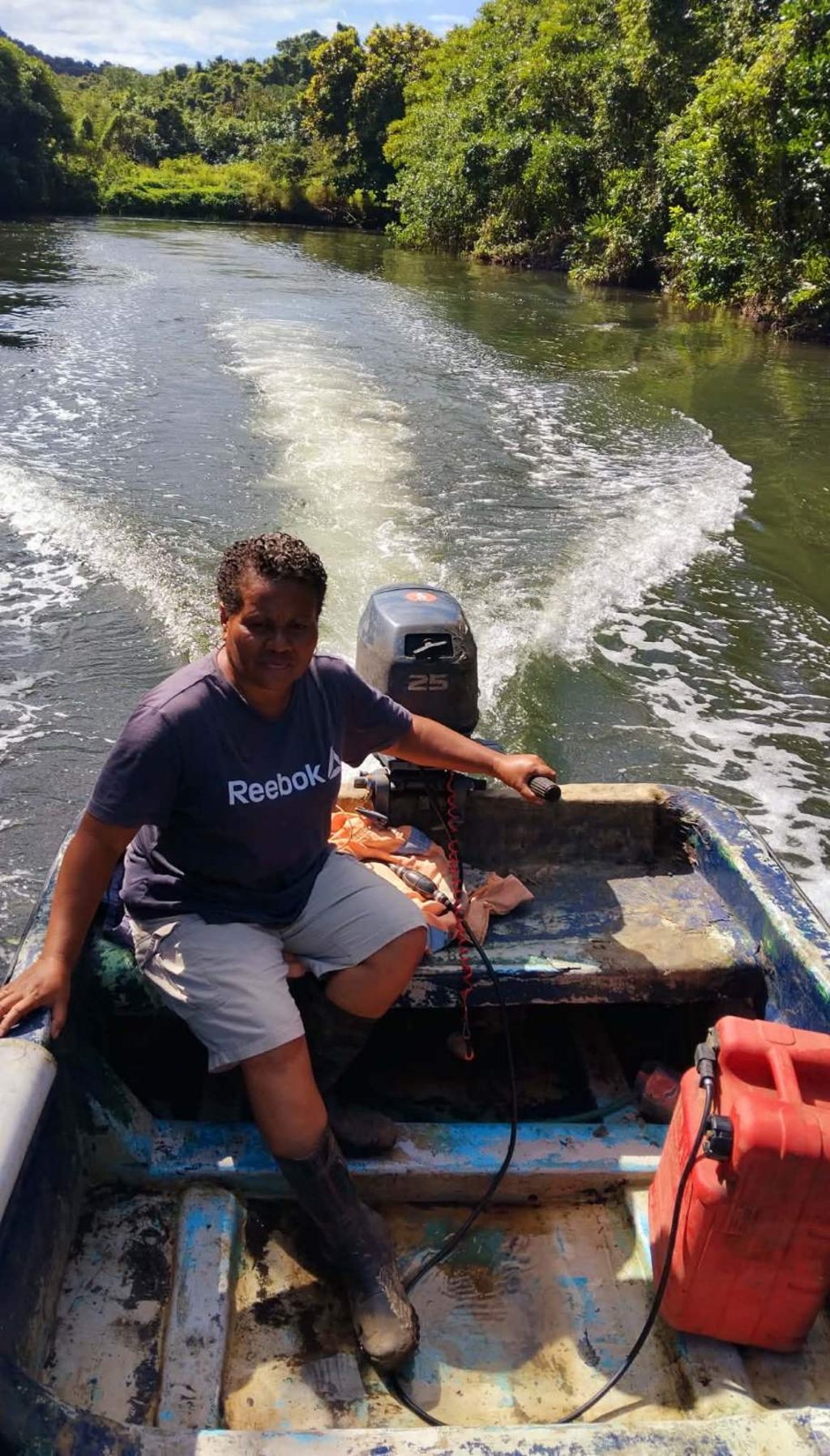
Every morning begins the same way for Katarina Vunisa: she does all the house chores, checks the tide, walks down to the boat and prepares for the day’s crossing.
At 51, she is the first woman in Barotu, Ra to hold a boat captain’s licence, a role she did not plan for but has grown into with confidence.
Vunisa is originally from Taveuni, where boats were simply how people got around. She grew up travelling by sea from childhood, long before she ever imagined she would one day captain her own.
“I am someone fond of the ocean,” Vunisa said.
“In my village in Taveuni, boat ride was the only mode of transportation, hence being a boat captain seemed natural.
“Boat captains always piqued my interest as a little girl,” she added.
Barotu, where she has lived since, sits on the roadside in Ra, a village like many others along the coast.
What set her apart from her neighbours was not just where she was from, but the seven to 10-minute boat ride she came to take several times a week, ferrying women from the village to the mangrove restoration site under the Kiwa RESTORE project.
For years, the family’s captain’s licence belonged to her husband. He worked the boat, and Vunisa managed the household. The interest in boating never left her, she said, but the opportunity to captain one herself never came, until her husband’s cataracts began affecting his eyesight, making it unsafe for him to continue navigating the water.
“I had to become a boat captain for our livelihood.
“My husband just had his eye operation last month. He couldn’t see properly for a while,” she explained.
She earned her own licence in 2023, becoming Barotu’s first female boat captain. Until then, she had been a housewife. Today, she is the primary breadwinner for her family.
Kiwa RESTORE Project is the first restoration project Vunisa has been part of. Her role is straightforward in description but demanding in practice: she picks up groups of up to seven women from the five partner villages (Barotu, Naiseralagi, Nanukuloa, Matawailevu, Navuniivi) and takes them out to the mangrove site, where the ground is slippery and footing has to be earned with every step. Once there, she does not simply wait by the boat. She joins the women to plant.
“We walk through the mud … it gets a bit slippery,” she explained.
“Then we plant the mangrove seedlings to the ground – it feels like I am giving back to the land when I plant.”
Although her husband no longer captains, the family’s ties to the water have not loosened.
“Through the money earned from ferrying the boat, I was able to help with the costs that came with my husband’s eye surgery; transportation, food and accommodation,” she said.
Their son has since earned his own captain’s licence, meaning three members of one household, husband, wife and son, have each held the qualification at some point. It is a detail Vunisa mentions with pride.
“My son also supports our house through his fishing trips,” she said.
“We are a family of captains.”
Vunisa said she was content with where she had landed, though she had not stopped thinking ahead. Her ambition now is to buy a second boat, a step that would let her expand the work she has already built.
“I do plan on expanding this work. I even got new engine for my boat through the money I have earned,” she said.
Beyond her own household, Vunisa hopes her example carries further. She wants other women in Barotu, and beyond, to consider getting their own captain’s licences rather than seeing the role as one reserved for men.
“I want to encourage other women to get their boat captain licences,” she said.
“In Barotu, women are the ones who usually go out to catch the crabs, so it would be good if they could go on their own – with other women.
“I like captaining a boat filled with women, our talanoa, and of course going out to restore our mangrove forest together.”
Barotu is one of five communities in Navitilevu Bay working with Kiwa RESTORE toward mangrove restoration, supported by the Kiwa Initiative and implemented by Conservation International.
For Vunisa, the interest was always there, since she was a little girl on Taveuni’s waters.
And now, she is the first female boat captain in Barotu Village.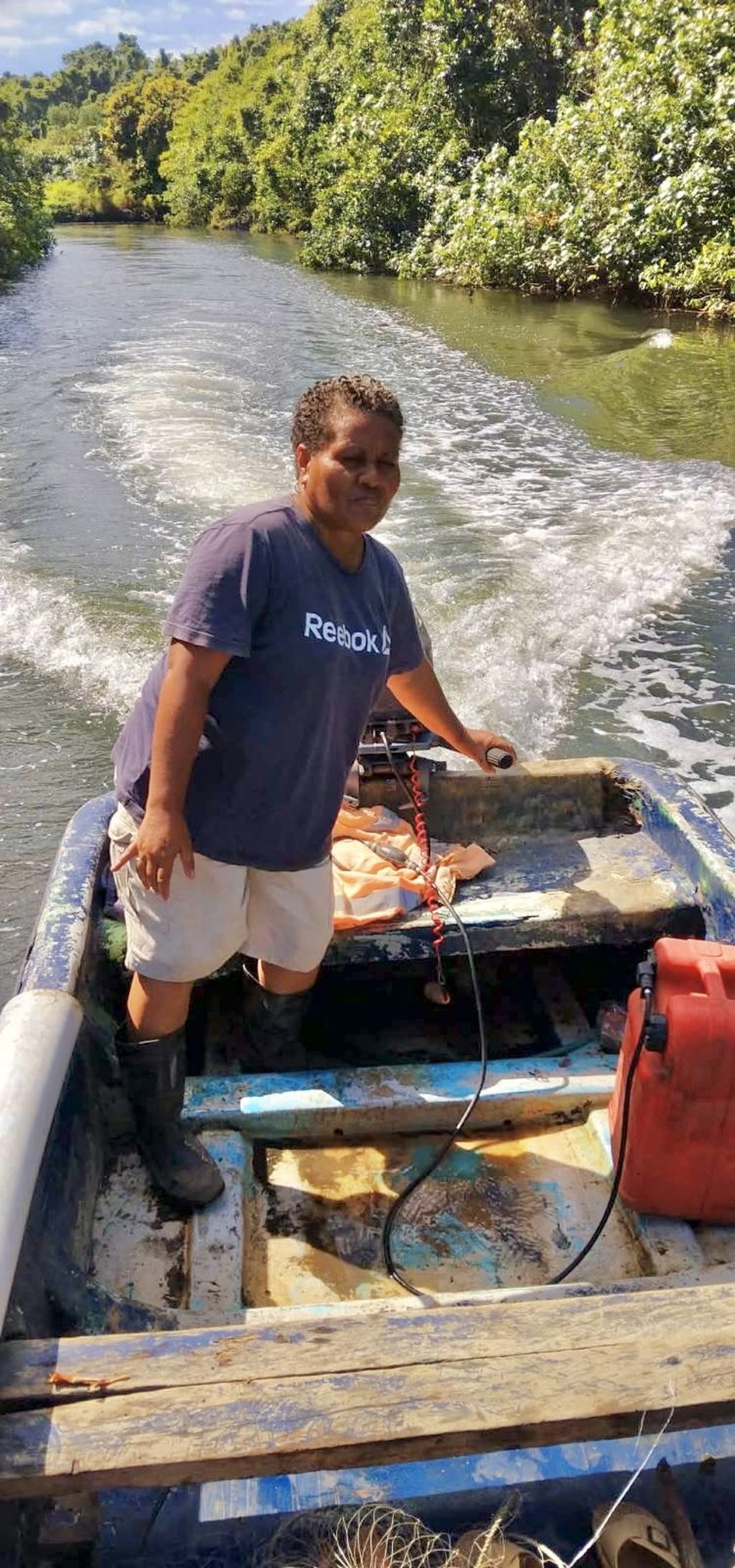
K

