
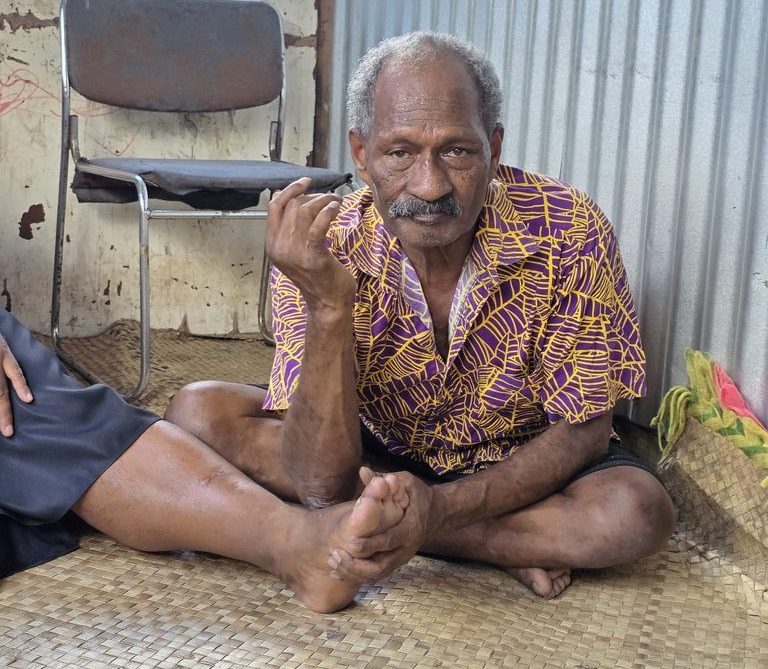
IN the quiet suburb of Newtown in Nasinu lives a man whose hands have brought relief to thousands.
Levani Tabuavulavula, from Bucalevu, Korowalau in Cakaudrove carries a gift that has been passed down through generations of his father’s family, a solisoli or traditional bone-healing practice.
For Levani, healing fractured and broken bones is not something he chose. Rather, it is something that chose him.
His journey began when he was just three months old. One day, an uncle returned home with broken ribs.
Levani’s father, the family’s healer, was away. In an act of faith and perhaps quiet desperation, Levani’s mother took the infant’s tiny hands and placed them gently on the injured man’s ribs.
What happened next remains a mystery. His uncle fell into a deep sleep and awoke healed.
That moment marked the beginning of a calling that would grow far beyond his village.
Levani’s family shares ties with the well-known traditional bone healers of Vunidogoloa, also in Cakaudrove — a region long associated with this rare solisoli.
Though born and raised in Nayavu, Wainibuka in Tailevu, Levani has never forgotten his paternal heritage and the responsibility that comes with it.
Over the years, more than 17,000 people have made their way to his home seeking treatment.
Every person he heals is carefully recorded in books — their names, villages, tikina and provinces meticulously documented, a testament to the reach of his work.
“I did not receive any medical training but got this gift through my ancestors,” Levani said.
“I believe that in the olden days, before hospitals and modern medicine, God gave gifts to every community to help them tackle diseases and injuries.”
His treatments are far from routine. Each patient is attended to differently, guided by what he senses during examination.
“For an ankle injury, I may massage the affected area using my elbow,” he said.
“For ribs, I might touch the back. For back problems, I use a neck treatment.”
It is a practice that relies not on textbooks or scans, but on intuition, experience, and faith.
There was a time, however, when Levani stepped away from healing.
Wrestling with his Christian beliefs, he began to fear that traditional practices might be misunderstood as witchcraft. For a period, he stopped altogether.
But encouragement from a pastor helped him see his work in a different light — not as something in conflict with faith, but as a gift rooted in it. Reassured, he returned to healing with renewed conviction.
Today, Levani sees patients daily from 10am onwards, allowing himself the early morning hours to tend to his home and family. People travel from across Fiji, and even from overseas, seeking his help.
“I am not here to displace modern medicine but to complement it,” he said.
For Levani, solisoli is not a personal possession but a family inheritance. To ensure its continuity, his daughters have also begun treating patients, learning the practice and embracing the responsibility that comes with it.
“This solisoli is not for me only,” he said. “It is for my whole family. That is why it is important that my children continue my legacy after me.”
In a world increasingly shaped by modern science, Levani Tabuavulavula’s healing hands remain an unrecognised bridge between tradition and faith, a living reminder that some gifts are carried not just in the hands, but in the bloodline.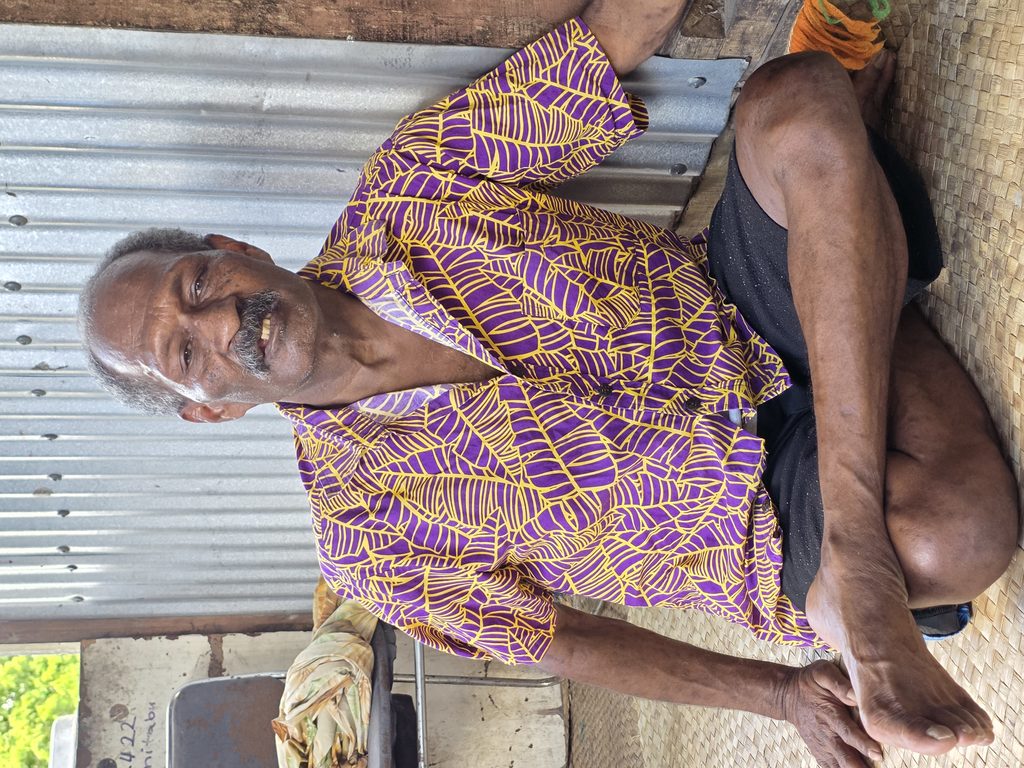
Levani Tabuavulavula at his home in Newtown, Nasinu. Picture: JOHN KAMEA

