
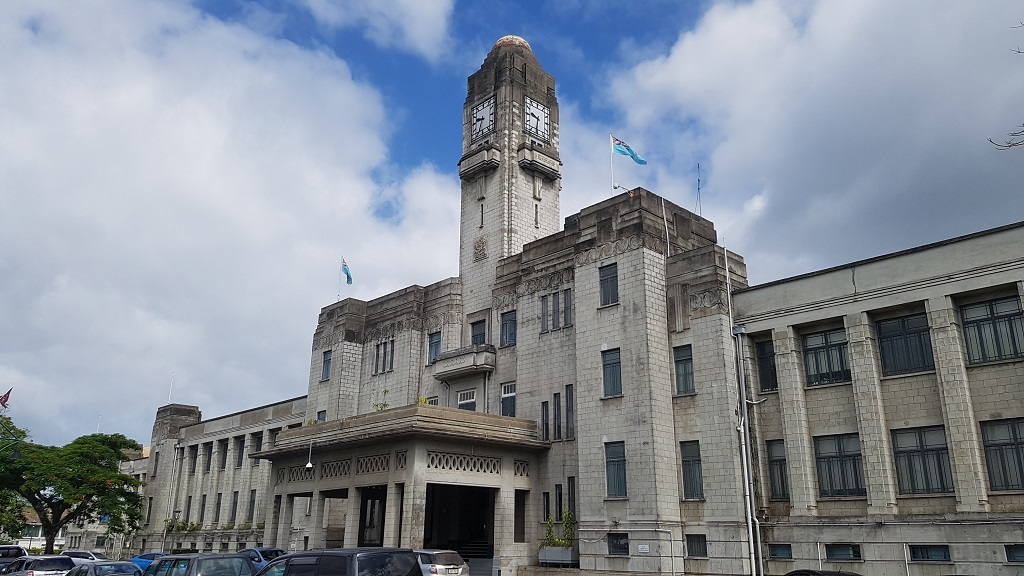
From time to time you will read in the newspaper, hear on the radio or watch on television about issues discussed in parliament by politicians. Parliament is where politicians have deliberative and consultative discussions about issues concerning Fiji.
Today we will look into Fiji’s Parliament system for our history piece, but before we do, let us first explain what parliament is. Parliament is the legislative branch or body of the State where its members are elected by the people.
Parliament as highlighted by the Parliament of the Republic of Fiji makes laws, represents the community in discussions about issues that affect them, investigates issues of importance to the community and scrutinises the actions of government.
Parliament as most of you would know has 55 members and they either belong to a political party or are elected as independent members.
If we look back to when the first European settlers arrived in Fiji, they knew about parliamentary systems or legislative councils as they came from advanced civilisations that had such assemblies at the time.
Even the first modern parliament as recorded by Wikipedia was held in 1188, which was considered the first parliament of the western world.
Looking at the history of parliament in Fiji, Fijian History (fijianhistory.com) highlights that in 1871 the first European settlers had attempted to set up a government system in Levuka.
That initial experiment to set up parliament as highlighted by Fijian History failed and a deed of cession was signed in 1874, making Fiji a British Crown colony in the Pacific.
It was here that a legislative council was formed and it was headed by a British governor in Levuka.
It was in 1882 as described by Fijian History that a new government area was established in Suva and government buildings in Levuka were dismantled and transported to Suva.
It was how Suva became the Capital City of Fiji. As the council’s role grew in decision making, it was vital that the iTaukei were represented in the council. This was where the Great Council of Chiefs (GCC) came in.
The GCC which played a major role in Fiji’s development in the past nominated two iTaukei members in 1904 to join the legislative council and they were appointed by the governor.
The council according to Fijian History also later restructured to include elected Indo-Fijian seats. Those inclusions by the council allowed healthy talks to be made. As discussions were being made by the council, it is important to note the development of where it was being held.
After the completion of the new government art deco-style government building in 1939, the building was used by the legislative council and later the House of Representatives.
The building was designed by architect, Walter Frederick Hedges. This was an anticipated project not only for Mr Hedges but for Fiji as it would house its Parliament in the Capital City.
As plans were underway with the government building design, matters continued to be addressed by the legislative council. Some of the matters addressed were women having the right to vote in Fiji for the first time in 1963 according to Fijian History, and also the iTaukei being allowed to vote for their own representatives on the legislative council rather than being appointed by the GCC.
In 1967 the ministerial system was adopted whereby three members of the legislative council were elected to the executive council. During Fiji’s independence in 1970, the legislative council was renamed the House of Representatives and Parliament sat for the first time.
According to Parliament of Fiji, Parliament continued to meet there until 1987. Around August 1973, the Government Building had some inclusions to its building
structure.
The building had a parliament library and temporary quarters included.
This newspaper on August 23, 1973 reported that the library was behind the then government building’s post office in rooms which the public relations office had used for storing official records.
Carpenters Fiji Ltd had given Parliament $100,000 as an independence gift three years earlier to pay for a library building, and the Government of Nauru also added $1500 to the library funds, also as an independence gift.
Books from the reference library on the fourth floor of the new government buildings had formed the nucleus of the parliament library.
This newspaper reported that the then London-based general council of the Commonwealth Parliamentary Association had a special library support fund to provide about 25 basic volumes to legislatures which did not have libraries.
The volumes were predominately for the use of presiding officers, members and clerks of the legislatures.
The Government spokesman who spoke to this newspaper said the basic volumes had arrived from London and the Government was going to buy more books after making provisions in its 1974 estimates.
He had told this newspaper that the library would have a permanent home in the proposed new parliament building.
A month later on September 1973, a parliament committee had recommended a new parliament building to be constructed in Suva. It was to cost about $4 million.
The move had suggested an international design competition for the project.
The committee had recommended a site on Battery Hill at the corner of Vuya Rd and Sukuna Rd in Suva for the project.
The committee was looking for at least two assessors who would be eminent architects in their own countries to design the new parliament complex.
MORE ON THIS NEXT WEEK.

