In today’s world, Smartphones and tablets have become a common part of our daily lives. Today, many young children spend hours watching cartoons, playing games and watching videos. Although these devices can support learning, too much screen time can affect children’s eyesight, sleep, physical health and overall development.
One common problem caused by excessive screen use is digital eye strain. Children who spend long hours looking at screens may experience tired eyes, headaches, blurred vision, dry eyes and difficulty focusing. They also tend to blink less while watching videos, which can make their eyes dry and uncomfortable.
Another major concern is short-sightedness (myopia). Children who spend too much time doing close-up activities and less time outdoors may have a higher risk of developing myopia. This condition makes it difficult to see distant objects clearly.
Sometimes, when children refuse to eat their meals, parents give them a smartphone or tablet to watch videos so they will eat. Although this may seem like an easy solution, parents should avoid making it a regular habit. Children should learn to enjoy their meals without depending on screens. Watching videos while eating can also distract them from recognising when they are full.
Another growing concern is that children are spending more time on phones instead of playing outside. Outdoor activities help children develop strong bones, healthy muscles and better physical fitness. Sunlight also helps the body produce vitamin D, which is important for healthy bones. Less outdoor activity may reduce children’s opportunity to get enough sunlight and affect their physical health.
Using smartphones and tablets, especially before bedtime, can also disturb children’s sleeping patterns. The blue light from screens and the stimulating content can make it harder for children to fall asleep. Poor sleep may affect their concentration, learning, mood, behaviour and healthy development.
Parents can protect their children by following a few simple steps:
• Limit children’s daily screen time according to their age.
• Encourage at least two hours of outdoor activities each day.
• Avoid using phones or tablets during mealtimes.
• Encourage reading, drawing, sports and outdoor games.
• Follow the 20-20-20 rule: every 20 minutes, look at something 20 feet away for 20 seconds.
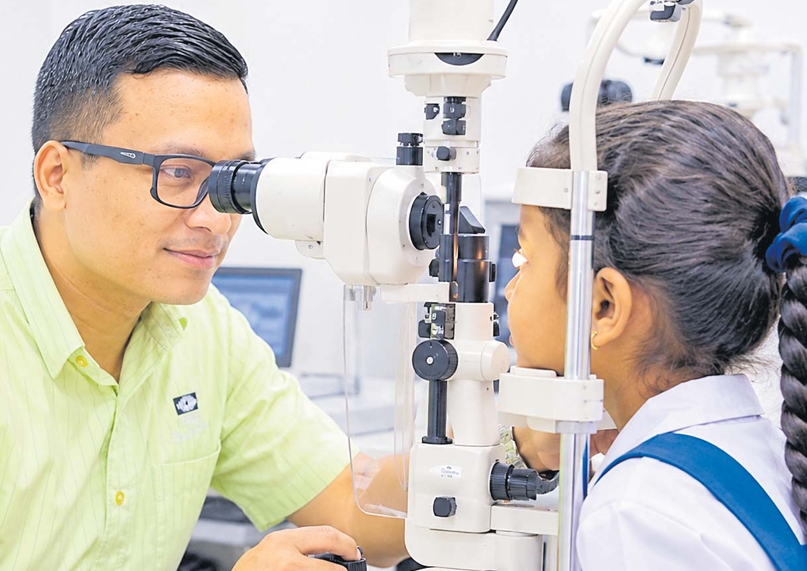
• Arrange regular eye examinations to check children’s eyesight.
Our children’s eyesight and health are precious. Smartphones and tablets are useful learning tools, but they should never replace outdoor play, healthy eating, proper sleep and family interaction. Parents must take responsibility for developing healthy screen habits from an early age. A healthy childhood today means a healthier future tomorrow.