
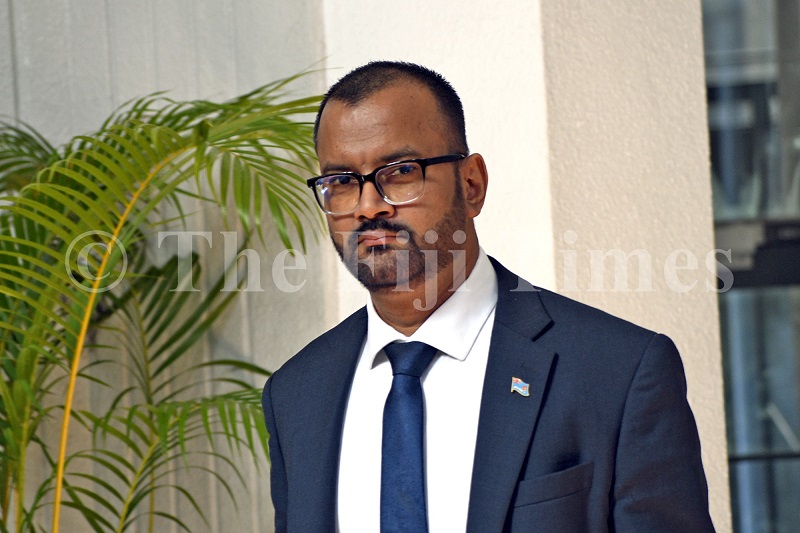
Opposition Member of Parliament Alvick Maharaj has called on the government and Energy Fiji Limited (EFL) to stop proposed electricity tariff hikes, arguing that the burden of future energy development should not be placed on ordinary Fijians already struggling with the cost of living.
In a statement, Maharaj questioned why consumers are being asked to absorb a proposed 25 per cent tariff increase, with large commercial users facing up to a 50 per cent hike, instead of EFL expanding its customer base.
“EFL should be focused on expanding the grid and increasing revenue by connecting more homes and businesses, not exploiting existing customers through higher tariffs,” Maharaj said.
He pointed to significant government investment in rural electrification prior to 2022, noting that tens of millions of dollars were allocated to grid extensions.
According to Maharaj, more than $50 million was set aside in 2018/2019, including $18.7 million paid directly to EFL to electrify over 2,300 households. A further $9.2 million was allocated in 2019/2020, and about $6.1 million in 2021/2022 for new connections and wiring.
Maharaj questioned why funding for grid expansion has reportedly slowed in recent years, despite visible progress in electrifying villages and settlements around the country.
“Is the public now being forced to pay higher power bills because the government and EFL cannot account for how previous funds were spent?” he asked.
“Why are rural families still waiting for electricity when millions of dollars were already paid out?”
The opposition MP also criticised what he described as EFL’s reliance on costly and polluting diesel generators, saying the company should instead focus on completing funded grid extensions and investing in renewable energy.
Maharaj said EFL now has access to major capital and international partners, including Japanese firms, and should use these resources to strengthen infrastructure rather than increase tariffs.
“Fijians need transparency and accountability, not another increase in their electricity bills,” he said.

