
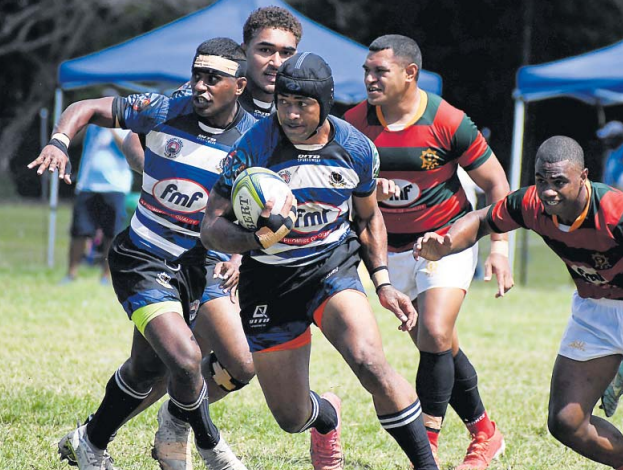
SPORT in Fiji is changing, and Suva Rugby has just taken a major step forward.
In a move that signals a new era for local sport, the Suva Rugby Union has launched its official website, becoming one of the first provincial unions in the country to fully embrace the digital space.
The initiative is more than just a website. It reflects a broader shift in how sport is managed, followed, and experienced in today’s world.
For many years, rugby in Fiji has relied heavily on manual systems, word-of-mouth updates, and scattered information.
Fixtures, player statistics, and competition results were often difficult to track. But that has to change, and Suva Rugby Union has taken that first step.
With the launch of its new digital platform, Suva Rugby is bringing structure, accessibility, and transparency to the game.
The website will allow users to access up-to-date player statistics, match fixtures, results, and live standings in one central location. It also serves as a digital hub for club registrations and official announcements, making it easier for administrators, players, and fans to stay informed.
This kind of system is standard in professional sporting environments around the world. For Fiji, and particularly for provincial rugby, it marks an important step toward modernisation.
Suva Rugby chairman Maritino Nemani has highlighted the importance of having accurate and accessible information, noting that it helps strengthen the way the game is managed while keeping all stakeholders connected.
And that connection is key.
In today’s digital age, sport is no longer just about what happens on the field. It is also about how the game is presented, shared, and experienced off the field. Fans expect instant updates. Sponsors expect visibility. Players expect recognition.
Digital platforms make all of this possible.
Globally, sport has already moved in this direction. Data analytics, live updates, digital profiles, and online engagement are now part of everyday operations. Fiji is now catching up, and Suva Rugby is leading the way at the provincial level.
The move also reflects a broader understanding that sport must evolve to remain relevant, especially for younger generations who consume most of their content online.
Importantly, the platform is not just about convenience. It is about ownership.
By having its own digital space, Suva Rugby controls its own information, its own narrative, and its own growth. It no longer depends solely on external platforms or third parties to share updates. Instead, it has a central system that belongs to the union itself.
This creates long-term value.
It also opens the door for future development. Features such as player databases, performance tracking, livestream integration, and even commercial opportunities like sponsorship visibility can now be built around this digital foundation.
The website was developed by local technology company Vanguard Tech, adding another positive dimension to the project. The platform is described as fully AI-integrated and designed with strong security features, ensuring that data is managed safely while remaining accessible.
This highlights an important point. The growth of sport is not just about athletes and administrators. It also involves partnerships with local industries, including technology.
When local companies are involved in building solutions for local organisations, it strengthens the entire ecosystem.
Suva Rugby’s move may seem simple on the surface, but it represents something much bigger.
At the centre of this transformation is Maritino Nemani, a figure whose journey reflects both leadership and service. A former Fiji football captain and a proud Nabua rugby player, Nemani has long been respected for his commitment to sport.
Today, he is giving back to the very community that shaped him. His role in driving Suva Rugby into the digital age shows vision and forward thinking, qualities that are increasingly important in modern sport.
Rather than holding on to old systems, Nemani has embraced change, setting an example not just for rugby but for all sporting bodies in Fiji.
His leadership sends a clear message to young athletes that success is not only about what you achieve on the field, but also about how you contribute off it.
Equally important is the role played by vice chairman Stanley Simpson, a titan in the media landscape whose steady support and commitment have helped bring this vision to life.
As the owner of Mai TV, one of Fiji’s leading television stations, Simpson has already been instrumental in changing the way traditional systems think and operate, particularly in how information is shared and consumed.
He represents a new kind of leadership that blends media influence with innovation, working quietly but effectively behind the scenes to ensure that ideas are not only discussed but delivered.
Their work is a reminder that the future of sport in Fiji depends not only on talent but on leaders who are willing to step up, think ahead, and invest in lasting change.
Other unions and sporting bodies across Fiji can now look at this as a model. If sport in Fiji is to grow, compete, and remain relevant on a global stage, these are the kinds of steps that must be taken.
Modern sport requires modern tools.
Suva Rugby has taken that step.
Until next week, take care and be safe!
-ARNOLD CHANEL is an investor and business executive with years of tech expertise. He can be contacted on ceo@vanguardtech.pro.

