
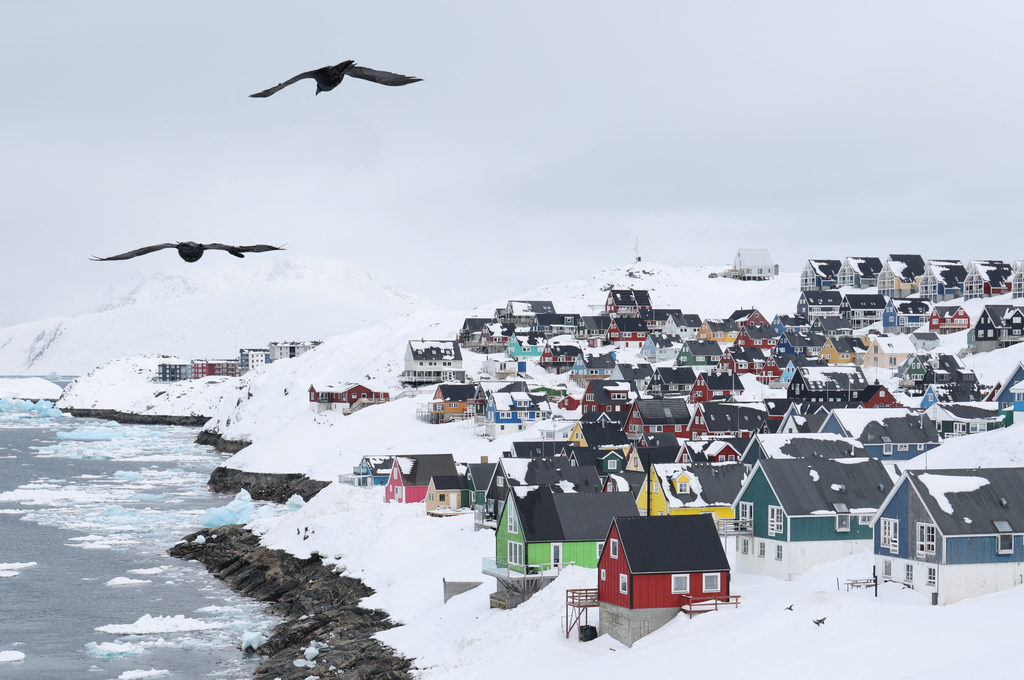
THE United States’ shift from alliance leader to unpredictable partner, exemplified by its pressure on Denmark over Greenland, signals a dangerous new era of transactional geopolitics that forces Pasifika nations to rethink their security and sovereignty.
The recent spectacle of the United States threatening tariff warfare against Denmark to force a sale of Greenland is not merely a North Atlantic curiosity. For the nations of the Pasifika, it is a stark warning signal. This episode, where a president treats the territory of a NATO ally as a real estate deal to be coerced, reveals a fundamental shift: the superpower that once underwrote a rules-based order is now actively dismantling it in favour of a “might makes right” doctrine . For Australia and the Pasifika, this geopolitical tremor, illuminates the urgent need to forge a path of sovereign resilience or risk being collateral damage in a new age of imperial ambition.
The Greenland Blueprint: Transactional Power and Its Pasifika Parallels
The mechanics of the Greenland gambit are disturbingly clear. The US desire for the island is driven by hard strategic and economic interests: securing dominance in the Arctic for defence, controlling vast deposits of rare earth elements crucial for modern technology, and commanding new trade routes . To achieve this, the administration has moved beyond persuasion to coercion, imposing escalating tariffs specifically to make Denmark’s continued stewardship of Greenland financially untenable .
The chilling precedent for the Pasifika is twofold. First, it demonstrates that even formal alliances offer no protection against a transactional superpower’s territorial or strategic whims. Second, the justifications — strategic location, critical resources, and maritime control — are identical to those that heighten tension in the Pasifika, from the South China Sea to the exclusive economic zones (EEZs) of small island states . If Greenland, with its Danish protector and NATO membership, is not safe, what immutable guarantee protects the sovereignty of Pasifika nations over our own vast ocean domains?
Australia’s AUKUS Dilemma: Between Dependency and Distraction
In this volatile climate, Australia’s signature security move, the AUKUS pact, embodies a profound strategic dilemma. Conceived as a cornerstone for deterrence, its fate is intrinsically tethered to US political continuity and commitment — a commitment now shown to be conditional and whimsical . The pact’s overwhelming focus on high-end, long-term military technology, like nuclear-powered submarines arriving in the 2040s, creates a critical perception gap in the immediate region .
While Australia looks to a distant horizon for security, its Pasifika Vuvale, faces existential threats today: climate change, economic development, and non-traditional security challenges. There is a growing risk that AUKUS is perceived not as a contribution to regional stability, but as a provocative, inward-looking project that diverts Australian attention and resources from the core needs of its neighbours . This gap is a strategic liability, undermining Australia’s credibility as a reliable, resident power.
The Pasifika Response: Agency, Unity, and the “Blue Pacific” Fortress
Confronted with this new era of great-power caprice, Pasifika Island nations are not passive victims. We are actively constructing a fortress of sovereignty built on law, unity, and a clear-eyed articulation of our own priorities.
-The Unifying Vision: The 2050 Strategy for the Blue Pasifika Continent is our region’s masterplan. It asserts a collective identity as stewards of nearly 20 per cent of the earth’s ocean, demanding that external engagement align with our terms on climate action, ocean health, and sustainable development .
-Global Advocacy: Our leaders are taking this vision to the world’s highest platforms. At the United Nations General Assembly, they amplified calls for urgent climate finance and presented the Pasifika Resilience Facility as a regionally owned solution, asserting our agency in shaping global responses to challenges they face firsthand .
-Strategic Diplomacy: Heeding the warning that “if you’re not at the table, you’re on the menu,” the region is wise to diversify our partnerships . Engaging deeply with the Europeans and Asian countries, and others to create a “dense web of connections” that provides leverage and options, ensuring no single power can dictate our region’s future.
This is the practice of “values-based realism” in action — principled in defending sovereignty and international law, but pragmatic in building coalitions to secure it.
The Path Forward: From Subordinate Allies to Strategic Stewards
The lesson from the Arctic is unambiguous: the era of comfortable dependency is over. Australia and New Zealand, as regional middle powers, face a critical choice. They can remain subordinate to a capricious distant power, or they can step decisively into the role of strategic stewards for the Pasifika.
This requires a fundamental re-calibration:
1. Elevating Pasifika Priorities: Treating climate action, infrastructure partnerships, and labour mobility with the same strategic seriousness as naval procurement. Security must be comprehensively reframed through the Boe Declaration lens, which prioritises human, environmental, and economic security alongside traditional concerns.
2. Building Tangible Resilience: For Australia, this means investing in sovereign defence capabilities that allow it to hold its own approach, demonstrating to Washington it is a capable ally and to the Pasifika a serious partner.
3. Becoming the Honest Broker: Australia and New Zealand must use their unique position to translate Pasifika needs to Washington and others, advocating for engagement that is consistent, generous, and aligned with the 2050 Strategy. They must also communicate that viewing the Pasifika solely as an arena for military competition is a losing strategy.
The great-power competition over Greenland has delivered a grim gift of clarity. The rules-based order that protected the vulnerable is under direct assault.
For the Pasifika Vuvale, the response must be unity, legal fortification, and the assertive pursuit of a future authored by themselves.
The goal is not to choose between competing giants, but to build such a strong, cohesive, and diplomatically savvy collective that the giants must respectfully come to the Pasifika’s table, on its terms. The storm seeded in the Arctic is on the horizon; the time to reinforce the Pasifika’s house is now.
RO NAULU MATAITINI is a concerned citizen and a member of the Bose Levu Vakaturaga. The views expressed herein are his.

