

It seems that we, as of late, have collectively developed an uncanny ability to heap great misfortunes upon ourselves unnecessarily. These are manifested in a variety of ways — through outright negligence of others, blind obedience to authority, ethical incompetence, as well as wilful impudence and conceit at the politico-legal and socio-cultural levels of our society. In fact, adroit observers of our society have likened this phenomenon to the perpetual recurrence of the metaphorical foot in mouth syndrome in our country.
THE latest episode involves a report in The Fiji Times about a vanua consisting of four tribes on Vanua Levu outlawing its women from consuming kava within its geographical boundaries.
The decision, made at a traditional gathering of vanua chieftains, was justified by the perceived breakdown of discipline within the vanua concerned.
It was noted by one of the clan heads that parental neglect is a major contributing factor to the social degradation of customary norms in the villages within the vanua.
Suffice to say that this decision has spawned conflicting outlooks from sympathisers and detractors alike.
On one hand, the sympathisers point out the need of respecting the worldview of the iTaukei — an outlook that is based on their customary ways of knowing or sala vakavanua.
Indeed, this viewpoint is animated by the widespread consensus within the indigenous community that our current constitution fails to recognise the iTaukei traditional governance systems within its charters.
On the other hand, are those who disagree with the decision. They refer to human rights conventions and constitutional warrants as the basis for their qualms.
They point out that the ruling is outdated and that vanua leaders have to be more cognisant of the fact that their decisions, though may be customary or traditional in nature, are ultimately answerable to the laws enshrined in our constitution.
Both perspectives are important reminders of other unresolved tensions concerning tradition and modernity, taukei and vulagi and between men and women in our communities right across Fiji.
The impasse between these two groups is further compounded by the deep distrust each has on the other. They both provide compelling arguments of the merits of their respective causes in order to convince the public on the veracity of their validity-claims. Compelling as these maybe, there is, however, a suggestion in both camps that “tradition” and “modernity” are mutually exclusive categories. In our view, this is a red herring.
One of the drawbacks of viewing tradition and modernity as a dichotomy is how it prevents the interrogation of one viewpoint from the perspective of the other in a real meaningful manner; one that aims at locating potential synergies between the two.
We are convinced that the perceived differences between the two camps can be mediated with a more judicious approach.
In other words, modern sensibilities in Fiji could potentially benefit from some good old-fashioned truths and, by the same token, the efficacy of some traditional ways of knowing and doing can be further improved through engagement with contemporary discourses.
This attitude allows us to keep our tradition without unnecessarily enslaving ourselves to some of its more questionable imperatives. There are indeed instances where “traditional” and “modern” values are mutually reinforcing.
Let us take an example: civil liberties, often believed to be premised on western ideas, are often portrayed in some iTaukei circles as the bane of traditional authority within a vanua.
Yet any rudimentary examination between the two so-called antithetical systems will highlight the comparable roles that respect (veidokai), deference (veivakaliuci) and reciprocity (veisolevaki) play in the maintenance of, both, iTaukei traditions as well as neo-liberal notions of human rights.
Is it really a leap too far, then, to reorient these traditional values, given our contemporary contexts, and apply them to everyone within and outside the confines of our own vanua?
Or are we satisfied with the current status quo of thinking about “tradition” and “modernity” as mutually inconsistent?
Our collective failure to inspect and critically interrogate our customary ways from modern prisms of analyses, and vice versa, has led to the malaise and follies in our postcolonial present.
As to the decision to bar women from kava consumption, do we really think that the only way to improve our vanua is to put boundaries on what our women can do?
The problem with the sympathisers of this position is that only one gender has been singled out to give its pound of flesh for a social problem that affects us all.
Modern sensibilities dictate that this boils down to the problem of power in our society. In other words, we need to connect the lived experience of our women to the history of our society in order to understand how power works in this instance.
We can do this by asking ourselves a few questions such as:
Are the people who have been barred from consuming kava belong to the same category as those that are constantly surveilled in terms of what they may choose to wear in modern-day Fiji?
Is it the same gender that, historically, would face an ignominious fate if death befell their husbands, before them, in pre-colonial Fiji? Is it the same group that are discriminated against when it comes to authority structures in contemporary Fiji?
Are they usually the victims of domestic abuse in Fijian households?
Are we referring to the same group when we talk about victims of sexual harassment and unequal pay in the workplace?
Indeed, the systematic disfranchisement of women takes on grave overtones when we realise that this victimisation is not limited to Fiji but is, in fact, global in nature.
Patriarchy, traditionalism, developmentalism, capitalism and other isms seemed to have actively conspired to suppress women everywhere. Is this trend OK for our Fijian mothers, sisters and daughters?
It is only by posing these uncomfortable questions to current norms about what is proper and acceptable for women in the vanua do we get an insight into the workings of power in our society.
This realisation will allow us to address the current power asymmetries between men and women in our country if we choose to.
Sensitivity to power in its various guises also ensures that we are, also, not blindly following our tradition just because it is there.
It is in this way that those who continue to argue that the vanua should be left to do its own thing have, in light of all the structural disadvantages faced by women today, become complicit in the systematic belittling and victimisation of women in iTaukei society.
Thinking our way forward
Human existence is shaped by history, contexts and actions or agency.
Custom, therefore, is an institutionalised way of thinking and acting over time a cluster of human practises that are embedded into the social tapestry of any given community.
These newly institutionalised practises then become the new ‘normal’ through performative iterations, metamorphosing into “tradition” as time passes.
Indigenous Fijian customs, consequently, are the cumulative sum of our historical agency or actions from the past to the present.
This is to say that our norms are simply practises that have been institutionalised during the course of our historical journey.
As such, they also have been changing as our worldviews and priorities change.
They are, therefore, not sacrosanct as they are constantly reviewed when we become aware of new and better imperatives on our collective horizon.
Given this, we cannot really refrain from constantly questioning the validity of any wisdom that have been handed down to us over the ages.
Our ancestors would have been appalled if we lived out our lives mimicking what they did while not understanding the difference.
Indeed, to blindly follow on their heels and hanging on to their proverbial coattails is to deny our collective ability to remake our society in light of our contemporary realities and sensibilities.
It is ironic, therefore, that we can all agree, on one hand, to review the 2013 constitution so that it is more reflective of our present conditions and aspirations while, on the other, shutting the door firmly on doing the same to our traditions based on an uncritical nostalgia for the past. We understand that it is convenient to fall back onto tradition for ready-made answers to the dilemmas of the present.
However, we are also mindful that one of the gravest mistakes we can do is to delude ourselves that our future is in the past.
It is not only perverse to pretend that it is so, it also speaks volumes of our timidity, or lack of courage, to interrogate our customary ways in light of our present requirements.
The Greek philosopher, Plato, narrates a story that speaks directly to the nature of the human condition in the Republic.
It is a tale based on a fictional conversation that took place between two men dear to him – his older brother Glaucon and his mentor Socrates.
The latter asked the former to imagine a world whose people are living out their lives chained in a cave.
Their shackles prevented them from looking elsewhere other than the back of the cave. In the background behind them is a raging fire that casts a light backdrop on the cave wall directly in front of them.
Lastly, behind the fire were other humans lifting different artefacts as well models of animals so that their silhouettes were easily reflected on the wall.
Glaucon pointed out that, given that scenario, the imprisoned cave dwellers would be expected to mistake the shadows of the various artefacts and models for the real thing. Socrates then reminded him that it is only so until the moment one of them breaks loose and ventures out to experience the rejuvenating power of the sun as well as the simple pleasures of watching real animals in their natural world. Even though this experience may initially be painful, bewildering and traumatic for the person involved, it nevertheless has the liberating effect of freeing the prisoner from the delusions of the cave.
Would it be prudent then, Socrates wondered, for this person to return to his or her original spot inside the cave and enlighten others of their follies? More importantly, would the others believe what they are now told about the world outside of their shared experiences?
For us in Fiji the answer to this enigma lies in our collective will to free ourselves together from conventions of the past that have outlived their used-by date. In order to do this we must have the audacity to question our deepest held beliefs by holding them up to public scrutiny. Only then will we get to the destiny we all hope for ourselves and our children.
So let us get out of our caves. We have a future to conquer and nation to salvage.
DR TUI RAKUITA teaches at the School of Social Science, University of Otago.
DR SEVANAIA SAKAI teaches at the School of Agriculture, Geography, Oceans, and Natural Sciences, University of the South Pacific. The views expressed herein are the authors and not of this newspaper.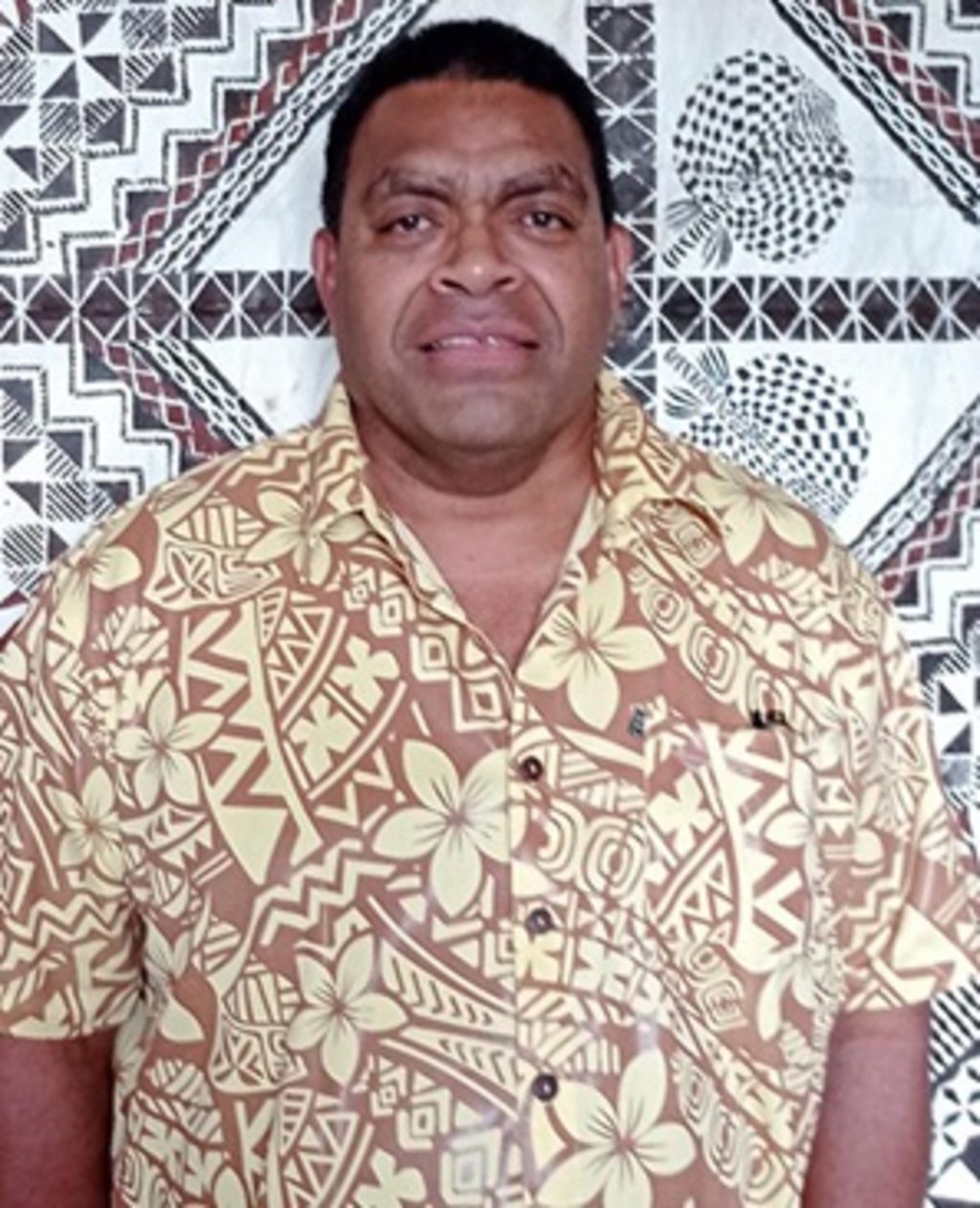
dr tui rakuita

