
ONE day, Fiji woke up and drugs were everywhere.
Not gradually. Not quietly.
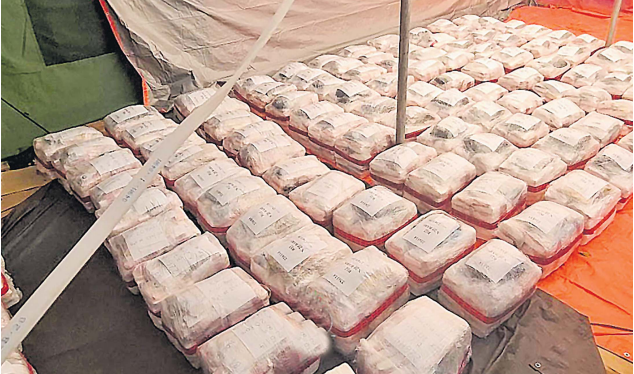
A drug haul seizure of 2630 parcels of cocaine during a coordinated drug raid in Vatia waters, Tavua on January 15,
But suddenly, brazenly, on our streets, in our communities, at our doorsteps.
And the most confronting question of all is this: How does something of this scale simply “arrive” without warning?
Drugs do not drift into a country by accident. They’re not carried in by the tide or blown in by the wind.
They arrive through networks, routes, permissions, and failures – sometimes deliberate, sometimes negligent, sometimes criminal.
So Fijians are entitled, no, obliged, to ask the hard questions.
Who brought it in? How long has it been happening? Were authorities asleep at the wheel? Or worse, were some actively complicit? Were positions of power and public trust compromised? And why were ordinary citizens the last to know, yet the first to suffer? These aren’t wild accusations.
They’re legitimate questions in any democracy confronted by a crisis of this magnitude.
Because the cost has been devastating.
Lives lost. Families shattered.
Young people robbed of their future.
Communities hollowed out by addiction, crime and despair.
Drug lords don’t just traffic substances.
They traffic human destruction.
And they do so with ruthless efficiency, caring little for the collateral damage left behind.
But here’s the uncomfortable truth: The drug problem is rarely just a drug problem.
History shows us that where drugs flourish unchecked, something deeper is sometimes at play. Weak
borders. Corrupt systems. Compromised institutions. Or strategic neglect.
And sometimes, far more disturbingly, external interests.
It’s not unreasonable to ask whether Fiji’s drug crisis serves more than one purpose. On one level, it’s about money – vast sums flowing into the hands of criminals. On another, it may be about something far more strategic: weakening a nation from within.
Because a society consumed by addiction, chaos and mistrust becomes easier to influence, easier to divide and easier to control.
When citizens turn on each other arguing over blame, ethnicity, politics, or ideology – the real architects of the crisis operate comfortably in the shadows. Chaos becomes a tool.
Division becomes leverage.
And then, almost predictably, “help” arrives.
Assistance is offered. Aid is promised.
Expertise is flown in.
But history also teaches us this sobering lesson: There’s no such thing as a free lunch in geopolitics. Help almost always comes with conditions.
Influence is rarely given without expectation. And sovereignty, once quietly traded away, is difficult to reclaim.
So while Fijians argue among themselves about who’s responsible, those with the most to gain may already be several moves ahead on the chessboard.
This isn’t about paranoia. It’s about vigilance.
The world has changed dramatically.
Power no longer always arrives with boots and banners.
Sometimes it arrives disguised as commerce, aid or rescue after a crisis has been allowed to fester.
And that’s why Fiji must resist the temptation to look only at the surface.
Yes, drug dealers must be hunted down.
Yes, addicts must be helped, not condemned.
Yes, law enforcement must be strengthened and held accountable.
But beyond that, the nation must demand transparency, truth and courageous leadership. It must ask who benefits from Fiji’s pain and who pays the price.
Because if Fiji does not ask these hard questions now, others will answer them later on their terms, not ours.
And by then, the cost may be far greater than we ever imagined.
COLIN DEOKI lives in Melbourne, Australia and is a regular contributor to this newspaper. The views expressed in this article are his and not necessarily of this newspaper.

