
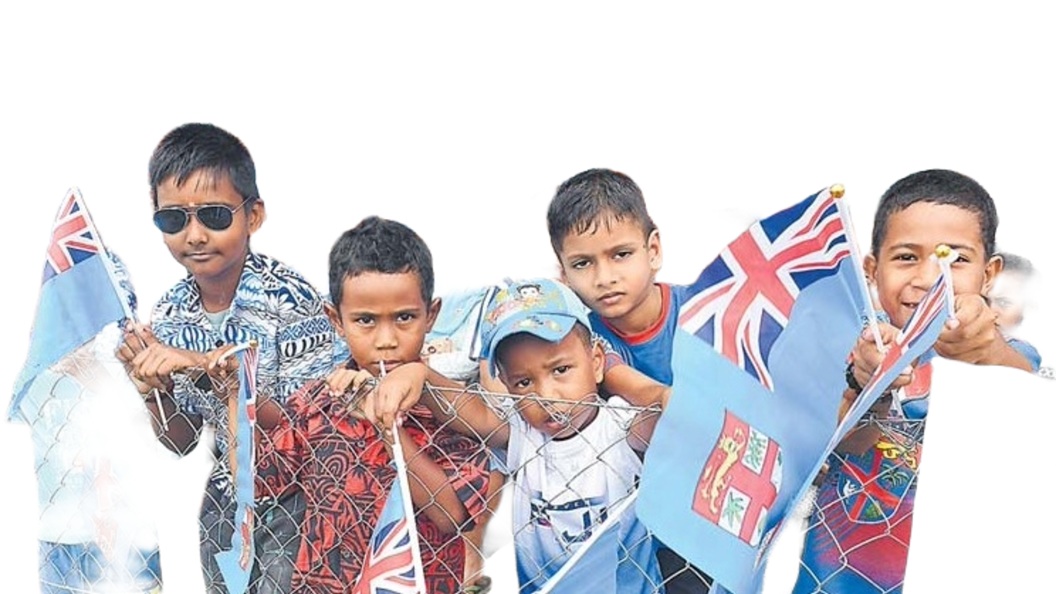
The present debate over the word “Fijian” should begin with respect.
The Great Council of Chiefs has argued that the term should be reserved for the indigenous people of this land, while Ratu Timoci Tavanavanua has argued that it can remain a name shared by all citizens in the interests of inclusion and national unity.
Both positions arise from concern for Fiji. Both deserve to be heard carefully and fairly.
Part of the difficulty is semantic. In English, a word like “Fijian” can function in two ways at once. It can be a demonym, meaning a person connected to a place or country. But it can also function as an ethnonym, meaning the historic name of a people.
Once one word is made to carry both meanings, confusion is almost inevitable. Is “Fijian” simply the civic name for all citizens of Fiji? Or is it the historical name of the indigenous people of this land? In public memory, it has long carried both meanings.
That is why this issue is not just about vocabulary. It is about dignity, history, and belonging. Fiji’s own constitutional history shows this clearly.
The 1970 Constitution, which came into effect at independence, recalled in its preamble that on October 10, 1874 Cakobau and other high chiefs ceded Fiji to Great Britain. That same constitutional order still used “Fijian” in the older indigenous legal sense, including references to “Fijian land, customs or customary rights.” The point is important: the constitutional tradition that accompanied independence still preserved “Fijian” as an indigenous historical term.
That history matters because it touches the deeper emotional issue. Indigenous Fijians are not simply a people who were conquered, renamed, and told to live under a separate label. The chiefs of Fiji were central to the country’s constitutional and political history. For many indigenous Fijians, therefore, the word “Fijian” carries not only ethnicity, but also chiefly stewardship, first belonging, and connection to the vanua. It carries a sense of rootedness and moral authority.
This helps explain why the present terminology remains difficult for many. The 2013 Constitution states that “All citizens of Fiji shall be known as Fijians,” while its preamble separately recognizes “the indigenous people or the iTaukei.”
Many indigenous Fijians experience this not as a neutral act of inclusion, but as a reordering in which their historic name was widened for everyone, while they themselves were placed under another constitutional label. Whether others agree with that feeling or not, the feeling is real.
There is also a wider anti-colonial instinct behind it. In New Zealand, official sources describe Māori as tangata whenua, the people of the land. In Australia, official guidance stresses respectful use of the term “Aboriginal and Torres Strait Islander peoples.”
In both countries, the general civic population carries one national label, while the indigenous peoples stand under another. That may work administratively, but it can also carry a lingering sense that the first peoples of the land are placed in a separate category while the state’s common identity sits above them. Many indigenous Fijians do not want that for Fiji.
That is why even a middle-ground compromise such as “Fiji Islander” for citizenship and “Fijian” for the indigenous people may still fall short emotionally.
It may solve a linguistic problem, but it does not fully solve the psychological one. It still preserves the structure of separation. It still leaves indigenous people standing under a distinct state label. For many iTaukei, that does not feel like restoration. It still feels like distance.
My own view is that the first critical step should be to approach the Great Council of Chiefs. Before Fiji decides how to move ahead, it should first return to chiefly wisdom and ask for direction. In that sense, Jeremiah 6:16 is deeply fitting: we should “ask for the old paths, where the good way is, and walk in it.”
The point is not to go backward. The point is to recover the dignity, moral authority, and confidence that the chiefs have historically carried in the life of this nation.
If the question is first placed before the GCC, then the sharing of the word “Fijian” with others can come, not as an imposed concession, but as a chiefly act of leadership, confidence, and welcome. That changes the moral logic of the whole debate. It says to the nation: this name has not been taken from the indigenous people by state power and redistributed from above. It has been shared by the first people of the land, through their chiefs, in a spirit of confidence and generosity.
That is, instead of the state appearing to take the historic name of the indigenous people and redistribute it from above, the chiefs themselves would decide whether to extend that name outward in a spirit of welcome. That would give back a sense of control to the indigenous people. It would say, in effect: we remain the historical Fijians of this land, and from that place of dignity we are willing to include others within the national name.
I believe the probability of success is high if that approach is taken. Why? Because the iTaukei are, by nature and tradition, a caring people. Our chiefly culture is not only about authority; it is also about responsibility, hospitality, and relational duty.
Our Christian inheritance reinforces that same instinct. We are capable of sharing the word “Fijian” with others, not because we have surrendered our own identity, but because we are secure enough in that identity to be generous. That is a stronger basis for unity than an arrangement many still experience as imposed.
This is why the present constitutional review is such an important opportunity. The question is not whether indigenous Fijians are willing to include others. I believe they are. The real question is whether inclusion should come by first placing indigenous people under a separate label they did not choose, or whether it should come from a restored sense of dignity and control. I believe the second path is wiser.
Fiji does not need a naming system that creates unity by first wounding memory. It needs one that begins with honour and then extends that honour outward. Let the chiefs be approached first.
Let them be asked, in the spirit of the old paths, whether the historic name “Fijian” may be shared. If they agree, then Fiji will have found something much better than a technical compromise. It will have found a path to national unity grounded in dignity, confidence, and welcome.
If that can be achieved, then “Fijian” will no longer be a word caught between grievance and confusion. It will become what it should be: a name with roots deep enough to be shared.
- Professor Jito Vanualailai is the University of the South Pacific’s Deputy Vice-Chancellor and Vice-President (Education). The views expressed in this article are his and do not reflect the views of this newspaper.

