
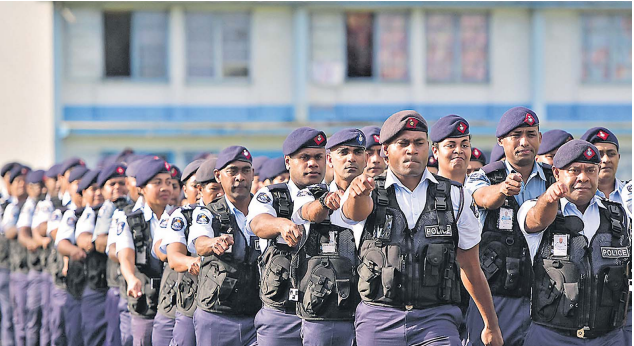
TRUST, or rather the lack of it, emerged as one of the most consistent concerns raised during consultations for the National Security and Defence Review. Individuals and organisations shared their fears openly. Many said they no longer believed the police could protect them. Others questioned whether some officers were themselves involved in criminal activity. The shadow of past human rights abuses, coupled with the recent intrusion of the drug trade and the militarisation of policing culture, has deepened the mistrust.
Civil society groups and government stakeholders alike pointed to specific police stations associated with serious abuses. One organisation even called for a Royal Commission of Inquiry into the Fiji Police Force. When the public begins to question the integrity of those responsible for keeping them safe, we are no longer dealing with an isolated institutional problem, we are confronting a national security crisis.
In many consultations, individuals spoke more candidly when government officials were absent. They expressed concerns about nepotism, corruption, and political interference. These perceptions, whether accurate or not, erode the legitimacy of the State and weaken the social contract between citizens and their government.
Rebuilding this trust must be a national priority. Strong and transparent partnerships between government and citizens are essential if we are to confront the threats facing the country – most urgently the spread of illicit drugs. Restoring faith in our disciplinary forces requires honest conversations in every corner of our society – in schools, village halls, provincial meetings, townships and Parliament.
As an island nation, Fiji has the advantage of marine borders. With the right investments in surveillance technology and co-ordinated maritime operations – especially through assets housed within the Maritime Essential Services Centre and Navy – border security can be strengthened. At the same time, Fiji’s close-knit social fabric means information travels quickly. Communities often know who is using or selling drugs, yet they fear retaliation or believe reporting crime to the police is pointless or pointedly harmful as this could invite retribution. That fear, that distrust, is our biggest obstacle.
What can be done?
Fiji is not alone in facing a policing crisis. In the 1990s and early 2000s, New South Wales in Australia grappled with similar problems – corruption, community mistrust, and police involvement in drug trafficking. The solution was neither quick nor easy. It required the creation of a core group of officers with impeccable integrity and the strengthening of an independent anti-corruption body. High-profile convictions, including the jailing of corrupt officers, sent a powerful message.
There are lessons here for Fiji.
First, all public servants – current and prospective – should be rigorously vetted to ensure that only individuals of the highest integrity serve the country. Second, FICAC must be strengthened. Its credibility has been damaged, and rebuilding it will require greater independence, clearer mandates, and the courage to prosecute without fear or favour. Third, foreign prosecutors should be brought in for sensitive cases to ensure public confidence in the process. Finally, an anonymous whistle-blower hotline would give citizens and honest officers alike a safe avenue to report wrongdoing.
We cannot deny that some officers have broken the law. But it is equally important to recognise that most men and women in uniform serve with honour and remain committed to their oath. The task now is to empower them – to rebuild a clean, credible cadre of officers capable of restoring confidence in the system.
Reversing the trust deficit is not something that will happen overnight. But it can happen. It begins with truth, transparency and a willingness to act decisively. With the right reforms – and with leadership committed to integrity over convenience – Fiji can rebuild a police force that its people trust, respect and rely upon.
In a time when our national security challenges are growing more complex, nothing is more important.

