
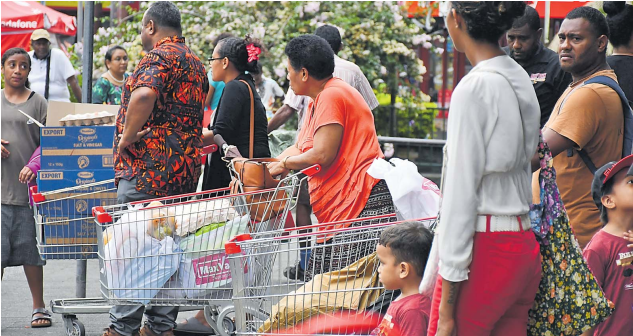
While the Government celebrates its budget as “people-first,” a closer look suggests that the people most in need are still being left behind. Behind the optimistic headlines lies a budget riddled with troubling gaps, misplaced priorities, and a concerning lack of transparency. For the average Fijian, the numbers don’t add up, not in their wallets, not in their kitchens, and not in their futures.
TAKE the much-publicised reduction of VAT to 12.5 per cent. As highlighted in The Fiji Times (02/08), this shouldn’t have been a difficult decision. After all, Fiji operated with a 9 per cent VAT rate prior to the 2023–2024 budget. So, while the recent drop may seem like a win for taxpayers on paper, in reality, it barely scratches the surface of the deepening financial pressure that many households continue to face.
Then there’s the 300 per cent tax deduction under the Employment Taxation Scheme, hailed as an incentive for job creation through apprenticeships and part-time work. But what does this really mean for the workers themselves? The concern is that we’re building an economy on shaky ground, fostering a labour market dominated by precarious, low-paid, insecure jobs. Businesses benefit, yes, but many workers remain stuck in roles with no contracts, no safety net, and no path to real financial stability.
This shift toward casual and apprenticeship-based hiring may seem efficient for businesses, but it actively discourages long-term employment practices. Instead of investing in stable, full-time roles, employers are increasingly relying on short-term, disposable labor, creating a cycle where workers are kept in limbo, with no job security, no benefits, and limited access to credit. It’s a model that serves profits, not people.
Even the minimum wage increase, which took effect on April 1, 2025, feels like too little, too late. Yes, it’s a step forward, but one that took over two years and three months to materialise after the December 2022 general election. For many workers, the brutal force of inflation has already erased any real value this increase might have delivered. If this is what progress looks like, where is the equity?
Now let’s turn to the Fiji Police Force, a sector that continues to receive lavish funding without delivering proportional results. This year’s budget allocates $240.3 million, up $13.5 million from the previous year’s already sizable $226.8 million. At face value, it looks like a strategic investment in public safety, but the real question is: how exactly is this money being spent?
Is it reaching critical operational needs like transport, salaries, electricity, and communication? Or is it disappearing into poorly tracked expenses — meal allowances, perks, or even entertainment? When you’re asking taxpayers to shoulder growing economic burdens, the least you owe them is transparency.
Without a detailed, public breakdown of how this $240.3 million will be used, public skepticism is not only understandable, it’s justified. Last year’s bloated budget did little to prevent glaring security lapses, including the now-infamous break-in at the Prime Minister’s own residence. If the highest office in the country isn’t safe, what does that say for the rest of us?
While drug-related crimes continue to dominate headlines and policy conversations, a quieter surge in everyday crimes, robberies, break-ins, thefts, sacrilege, traffic violations, bribery, and nepotism is sweeping through communities. These issues may not make front-page news, but they are just as destructive to the sense of safety and trust that every citizen deserves.
A case in point: the vandalism at the Samabula Shiva Temple, a sacred site located less than 300 meters from the Samabula Police Station. A visible police presence could have deterred such a disgraceful act. Instead, patrols are scarce, and the silence of sirens is louder than ever. When crime happens within shouting distance of a police station, what message does that send?
And what are police prioritising instead? Take the growing number of Toyota Hilux vehicles, now known more for their heavily tinted windows and sealed cabins than for community presence. Are officers choosing comfort over vigilance, hiding behind tinted glass while the public wonders: is our security being traded for air-conditioning?
Then there are the troubling, borderline absurd reports of reckless conduct by law enforcement. Police vehicles caught over-speeding, illegally parked for personal pleasure, with hazard turned on. Police officers are damaging property and dismissing it as “careless driving.” One particularly disturbing case involved a police vehicle, sirens blaring, speeding through the streets, only to buy kava. When this was reported, it wasn’t the officers who were held accountable; the complainant was interrogated as though they were the criminal. The case? Quietly withdrawn.
These are not isolated incidents. They reveal a disturbing power imbalance, where some officers behave as if they are above the very laws they’re meant to enforce. The role of a police officer is not to intimidate or inconvenience, but to protect and serve. That promise is breaking, and so is the public’s trust.
If this erosion continues, no amount of funding, not the $226.8 million allocated last year, nor the $240.3 million handed out this year, will be enough to fix it. You cannot budget your way back to trust. That takes accountability, transparency, and a visible, ethical police force the people can believe in.
On the education front, schools have now been given more room to fundraise. This essentially shifts the financial burden onto families, many of whom are already struggling. While fundraising can support school expansion and maintenance, the smarter path would have been to offer direct subsidies or tax relief for schools purchasing materials from local hardware suppliers.
Another area of concern is vocational education. Yes, it’s encouraging to see more students traveling to Australia and New Zealand for TVET training, but what about building TVET capacity here in Fiji? Strengthening our local training facilities would keep financial resources within our borders and potentially attract students from across the Pacific, stimulating both our education sector and the wider economy.
Arguably, one of the most disappointing aspects of the budget is the quiet announcement of increased Parliamentary salaries and allowances. When everyday citizens are being squeezed from all sides, whether by rising costs, unstable employment, or education expenses, an increase in politicians’ pay is not only tone-deaf, it’s unjustifiable.
Even worse, the public has been given no clear breakdown of actual salary figures for Ministers, the Prime Minister, or Opposition members. We’re left with vague percentages and no transparency. In a time of economic strain, wouldn’t it have been more appropriate for elected leaders to lead by example and forgo increases until the people they represent are back on stable ground?
Rather than inflating parliamentary salaries or continuing unchecked spending in areas lacking accountability, funds could be redirected toward meaningful improvements, like expanding access to clean water, completing the long-awaited Viria Water Project, providing better public health and medical facilities, or subsidising food and transport for those hit hardest by the cost of living crisis.
If Fiji is serious about rebuilding trust and ensuring fair progress, then it must start by redirecting resources toward everyday Fijians, not toward systems that continue to serve only a privileged few.
KRISHNEEL NAIR, a concerned citizen and a taxpayer of Fiji, takes full ownership of the views expressed herein.

