
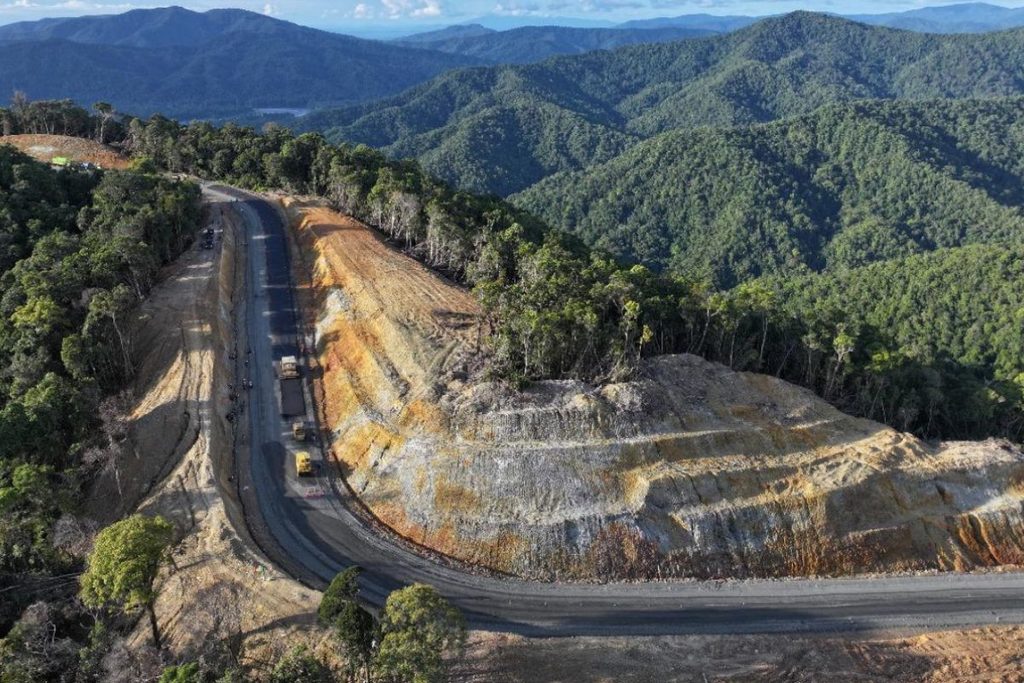
The Trans-Papua Highway may lower prices and bring services closer, but only fair connectivity will earn legitimacy
In Papua, distance is not simply a line on a map. It is a daily cost carried by ordinary families.
It is paid at the market when basic goods arrive late and expensive. It is paid again when fuel becomes scarce or priced beyond reach. It is paid in the highlands, where steep terrain and fragile transport links can turn a medical emergency into a race against time. And it is paid quietly over years, when young people grow up with fewer opportunities because access is harder and services less reliable.
Across the Pacific, we understand what isolation does to communities. It raises the cost of living, shrinks markets, and makes health and education harder to deliver. It deepens inequality in ways that can feel permanent. Papua, Indonesia’s far eastern region, has lived with this structural disadvantage for decades. That is why Indonesia’s Trans-Papua Highway has become more than an infrastructure headline. For many Papuans, it represents a basic question of dignity. Will everyday life become more affordable, and will essential services become closer and more dependable.
The logic behind the project is straightforward. Where supply chains rely heavily on costly air transport and unpredictable routes, prices remain high and volatile. Where roads are missing or unreliable, goods move slowly, services arrive irregularly, and local producers struggle to reach markets. A functioning and maintained road network can ease these pressures by shifting transport from air to land, improving predictability, and making deliveries less vulnerable to disruption.
In plain terms, roads can make life cheaper.
But in Papua, as in many places across our region, the most important question is not whether a road is useful. The question is whether the road will be fair.
Infrastructure is often discussed in kilometres, budgets, and deadlines. Yet what matters most is what people experience. A reliable corridor can mean food and household goods arriving more consistently. It can mean fewer sudden price spikes when flights are grounded or routes fail. It can mean small traders and producers having a real chance to sell beyond their immediate area. When reliability improves, local economies can breathe.
Connectivity can also strengthen how public services function. Health systems depend on regular supply, not occasional miracles. Roads can help vaccines, medicines, equipment, and specialist outreach teams reach remote districts more consistently. Even modest improvements in travel time can matter in emergencies, especially where terrain has long swallowed the golden hour.
Education is part of the same story. Where access is fragile, schools struggle to remain resourced and staffed. Roads can improve the flow of learning materials and make it easier for teachers to travel and stay in their posts. In the modern world, physical corridors increasingly shape digital corridors. Fibre optic lines and telecommunications maintenance often follow roads because roads make upkeep possible. When a road works, digital connectivity has a better chance to follow.
These are real benefits, and they are the kind that ordinary readers in Fiji can recognise immediately. A road can reduce the cost of isolation.
But a road cannot, by itself, resolve every political and social tension connected to Papua. Development does not automatically create legitimacy. Legitimacy comes from trust, and trust is built through fairness, transparency, and respect.
Across the Pacific, we have seen the double edged nature of major infrastructure projects. They can open opportunity. They can also trigger disputes over land, pressure fragile ecosystems, and fuel social tension when communities feel sidelined.
Papua is not a blank space waiting to be connected. Land in Papua is customary territory, identity, and heritage. If people believe a project opens access for outsiders without strong safeguards for customary owners, distrust will grow. If consultation is late or symbolic, if compensation is unclear, if dispute resolution is inaccessible, or if environmental protection feels like a box ticking exercise, then a road meant to reduce isolation can deepen grievances instead.
This is why the idea of fair connectivity matters more than connectivity alone.
Fair connectivity means communities are not merely informed, but genuinely included. It means customary rights are protected in ways people can verify. It means benefits are not concentrated among a few while social and environmental costs are carried by many.
If the Trans-Papua Highway is to succeed as a development project, and not become another source of bitterness, its safeguards must be visible, credible, and consistently applied.
It begins with meaningful consultation. Communities must have early and clear access to information about routes, timelines, impacts, and remedies. Consultation must not be treated as a formality after decisions are already made.
It requires transparent compensation and credible dispute resolution. Compensation processes must be clear, fair, and documented. Disputes over land and access are not unusual in major projects. They are expected. What matters is whether people have realistic ways to resolve them without being pushed into long, distant, and expensive battles that favour the strongest party.
It demands genuine environmental protection. Papua contains some of the most sensitive ecosystems in the world. The Pacific knows too well what happens when environmental safeguards are vague or weak. Protection must be more than a paragraph in a plan. It must be enforced, monitored, and designed for the long term, including maintenance, not just construction.
And it must include measurable benefit sharing. Jobs for locals cannot remain a slogan. It must show up in contracts, training, apprenticeships, and local business participation. It must show up in market access for indigenous producers and support for small enterprise, not only in opportunities for larger outside operators. When communities can point to real livelihoods created for local families, the project gains legitimacy that no press statement can manufacture.
For ordinary readers, Papua’s road will not be judged by engineering claims. It will be judged by outcomes. Do prices become more stable and affordable for households. Do clinics and schools function more reliably because supplies and staff can reach communities. Do local livelihoods grow because producers can access markets without punishing costs. Do customary owners feel protected and respected. Do environmental safeguards hold in practice. Do benefits flow in visible ways to indigenous Papuans.
If these answers are yes, the project will create its own credibility. If they are no, scepticism will grow regardless of how many kilometres are completed.
The Trans-Papua Highway can be a bridge, reducing the cost of distance, strengthening public services, and widening opportunity for communities long constrained by geography. But it can also become a line of division if it is seen as opening access without protecting rights, or delivering growth that bypasses the people who live on the land.
Papua does not only need roads. Papua needs fair connectivity, connectivity that improves daily life while safeguarding customary land, respecting communities, and protecting a fragile environment.
In the end, this is the standard worth holding any government to. Not simply whether a highway is finished, but whether it earns trust, through fairness that ordinary people can feel in their daily lives.
The arguments in this Article is long-term anthropological research on the social, political and cultural impacts of the Trans-Papua Highway, particularly S. Eben Kirksey and Kiki van Bilsen, “A Road to Freedom: Mee articulations and the Trans-Papua Highway,” which documents how roads in Papua function not simply as infrastructure, but as contested spaces where indigenous mobility, state authority, capitalism and resistance intersect.

