
If I were the Prime Minister, one of my greatest concerns would be the way we, as a people, sometimes turn on our own institutions at the first sign of inconvenience.
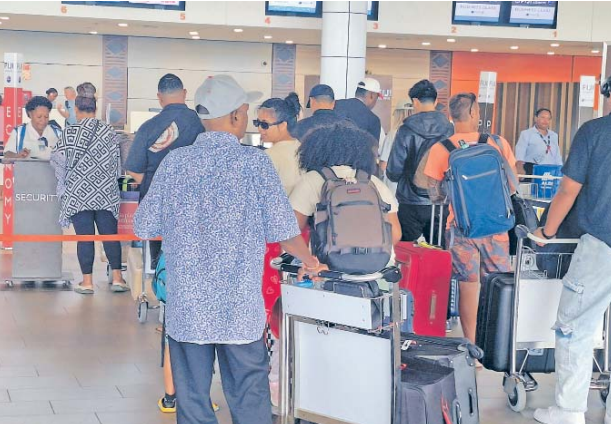
I was deeply distressed by the level of venom displayed — particularly by well-educated Fiji citizens — following the recent Fiji Airways flight delay to Auckland last week. The anger itself was not the issue; delays are frustrating. What was alarming was how quickly frustration turned into public condemnation including political condemnation.
The social media videos uploaded by disgruntled passengers caused enormous reputational damage to our national carrier and, by extension, to Fiji’s tourism industry. In today’s digital world, such damage travels instantly and lingers far longer than the delay itself.
Let me be clear: the delay should not have happened. Fiji Airways must accept responsibility for shortcomings in its communication. Passengers deserved clear, timely, and respectful updates. Relying on security guards to manage distressed customers instead of trained airline staff was inappropriate and avoidable. On this point, criticism is justified.
But perspective matters.
Imagine if the delay had been caused by severe weather, flooding, lightning, or the sudden closure of Auckland Airport — events well beyond the airline’s control. Would the reaction have been any different? I suspect it would not have been. The outrage appeared driven less by safety concerns and more by inconvenience — by anxiety over frozen donu, walu and kai in checked luggage rather than the safety of passengers, crew, and aircraft.
That should give us pause.
This episode reflects a troubling lack of pride and restraint when dealing with a national institution such as Fiji Airways. Like any customer-oriented organisation, it has service gaps. Yes, its communication failed on this occasion. Yes, fares can at times be higher than those offered by Virgin, Jetstar, or Qantas. These are legitimate issues that deserve structured and responsible engagement.
But Fiji Airways is more than just an airline.
It is a national icon, a major employer, a lifeline for our tourism industry, and often the first and last impression visitors have of Fiji. When we publicly humiliate it without balance or context, we are not asserting consumer rights — we are undermining our own national interest.
Nation-building requires more than criticism; it requires maturity. We must hold our institutions to account, but we must do so responsibly, constructively, and with an understanding of the wider consequences of our actions.
People of different races — though all Fijians — no longer look at one another, make eye contact, or exchange greetings as we once did in our villages and suburbs. The simple warmth of a “Yadra,” “Bula,” “Bula Vinaka,” “Namaste,” “Ram Ram,” “Namaskaram,” or even a “Good Morning” is slowly fading in our multiracial, multilingual, and multicultural society.
Such greetings have become more visible within our national airline and within the confined spaces of resorts and hotels — spaces largely reserved for tourists. Even there, these cultural expressions are often driven by corporate interests and commercial gain.
Ironically, the everyday Fijian is not afforded the same warmth or courtesy. A simple Bula or Namaste now seems to carry a price tag, valued more when exchanged for foreign currency than when shared freely among our own people.
If I were the Prime Minister, I would declare January 2026 the National Month of Greeting — a simple but powerful initiative to rekindle human connection and promote national unity. Relearning the habit of greeting one another would be a meaningful first step toward rebuilding respect, empathy, and cohesion among our people.

