
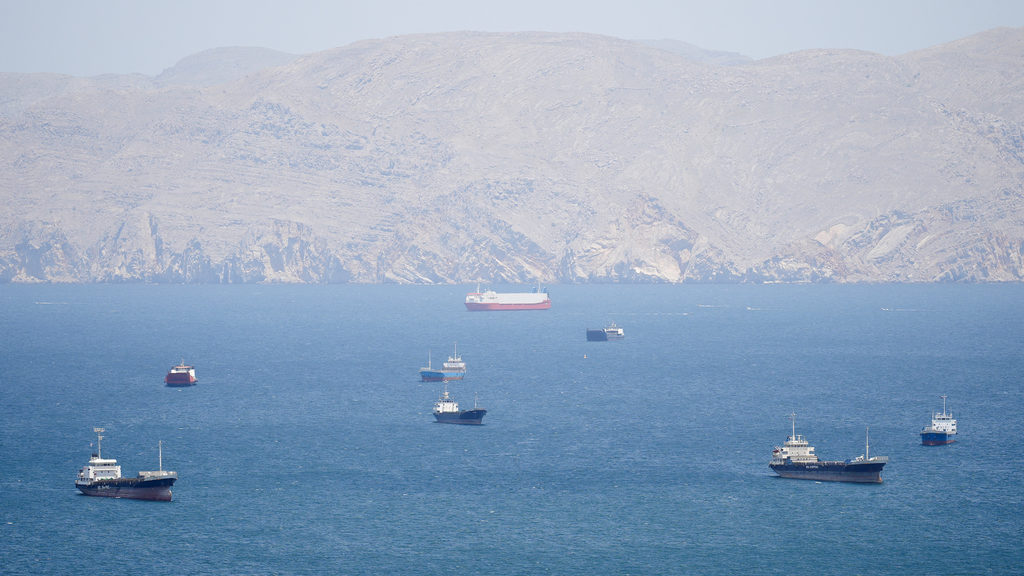
Brent crude at $US117 is not the price Fiji pays at the pump. The spot market says $US117 (approx.: $F260). The Viti Levu forecourt says $2.93 a litre. Today, that number rises again. Fijians are paying the equivalent of $US210 a barrel (approx. $F466) not $F260. The gap, $F206 a barrel on the spot price quoted today is not profit for any single company. It is a layered cost stack built over six distinct stages
WHEN Brent crude was reported trading at $US117 a barrel (approx. $F260), a reasonable Fijian consumer might conclude that the global oil price, while painful, was at least a known quantity.
But it is not the price Fiji pays. By the time that barrel of raw crude clears the international refinery, crosses the Pacific, passes through Fiji’s port, is taxed, stored, transported and pumped at a Viti Levu forecourt, the consumer is paying the equivalent of $US210 a barrel (approx. $F466). The gap, $US93 a barrel (approx. $F206), is not profit for any single company.
It is a layered cost stack built over six distinct stages, none of which Fiji controls.
Understanding every layer is the only way to understand why Fiji’s fuel prices rise faster than headlines suggest, and why the announcement by the FCCC (Fijian Competition & Consumer Commission) tonight (last night), effective from May 1, will again deliver a figure that shocks those who were watching the spot market.
Brent crude is not pump fuel
Brent crude is the name of a specific grade of raw, unprocessed petroleum used as the global pricing benchmark for roughly two-thirds of the world’s traded oil. At $US117 a barrel (approx. $F260), Brent measures the cost of unrefined crude at the point of trade. One barrel equals 158.987 litres. That crude cannot be put in a vehicle. Before it becomes petrol, diesel or kerosene, it must undergo a complex industrial process involving heat, pressure, chemical separation and multiple distillation stages at a facility that Fiji does not possess and has not possessed since the Mobil refinery at Lautoka closed permanently in 2006.
The spot price of Brent crude is therefore the starting point of Fiji’s fuel cost, not the destination. Every dollar added to Brent by the cost layers that follow is a dollar Fiji cannot negotiate, cannot hedge against and cannot absorb without passing it directly to the consumer.
The Singapore refining premium
Because Fiji has no domestic refinery, it purchases only finished, refined petroleum products, primarily from Singapore, the world’s third-largest refining hub. The FCCC does not use Brent crude as its pricing reference. It uses the Mean of Platts Singapore (MOPS), the daily assessed price of refined petroleum products delivered at Singapore.
MOPS already incorporates the refining margin, or crack spread, the price difference between crude input and refined product output.
In stable conditions, the crack spread for diesel runs at approximately $US12 to $US18 (approx. $F26.47 – $F39.71) a barrel.
Under the current Hormuz conflict, with Middle East refinery operations disrupted and global diesel and kerosene supplies tightened, the FCCC confirmed that international refined fuel prices for kerosene rose 59.80 per cent and for diesel 56.22 per cent in its April 2026 determination.
This is the crack spread effect in action: crude moved sharply, but refined products moved further because refining capacity itself has been compromised by the war.
The Pacific freight penalty
Singapore to Suva is approximately 8500 kilometres. Fiji sits at the end of a secondary distribution chain, served by small product tankers, not the Very Large Crude Carriers (VLCC) that move bulk cargoes between the Gulf, Rotterdam and Singapore. Small parcel Pacific freight carries a structural cost premium: fewer competing operators, no return cargo on the Fiji-to-Singapore leg, and port handling costs calibrated for island-scale throughput.
In normal conditions, freight adds approximately $US8 to $US12 ($F17.65 – $F26.47) per barrel to the Singapore MOPS price before cargo reaches Fijian waters. Those are not current conditions. The Hormuz conflict has driven maritime war-risk insurance premiums sharply higher across the entire Indian Ocean and Western Pacific zone. The FCCC explicitly cited significant increases in international freight rates as a co-driver of its April 2026 price determinations alongside refined fuel price movements.
Freight and insurance together now represent a material and structurally irreducible cost layer for every litre Fiji imports.
The exchange rate multiplier
Here is the structural vulnerability that most commentary overlooks. Every barrel of petroleum product that Fiji imports is invoiced, contracted and settled in United States dollars. Fiji earns its foreign exchange principally from tourism and remittances, both under pressure since the Middle East conflict began disrupting international aviation markets. The mid-market USD to FJD rate as of April 30, 2026 stands at approximately $F2.22 (approx. $F4.90) per USD, against a rate closer to $F2.18 (approx. $4.81) a year ago. That four-cent movement adds approximately F8 cents to the cost of every litre before any duty is collected. When the USD strengthens simultaneously with rising crude prices and spiking freight rates, the compound effect on the pump price is multiplicative, not additive. The FJD has no mechanism to protect Fijian consumers from dollar movements it cannot influence, in markets it does not access, for a commodity it does not produce.
The Government fiscal stack
Once refined fuel crosses the Fiji port boundary, the government applies its fiscal stack: import duty, excise duty, an environment and climate adaptation levy, and Value Added Tax at 12 per cent, each applied in sequence on a base that already includes the preceding charge.
The combined government take on petroleum products is, by regional standards, substantial. There is a political irony no minister has been pressed to address: when global crude prices rise, Fijian government revenue from fuel taxes rises proportionally while households absorb the cost. The government is a structural beneficiary of the very pressures it expresses concern about. A transparent publication of the full fiscal breakdown, showing precisely how much of 2.93 a litre represents government revenue at each layer, would be a basic service to public accountability. Beyond taxation, port wharfage, tank farm storage and inland trucking from port to retail outlets add further increments before the nozzle opens.
The FCCC formula and today’s announcement
By late today (yesterday), April 30, 2026, the FCCC will release its monthly fuel price determination, setting the maximum wholesale and retail prices for petrol, diesel, kerosene and premix effective from May 1.
That determination incorporates MOPS benchmark data, international freight rate movements and the prevailing USD to FJD exchange rate. All three inputs have moved adversely since the April 1 determination, which itself delivered increases of 20.1 per cent for petrol, 35.0 per cent for diesel and 42.0 per cent for kerosene.
The direction of yesterday’s adjustment is not in doubt. The only question is magnitude. Fijians filling up yesterday evening are filling up for the last time at the current regulated maximum. The FCCC does not set the price of crude. It does not set MOPS, freight rates or exchange rates. It applies a formula to inputs it does not control and passes the result to consumers who have no alternative supply.
The structural response Fiji needs
The only durable response to structural fuel price vulnerability in a small island developing state is structural, not monthly.
Fiji requires a strategic petroleum reserve, a government-held buffer stock of refined fuel sufficient to cover a minimum of thirty days of national consumption, to smooth price determinations and provide supply security during shipping disruptions. The Pacific Islands Forum has the institutional architecture to negotiate a regional petroleum purchasing consortium, pooling the import volumes of Fiji, Vanuatu, Tonga, Samoa and the Solomon Islands to achieve freight and insurance rate reductions no single island economy can secure independently. Currency hedging instruments for fuel procurement, available through the Asian Development Bank’s Pacific risk management facilities, have not been systematically used by Fiji to cap the FJD cost of forward fuel purchases. None of these mechanisms are novel.
All are available. What last night’s FCCC announcement will confirm, for the third consecutive monthly determination, is that Fiji is absorbing every global shock in real time, with no buffer, no hedge and no seat at any table where those costs are set. Brent crude at $US117 (approx. $F260) a barrel is the number in the headline. US$210 (approx. $F466) a barrel equivalent is the number at the pump.
The difference is the cost of being a small island at the far end of the world’s longest supply chain.
DR SUSHIL K SHARMA BA MA MEng (RMIT) PhD (Melbourne), is a World Meteorological Organisation accredited Class 1 Professional Meteorologist, a former Associate Professor of Meteorology at the Fiji National University and Manager Climate Research and Services Division at the Fiji Meteorological Services. The views expressed are those of the author alone and not of this newspaper.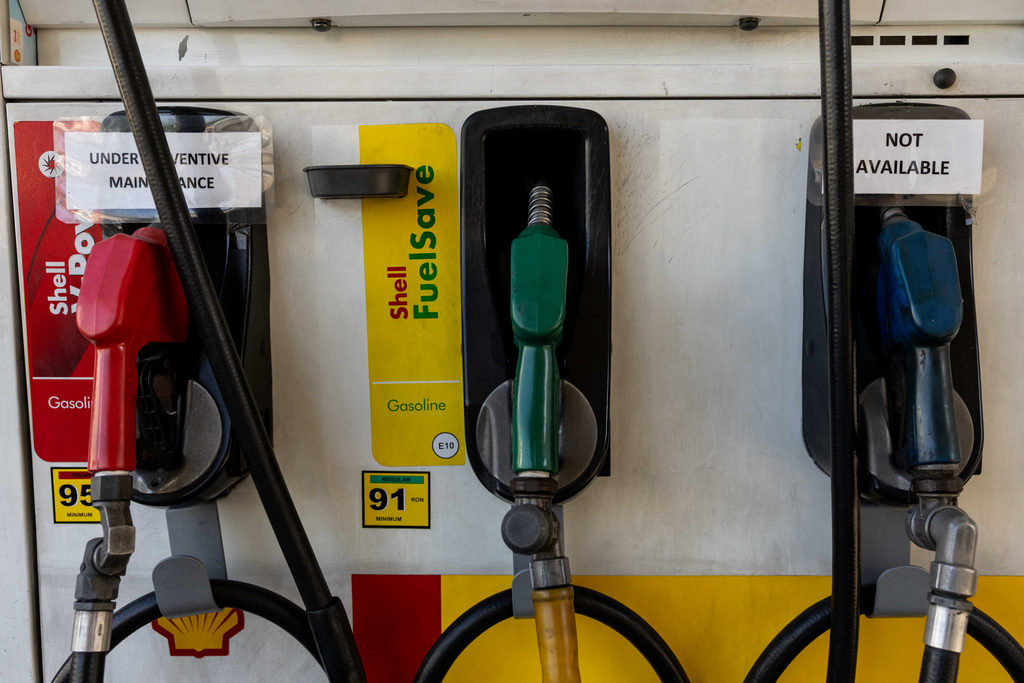
By the time a barrel of raw crude clears the international refinery, crosses the Pacific, passes through Fiji’s port, is taxed, stored, transported and pumped at a Viti Levu forecourt, the consumer is paying the equivalent of $US210 a barrel (approx.$F466), writes the author. Picture: REUTERS

