
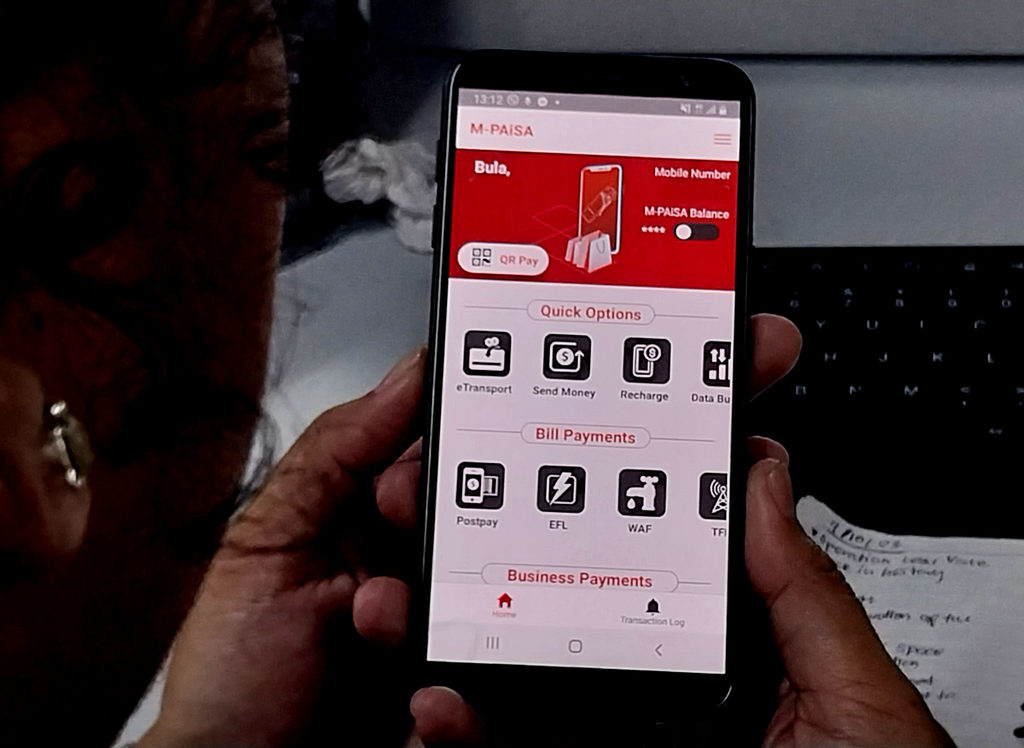
M-PAiSA began as a useful mobile wallet but has grown into a central channel for welfare payments, remittances, bills, transport support, bank transfers and everyday spending. In Fiji, that makes it less a convenience product and more a financial utility woven into ordinary life. The question raised by its rise is not simply whether it works, but whether the way it is priced and used is fair to the people who depend on it most. For low-income Fijians, a system this central must be assessed not only for efficiency, but for justice, transparency and consumer protection. It is now part of the country’s financial infrastructure, meaning its impact cannot be judged by convenience or growth alone.
M-PAiSA’s rise
M-PAiSA is no longer just a mobile wallet. It has become one of Fiji’s most important financial rails, moving money for welfare recipients, remittance receivers, bill payers, transport users, businesses and ordinary households. Recent reporting has put its annual transaction value at $6.95billion in 2023 (FV 01/02/24), more than $3b annually in earlier estimates (FT 06/02/24), and over $6b in the 2025 financial year (ATH 05/10/25).
That scale changes the nature of the debate. A platform moving billions of dollars and touching hundreds of thousands of people is not a niche telecom service anymore. It is part of the country’s financial plumbing, and once that happens, its pricing and conduct become matters of public interest, not private business. What began as a digital convenience now carries the financial habits of the nation.
What digital wallet means
A digital wallet lets people store money electronically and use it for transfers, payments, withdrawals and purchases without carrying cash. In Fiji, M-PAiSA sits inside the country’s payment system, including bank transfers, QR payments, remittances, utility bills, mobile recharge and government linked disbursements (RBF 13/10/24; Vodafone NPS page).
Once a wallet becomes central to how ordinary people move money, its charges resemble access charges for an essential service. If users are mostly low-income households, the fairness question becomes unavoidable. The wallet is not merely a product people can choose or ignore at will. It is part of how people live, pay and survive.
The fee structure
Vodafone’s tariff schedule shows that registered transfers from $1 to $2000 attract a 50 cent fee, QR payments are free, and cash withdrawals are charged on a banded basis: $2 for $1 to $100, $3 for $101 to $500, and $4 for $501 to $1000 (Vodafone tariffs; FS 08/06/26).
On paper, those numbers look small. In practice, they hit poor users hard because the absolute fee does not reflect transaction size relative to income or balance. A $2 fee differs sharply if you are moving $99 versus $4. Once a flat fee enters a low-income setting, the burden shifts toward the person least able to absorb it.
Why poor pay more
The real burden is not just the fee itself, but how often it is paid. A better off user may withdraw a larger amount once and use that cash over time, while a poor user may need to take out $4, $6 or $8 at a time, paying the same fee again days later. Lower income users pay a much higher effective percentage simply because they lack cash to move at once (FS 08/06/26).
That is regressive pricing in practice. When repeated small transactions are required for survival spending, the fee becomes a poverty penalty rather than a neutral charge. A $2 fee on a $4 withdrawal is 50 per cent; on a $6 withdrawal it is 33 per cent; on an $8 withdrawal it is 25 per cent, while a person withdrawing $99 pays 2 per cent; the same $2 and barely notices.
In real cases, users with only $30–$40 in their wallet withdraw $5 or even $1 at a time, paying $2 each time—meaning a $1 withdrawal incurs a 200 per cent effective charge, while a $90 withdrawal costs just over 2 per cent.
Government paid wallets
The issue sharpens because the State uses M-PAiSA as a payment channel. Social welfare payments including bus fare subsidy have been routed through the platform, and government disbursements increasingly rely on digital wallets for public support (FT 11/03/24; FS 16/08/22).
Many low-income Fijians do not freely choose the wallet; they are directed into it by government design. If public welfare, transport support or assistance is sent into the wallet, but recipients must pay to access or withdraw that money, part of the public support leaks into private charges before reaching the household budget.
That is a serious policy concern because the State builds a fee into support delivery, exposing the people least able to pay to repeated charges. Apart from that, the Government has to pay the company a fee also.
The bus fare trap
The bus fare example shows this vividly. If transport support is paid into M-PAiSA, the user may need to withdraw or transfer funds just to use the support, triggering a fee. In effect, the person receives public assistance and pays to access it (FT 11/03/24).
For a worker or parent on a tight budget, that repeated cost is a persistent drain on small balances, falling hardest on those least able to absorb it. Support payments should help a poor household move easily, not create extra friction and cost. When assistance depends on a wallet charging for access, the policy unintentionally weakens the support it was meant to provide.
Remittances matter too
Remittances make the story larger. Reporting shows M-PAiSA handling tens of millions of dollars in remittances monthly, including $52.6m in one month and about $452m over 12 months, while another report cited monthly remittances around $55m, or about $680m annually (FV 07/01/24; FV 26/02/25).
M-PAiSA is not only a domestic payment tool but a major channel for family support money from overseas. Every withdrawal or transfer fee reduces that support, making pricing a household income issue. When remittance money lands in a wallet and is chipped away by charges, the real cost is felt by the family depending on every dollar.
Scale changes the debate
The platform’s scale makes this impossible to ignore. M-PAiSA has processed over $100m a month, with annual volumes of $6.95b in 2023, over $3b annually in earlier estimates, and more than $6b in the 2025 financial year (FV 01/02/24; FT 06/02/24; ATH 05/10/25). Separate reporting noted nearly 600,000 registered users and hundreds of thousands of active monthly users (UNCDF 31/10/23), alongside millions of transfers and large inward remittance flows (FV 01/02/24; FT 28/03/23).
These figures show a deeply embedded platform. When a service reaches this scale, it cannot be treated as a side product with incidental consumer harm. It affects prices, access, household cash flow and financial inclusion nationwide. The more central the platform becomes, the more serious the scrutiny must be.
Why regulators must act
The Reserve Bank should care because M-PAiSA is formally integrated into the national payment system and licensed under the payment service framework (RBF 10/10/22; Vodafone NPS page), bringing it close to bank like infrastructure. Banks are cheaper and often do not have payment fees. The FCCC should care because consumer fairness in a captive market is paramount. When poor users have limited alternatives and must use the platform for welfare, remittances, bills and daily spending, the fee structure deserves scrutiny. This is a call to ensure charges are fair, proportionate and not punitive. A system this important should not be left to market logic alone.
A fairer model
The most reasonable reform is that government linked payments and initial welfare withdrawals should be free or heavily protected from transaction charges (FT 11/03/24; FS 16/08/22). If a private platform delivers public assistance, gets paid by the government also for those transactions, the cost of accessing it should not fall on the poorest users again. More broadly, M-PAiSA should be reviewed under rules recognising its quasi banking role. Carrying money nationally, affecting basic living costs, and serving low-income households mean the Reserve Bank, government, and the FCCC should treat it as an essential public utility, not a mere mobile product. M-PAiSA’s original promise was convenience, access and inclusion. Those matter, but a platform at the centre of Fiji’s financial life must also be judged by fairness, not just functionality.

